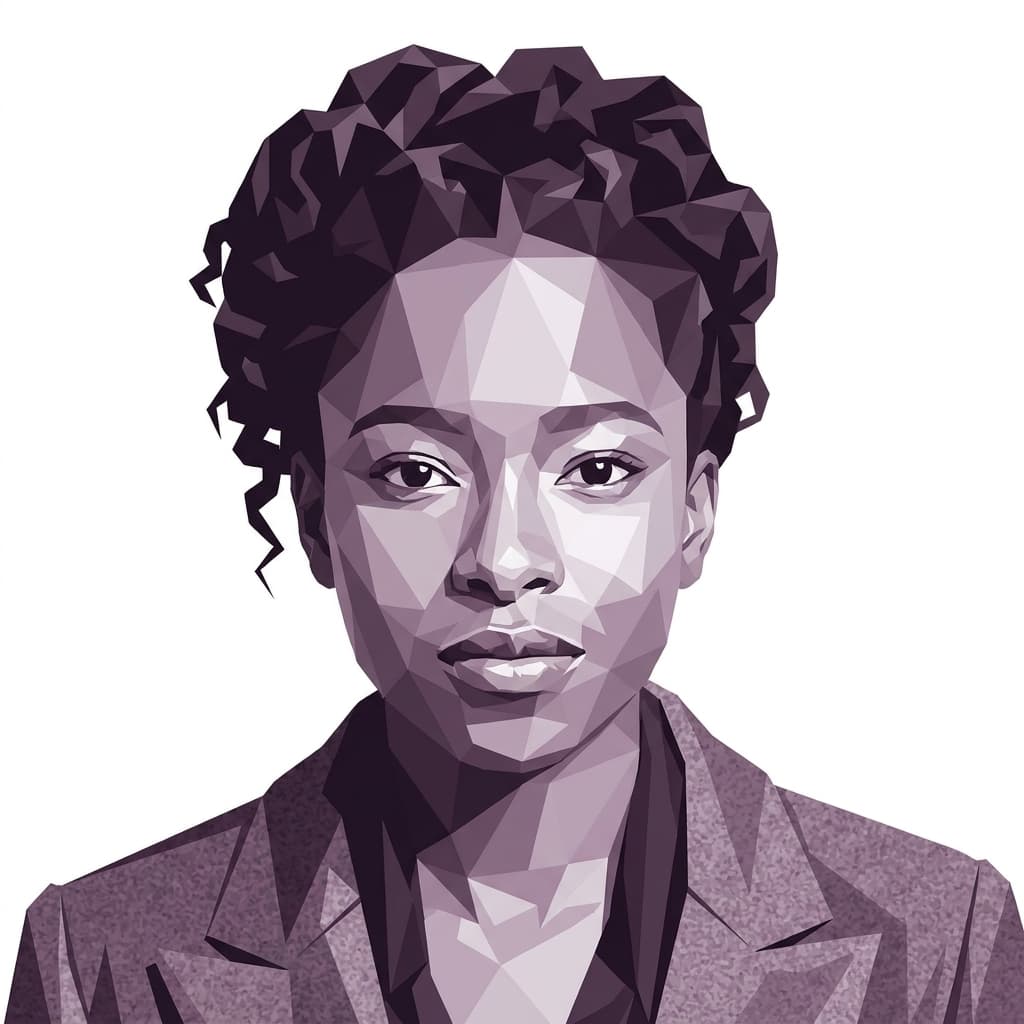
Amanda Gorman
American poet and activist whose inauguration reading made her a generational voice.
Design
- Q26.3
- h45.3
- R24.5
- g64.4
- i63.4
- S10.5
- T60.4
- U61.5
- V13.6
- W21.5
- X41.5
- Y60.2
- Z9.1
Personality
- Q22.1
- h47.1
- R53.5
- g40.6
- i37.6
- S25.2
- T41.1
- U25.5
- V37.2
- W51.5
- X19.4
- Y60.6
- Z9.3
Amanda Gorman is a Manifestor — wired to start things the rest of the culture hasn't quite imagined yet, and her arrival on the inauguration stage in January 2021 was exactly that kind of opening salvo. She was 22, the youngest inaugural poet in American history, reciting "The Hill We Climb" in a canary-yellow Prada coat that became iconic before she'd even finished the last stanza. The country had been told to expect a poem; what it got was a trailblazer's announcement that the next chapter would sound different.
Long before that morning, she'd been quietly building. A self-described "weird child" with an auditory processing disorder and a speech impediment that made the letter R nearly impossible, she spent her Los Angeles childhood reading obsessively and practicing words alone in her room. That early shaping is pure 1/3 profile — the investigator who needs a solid foundation, paired with the experimenter willing to fail her way into mastery. She has talked openly about rehearsing "The Hill We Climb" by repeating the line "We the successors of a country and a time" until the R's stopped tripping her, a kind of deep, patient focus on a single piece until it clicks.
Her writing process is unhurried in a way that surprises people who assume virality means speed. She has spoken about sitting with drafts for days, waiting for the version that feels right rather than the version that sounds clever — the working method of someone with Emotional Authority, who knows that clarity arrives only after the wave has passed. The night before the inauguration, she finished the poem after watching footage of the January 6th Capitol attack, letting the shock crack something open rather than turning away from it. The final stanzas were written in that emotional aftermath.
What carries her poems is less argument than presence. There's a warrior's open-heartedness in her refusal to write from cynicism, a faith that language can still do something for a fractured public. She writes a lot about what the country owes its people and what neighbors owe each other, and about the kind of leadership that doesn't hoard the microphone. When she signed a multi-book deal, partnered with Estée Lauder, and turned down political offices to keep writing, she was making the Manifestor's quieter decision: protect the source, inform the world, then move.
She's also a Listener before she's a speaker — a writer who collects other people's stories, family histories, the language of her mother's South L.A. classroom, civil rights cadences, scripture. Her poems braid them. "Call Us What We Carry," her 2021 collection, reads like an archive of pandemic grief assembled by someone trying to make meaning out of fragmented images and inherited memory.
At her best she demonstrates what happens when a young Manifestor is given space to do her thing: she initiates, then rests, then returns with a vision of what could be next and the persuasive instinct to make it land. The country is still catching up to the doors she's already walked through.