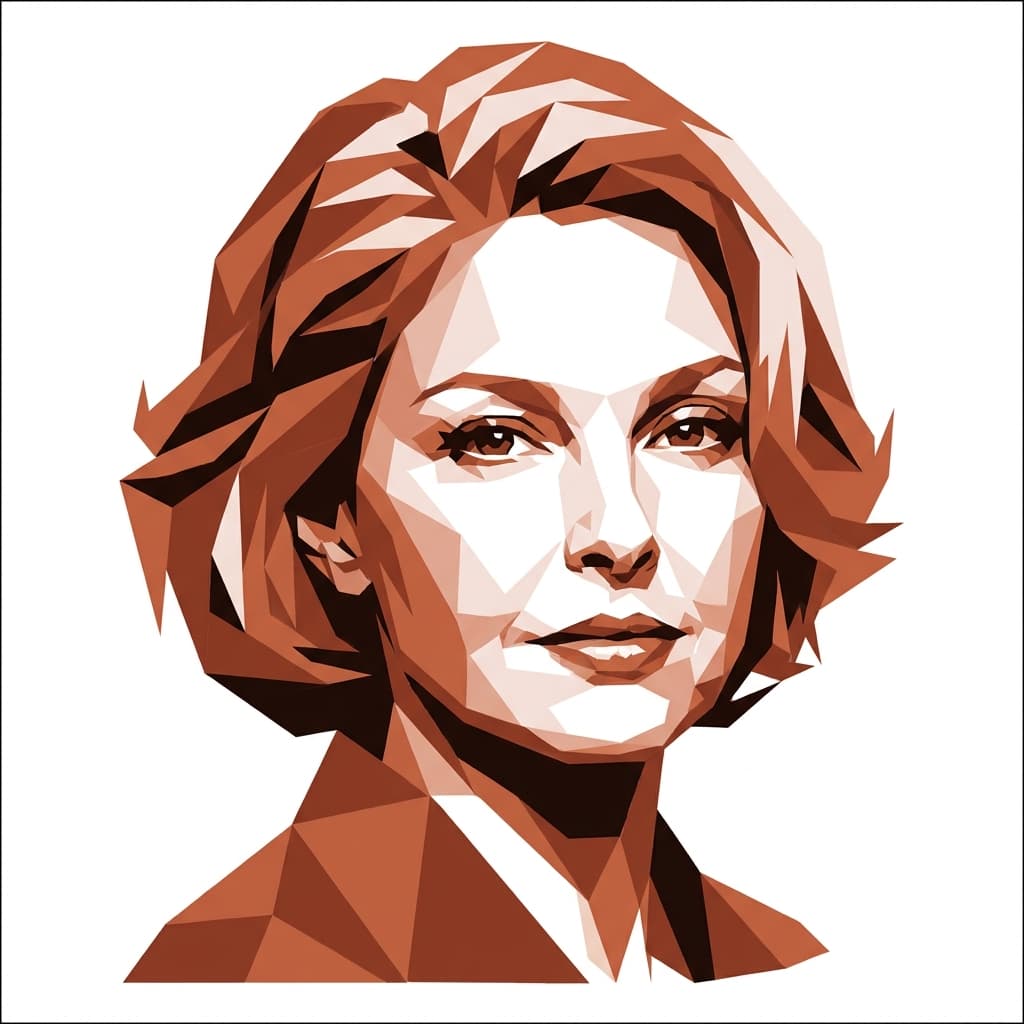
Ashley Judd
American actress and humanitarian activist known for film roles and outspoken advocacy on gender violence.
Design
- Q60.6
- h56.6
- R50.6
- g42.2
- i32.2
- S13.5
- T11.3
- U37.6
- V59.5
- W17.4
- X46.1
- Y14.2
- Z6.1
Personality
- Q3.4
- h50.4
- R60.5
- g51.4
- i57.4
- S42.4
- T21.5
- U2.4
- V29.2
- W51.3
- X6.4
- Y14.2
- Z47.4
Ashley Judd is a Generator — built with steady, renewable energy and designed to throw it behind the work that genuinely lights her up. That pattern explains a lot about how her life has actually unfolded: a thriller-era movie star in the 1990s who, instead of running the standard career playbook, kept disappearing into rural Tennessee, into graduate school at Harvard's Kennedy School, into Congolese refugee camps, and into the witness stand of public testimony. The acting was never the whole story.
Born in Sylmar, California to country singer Naomi Judd and raised across more than a dozen schools as her mother and sister Wynonna built their music career, Judd absorbed early what it meant to live inside other people's spotlight. Her 4/6 profile reads cleanly in retrospect — a younger experimental phase (the Ruby in Paradise, Heat, Double Jeopardy run, the public romances, the candid memoir) followed by a clear pivot toward role-model authority. She has spoken openly about depression, childhood trauma, and a stint at a treatment facility in 2006, extracting wisdom from a difficult earlier chapter rather than burying it.
Her humanitarian work shows a Generator's stamina aimed at what she actually cares about. As a global ambassador for Population Services International and YouthAIDS, she's traveled to brothels in Cambodia, slums in Kenya, and conflict zones in the Democratic Republic of the Congo, then come home and testified before Congress. There's a deep instinct for what's worth preserving and protecting in this work, and a clear sense of where resources and attention need to go that her acting career alone could never have absorbed.
In October 2017, Judd became one of the first women to go on the record against Harvey Weinstein in The New York Times, a decision that required sitting with the weight of the story for years before speaking. She had been carrying that experience since the late 1990s, and the timing of her disclosure — careful, considered, legally exposed — was characteristic. The moment carried real shock value, the kind that pushes a whole culture past a familiar boundary, and helped catalyze what became the #MeToo reckoning. She later sued Weinstein for defamation and career sabotage.
Judd is a storyteller who works from lived experience rather than abstraction, whether testifying at the UN, writing her 2011 memoir All That Is Bitter and Sweet, or speaking at the 2017 Women's March, where her recitation of nineteen-year-old Nina Donovan's "Nasty Woman" became one of the day's defining moments. Her opinions land with the weight of having actually researched the underlying material — she earned a master's in public administration in 2010 specifically to deepen the policy work.
In 2021 her mother died by suicide, and Judd has since spoken with extraordinary candor about discovering the scene, about grief, and about the failures of American media to cover suicide responsibly. It's the same pattern as ever: taking what she's lived through and turning it into something other people can use, committing fully once she's decided the cause is hers, and refusing to leave the experience unprocessed.