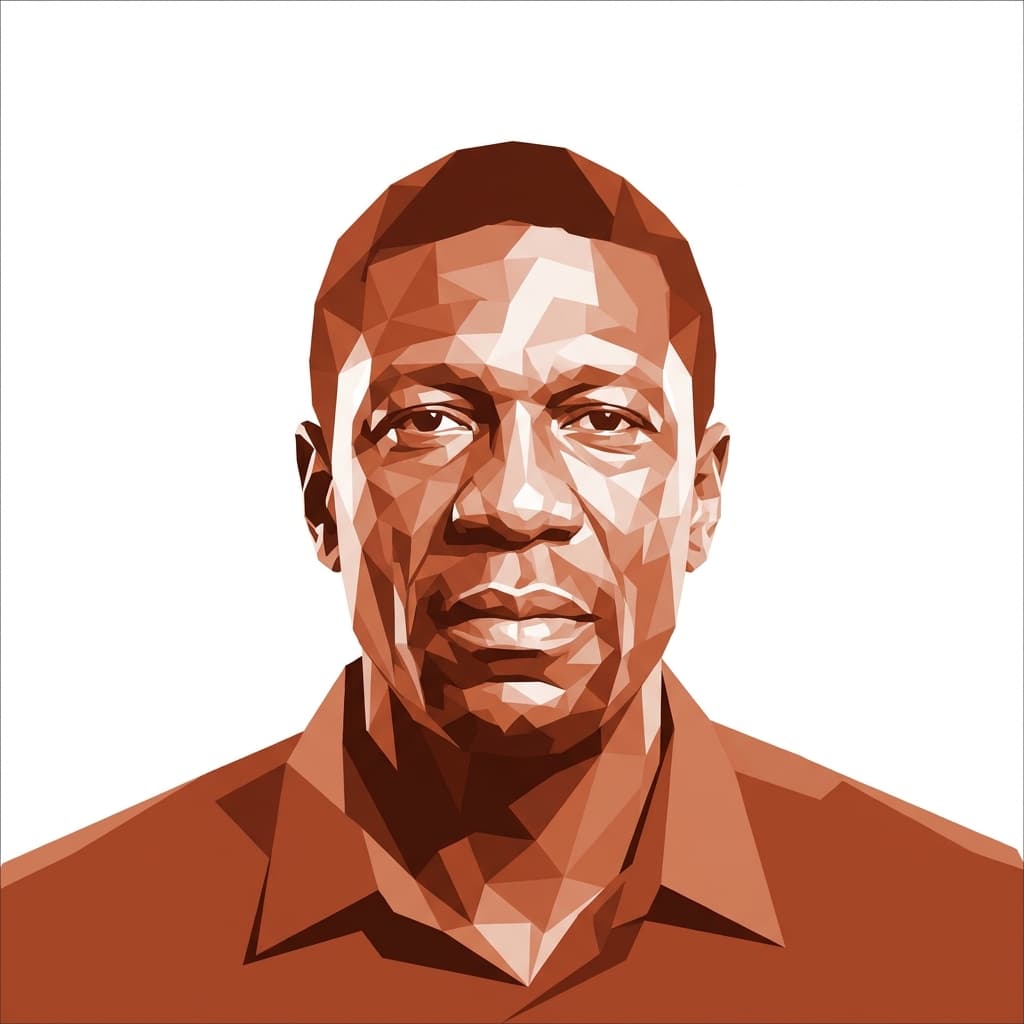
Bill Russell
NBA center who won 11 championships with the Celtics and became a defining civil rights voice.
Design
- Q14.1
- h8.1
- R34.2
- g49.6
- i4.6
- S14.4
- T38.4
- U10.1
- V48.6
- W19.4
- X42.4
- Y64.1
- Z62.5
Personality
- Q49.5
- h4.5
- R41.4
- g49.1
- i4.1
- S37.5
- T19.4
- U37.2
- V32.3
- W49.1
- X42.4
- Y64.1
- Z62.3
Bill Russell was a Generator — built with the kind of deep, renewable stamina that lets a person dive into one craft and remake it from the inside. He chose basketball, and across thirteen seasons with the Boston Celtics he won eleven championships, a number so absurd it stopped being a statistic and became a fact of the sport. He did it not by scoring but by patrolling the lane, by studying angles and trajectories until defense became a thinking person's art, and by organizing teammates around principles he could explain in precise detail.
Russell was the rare athlete who treated his game as a research project. A 5/1 profile tends to investigate first and lead second, and Russell fit the pattern exactly — he watched film obsessively, drew up theories about shot-blocking that nobody else had bothered to test, and only then stepped out as the authority everyone deferred to. He blocked shots not to swat them into the stands but to keep them in play, which required a mental map of where every teammate was standing. The innovation looked instinctive. It was actually homework.
Off the court he carried himself with a self-possession that refused to bend to anyone's expectations. When Boston fans hurled slurs at him and vandals broke into his home, he didn't perform gratitude for the city that cheered his rebounds. He marched in Washington in 1963, flew to Mississippi after Medgar Evers was murdered to run integrated basketball clinics, and stood beside Muhammad Ali at the 1967 Cleveland Summit. He fought the battles that he judged worth the cost, and he was unsentimental about which ones were not.
As player-coach from 1966 to 1969, Russell became the first Black head coach in major American professional sports. He took the job because Red Auerbach asked and because it felt right after he sat with it, not because he wanted the spotlight. He coached the way he played — by paying close attention to what each teammate actually needed and by holding the locker room together as a genuine community rather than a roster. The Celtics won two more titles under him, including his final season, which he closed and walked away from on his own terms.
After retirement Russell was famously prickly about Boston. He refused to have his number raised in a public ceremony, declined to attend his own Hall of Fame induction, and gave a generation of sportswriters very little of what they wanted. He was discerning about where to direct his considerable energy and allergic to the kind of fame that asked him to perform a softer version of himself. Later in life, partly through the patient diplomacy of younger players, he softened — accepted the ceremonies, laughed on camera, mentored the next generation of centers.
When he died in 2022, the NBA retired his number 6 league-wide, the first player ever to receive that honor. Russell's legacy was the quiet conviction that the work and the principles had to match, and that a champion was measured by both.