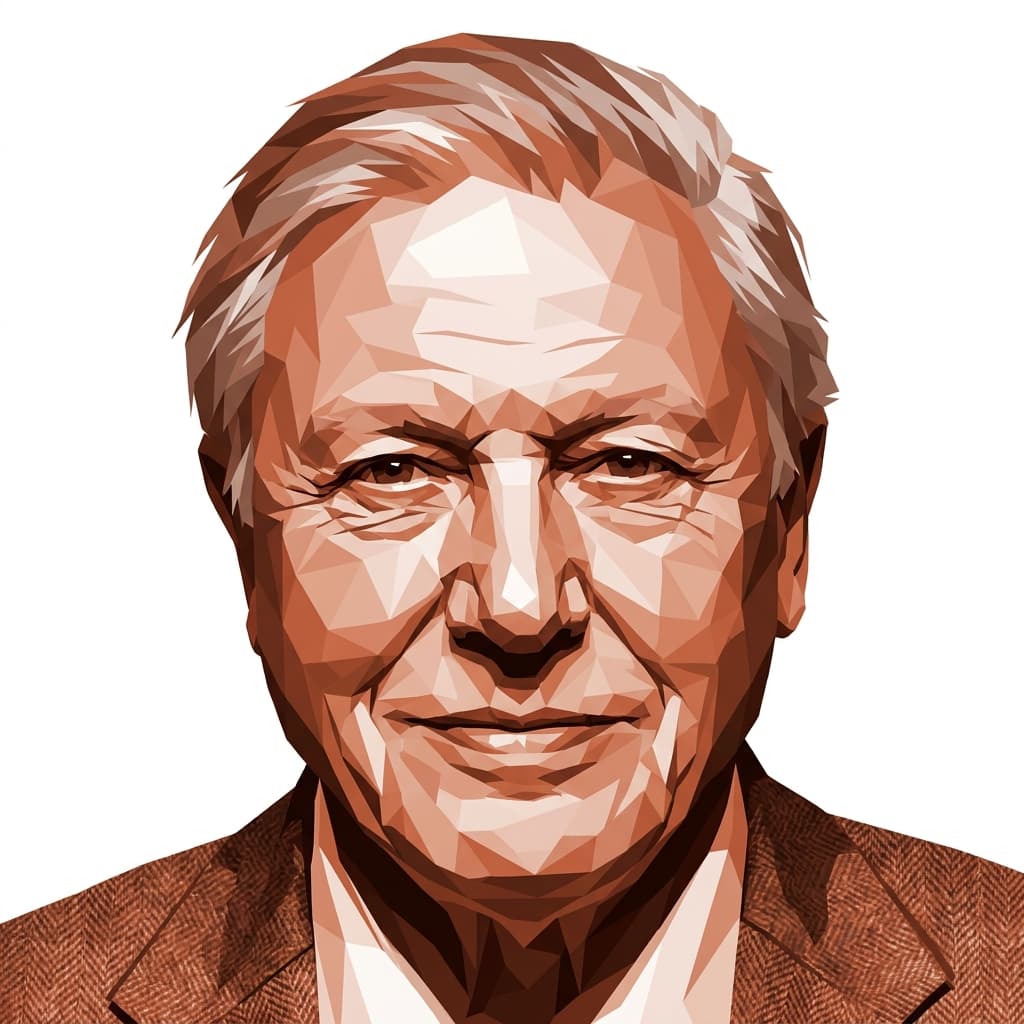
David Attenborough
English broadcaster and natural historian whose voice has narrated the living world for seven decades.
Design
- Q13.6
- h7.6
- R26.1
- g62.5
- i61.5
- S19.6
- T13.5
- U10.2
- V19.1
- W14.2
- X36.1
- Y4.5
- Z39.4
Personality
- Q2.4
- h1.4
- R36.4
- g53.4
- i54.4
- S42.2
- T25.4
- U55.4
- V30.1
- W43.5
- X36.6
- Y4.4
- Z39.4
David Attenborough is a Generator — built with the kind of stamina that lets a person crawl through a Bornean rainforest at ninety-three and still sound delighted about it. He joined the BBC in 1952 essentially by accident, applied for a radio job, was rejected, and ended up in the fledgling television department instead. From there he simply kept following what lit him up: animals, places nobody had filmed, the next expedition. Seventy years later he is still doing it, which is what the kind of consistent energy that outlasts whole generations of colleagues actually looks like in a human life.
His early career has the fingerprints of a 4/6 profile all over it — the relational network-builder in his twenties and thirties, the elder statesman from his fifties on. As Controller of BBC Two in the 1960s he commissioned Civilisation, The Ascot Gold Cup, and snooker in colour, then walked away from the executive track in 1972 because administration bored him and he wanted to be back in the field. It was a classic emotional-authority decision — sat on for months, weighed across many moods, then quietly executed. Life on Earth followed in 1979, and the role-model phase began in earnest.
What makes the films work is less the photography than the voice. Attenborough writes most of his own narration, and the prose has an unmistakable precision about which detail to include and which to leave out — the wingspan, the gestation period, the exact Latin name, never one fact more than the sentence can carry. He kneels next to a mountain gorilla in 1979 and says almost nothing, because listening with full presence is what the moment requires. The famous whisper isn't a stylistic choice; it's a man genuinely trying not to disturb the animal.
Underneath the gentlemanly surface is a real streak of provoking the audience into feeling something they were avoiding. Blue Planet II's plastic-in-the-albatross sequence, Climate Change: The Facts, the 2020 Witness Statement — these are not the films of a man who wants to be liked. They are calculated emotional interventions, delivered with the wonder-and-grief of someone who has watched the natural world shrink in real time and decided the politeness is no longer affordable. He waited decades to say it that plainly; when he finally did, governments listened because the trust was already banked.
He has the vision of someone who can sense which direction a whole field needs to move and the drive to keep producing at a pace that exhausts crews half his age. Colleagues describe a man who insists on doing his own pieces-to-camera in one take, who reads everything, who remembers the name of a beetle he filmed in 1956. The breakthroughs in his thinking on conservation — the move from neutral observer to advocate — arrived late and arrived whole, which is how breakthroughs tend to arrive. He is, at this point, the closest thing the natural world has to a sustained, recognisable human voice, and he became that by waiting, for seventy years, to respond to what was in front of him.