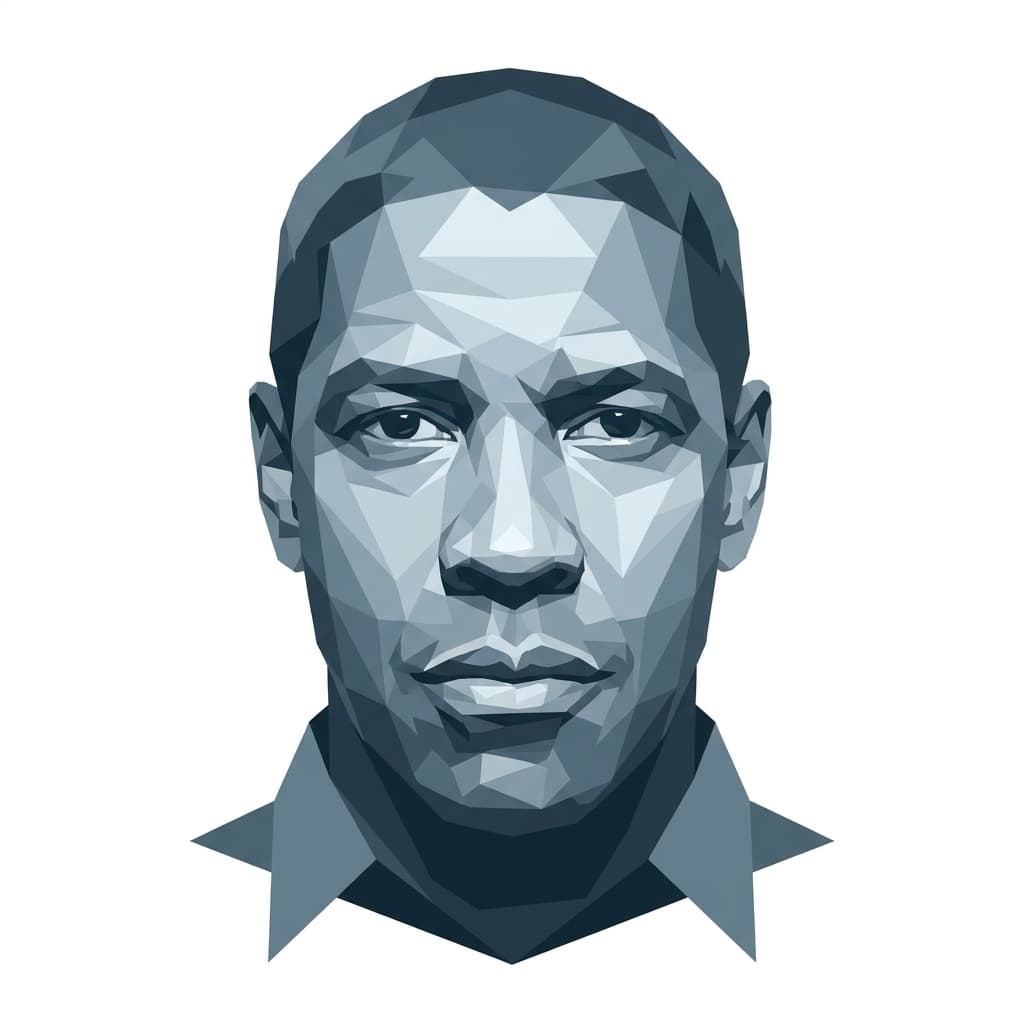
Denzel Washington
Two-time Oscar-winning actor and director known for moral gravity, discipline, and decades of leading-man roles.
Design
- Q18.5
- h17.5
- R14.5
- g38.1
- i39.1
- S28.2
- T43.3
- U54.3
- V56.1
- W44.1
- X56.1
- Y32.5
- Z29.2
Personality
- Q58.3
- h52.3
- R19.2
- g58.2
- i52.2
- S58.4
- T43.5
- U22.1
- V56.1
- W1.6
- X56.1
- Y50.2
- Z29.3
Denzel Washington is a Projector — built to see people clearly, steward energy rather than spray it, and lead through a perspective that's sharper than anyone else's in the room. The career bears this out. He's not a workaholic actor who takes everything offered; he picks roles carefully, disappears for stretches, and returns with performances that feel watched, considered, and inhabited from the inside out. The famous Washington stillness on camera — the long pause before the line lands — is the work of someone who reads a scene before he plays it.
Born in Mount Vernon and raised by a Pentecostal minister father and a beautician mother, he went through what his 3/5 profile all but guarantees: a stretch of trial and error before anything clicked. He started college pre-med, switched to pre-law, then journalism, before stumbling into theater at a summer camp where someone told him he should act. That pattern of learning by doing and then teaching what he learned became his whole approach — Fordham, then Lincoln Center's drama program, then years of stage work before Hollywood ever caught up.
His breakthrough as Private Trip in Glory — the role that won him his first Oscar — is a study in the kind of fight that has to mean something. The single tear he shed during the whipping scene was unscripted, unrepeatable, and entirely his. He's spoken about needing to find roles worth the struggle of inhabiting, turning down anything that felt like noise. Malcolm X, Rubin Carter, Frank Lucas, Alonzo Harris in Training Day — these are men he chose because they had something to wrestle with, and he brought the instinct for what's worth the investment to every yes.
The discipline is famous. He arrives on set with his lines memorized weeks early, doesn't drink during productions, and reads scripture before scenes. That's a quiet, fast knowing about people and material refined over decades — he can read a director, a co-star, or a screenplay in the first ten minutes and act accordingly. His producing and directing work (Antwone Fisher, The Great Debaters, Fences) reflects the steady drive to build things that outlast the moment, often platforming young Black actors he's spotted potential in long before the industry agreed.
Off-camera, he's protective of his marriage to Pauletta of more than forty years, his four children, and a small inner circle. He talks openly about faith and mentorship — Sidney Poitier called him, told him roles mattered, and Washington has passed that forward to Chadwick Boseman, Michael B. Jordan, and others with a clear sense of who deserves the care and who doesn't. He's not interested in being everywhere; he's interested in being right.
When he speaks publicly — commencement addresses, AFI tributes, the occasional interview — it lands because it's storytelling rooted in something actually lived, not platitude. Fall forward, he says. Put God first. Dreams without goals are just dreams. It's the 3/5 profile doing what it does best: turning the messiness of one life into something other people can use.