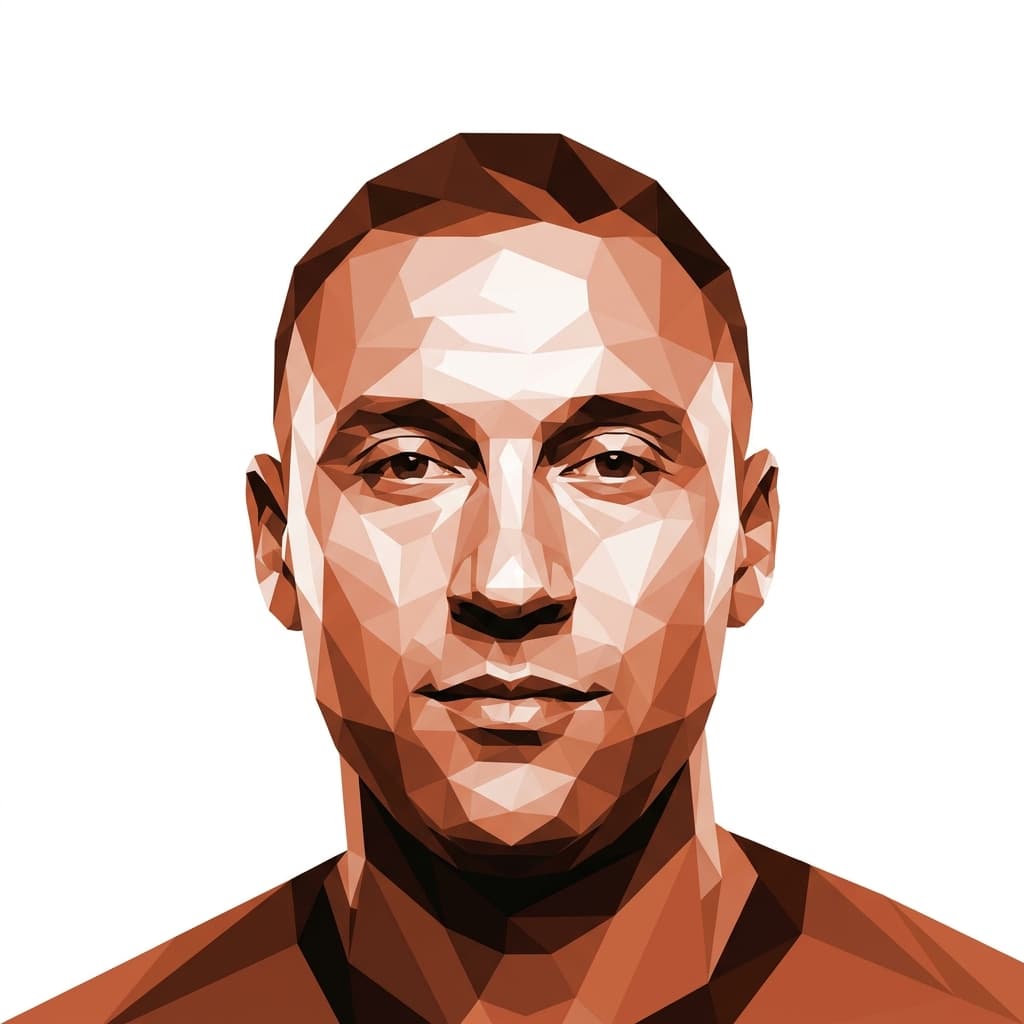
Derek Jeter
Hall of Fame Yankees shortstop and captain who defined a championship era in New York.
Design
- Q17.4
- h18.4
- R8.3
- g26.6
- i45.6
- S37.4
- T49.2
- U35.6
- V55.5
- W15.1
- X50.1
- Y9.5
- Z18.2
Personality
- Q52.2
- h58.2
- R18.3
- g26.3
- i45.3
- S39.2
- T20.1
- U33.4
- V22.1
- W52.5
- X32.4
- Y9.2
- Z18.1
Derek Jeter was a Generator — built with the kind of steady, day-in day-out stamina that turns a twenty-year career into a single, sustained act of mastery. From the moment the Yankees drafted him sixth overall in 1992, the trajectory was unbroken: shortstop in the Bronx, five rings, 3,465 hits, and a captaincy that he treated less like an honor than a job description. He didn't chase highlight reels. He chased the next ground ball.
The famous moments are mostly moments of presence. The Flip Play against Oakland in 2001, where he materialized in foul territory and shoveled the ball home, looked improvised because it was — a body responding before the mind could catch up. The dive into the stands against the Red Sox in 2004. The walk-off home run in his final Yankee Stadium at-bat. These weren't planned theater; they were the output of someone who waited for the play to come to him and then attacked it, over and over, for two decades.
Off the field, Jeter was famously hard to read. His 2/4 profile — the hermit who nonetheless lives inside a community — fit a man who threw legendary parties for teammates but kept his private life almost surgically sealed from the New York tabloids. He cultivated a small, fiercely loyal inner circle and let his instinct for who genuinely had his back do the gatekeeping. The endless dating-life headlines never produced a quote from him. He simply retreated when he needed to retreat and let the noise pass.
As a hitter and as a leader, his gift was a narrowness of attention that other players openly envied. Teammates described him stepping into the box in October as if the stadium had gone silent. He wasn't the most talented Yankee of his era — he'd be the first to say so — but he was the one who could hold focus when the pressure was at its highest. As captain, he policed the clubhouse with the same quiet eye for what wasn't working yet, pulling young players aside rather than calling anyone out in the press.
His Emotional Authority showed up most clearly in how he handled big decisions: the prolonged 2010 contract standoff with the Yankees, the timing of his retirement announcement, the years-long build to launching The Players' Tribune in 2014 and later buying into the Miami Marlins ownership group. None of it was impulsive. He sat with things. When he finally moved, he moved with the calm of someone who had already lived with the choice for months and trusted his read.
In retirement he's been the same man, just in a suit. He's spoken openly about wanting to build something that actually changes how athletes tell their own stories, and his Hall of Fame induction in 2020 — one vote shy of unanimous — landed with the understated grace that always defined him. Jeter never seemed to need the spotlight to validate the work. The work was the work. He showed up, did the job, and let the results speak.