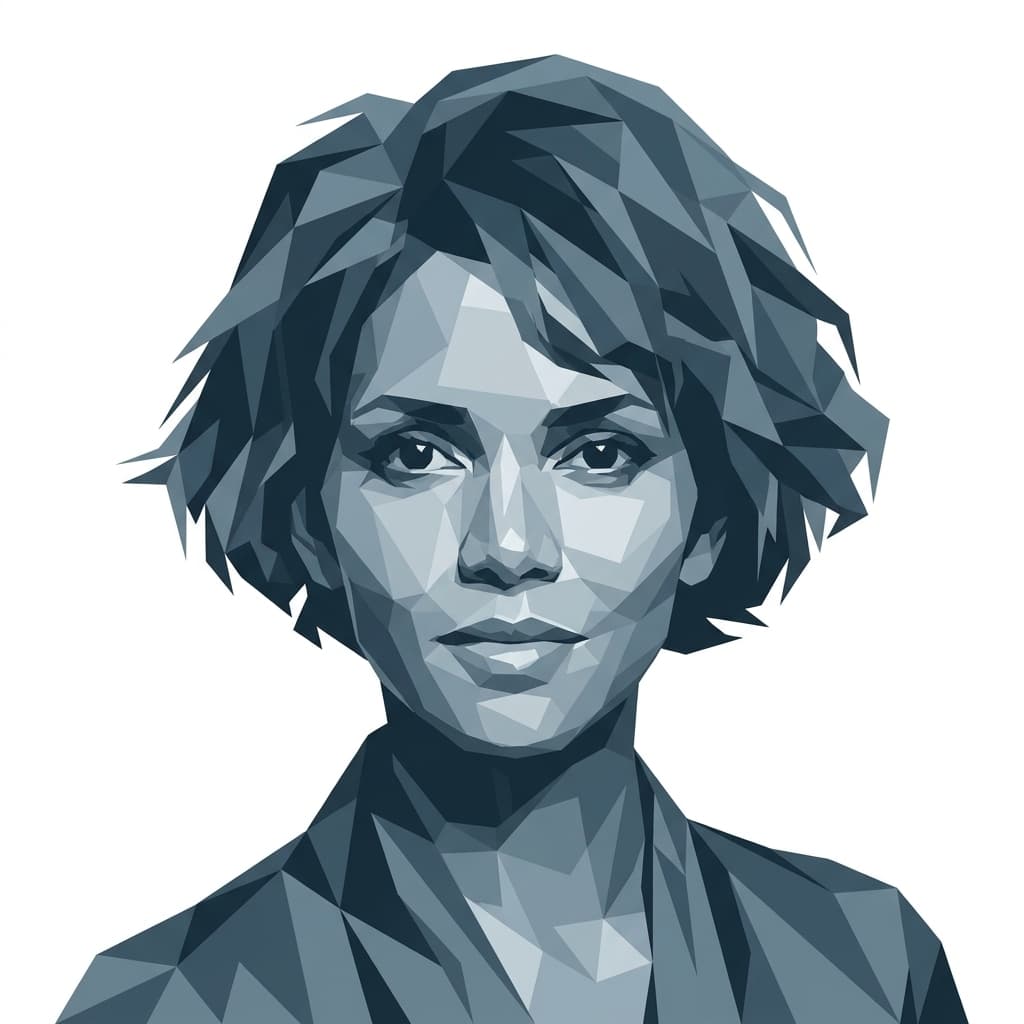
Halle Berry
Oscar-winning actress, former Miss USA runner-up, and the first Black woman to win Best Actress.
Design
- Q23.6
- h43.6
- R36.1
- g8.1
- i14.1
- S24.3
- T21.2
- U23.2
- V15.4
- W36.5
- X64.5
- Y43.2
- Z64.5
Personality
- Q4.4
- h49.4
- R31.2
- g23.3
- i43.3
- S31.2
- T56.4
- U62.3
- V62.2
- W25.1
- X47.2
- Y43.1
- Z47.1
Halle Berry is a Projector — built not to outwork the room but to be recognized by it, and her career is essentially a study in what happens when that recognition arrives in waves. She came up through pageantry (first runner-up at Miss USA 1986), modeled briefly in New York while sleeping in a homeless shelter, and then translated being seen into being cast. The early-90s break in Jungle Fever came because Spike Lee actually saw her — not the pageant version, but the unglamorous, drug-addicted Vivian she fought to play without a shower for ten days.
Her 4/6 profile — the role model who has to live through the mess first — reads almost too literally across her life. The earlier years were the experimentation phase: the modeling, the sitcoms (Living Dolls, Knots Landing), the very public marriages and divorces, the 2000 hit-and-run case, the depression she's openly described. By the time she stood on that Oscar stage in 2002 for Monster's Ball, she was visibly someone who had already been through it, speaking from lived experience rather than from having the answers. The tears weren't performance. They were the weight of a long initiation finally being witnessed.
That Oscar win — the first and still only Best Actress win by a Black woman — is the Gate 8 moment of her chart made flesh: drawing attention to something the industry had refused to see. She used the speech to name Dorothy Dandridge, Lena Horne, Diahann Carroll. It was a vision of where things were headed delivered to a room that had been invited to listen, and it lands differently now precisely because the door she expected to open behind her largely didn't. She has said so, plainly, more than once.
She works with the kind of certainty that comes from talking things through with the right people in the right rooms — a producer's instinct as much as an actor's. Bruised, her 2020 directorial debut, was a project she chased for years, eventually fighting to direct it herself and training in MMA on a body that had just turned fifty. The film is messy and uneven and exactly the kind of swing a Projector takes when they finally stop waiting for permission and decide to make themselves impossible to overlook. She's spoken about menopause, about her Type 1 diabetes, about the gap between the doors people think her Oscar opened and what actually followed — revolutionizing the conversation around what an aging actress is allowed to say out loud.
There's a restlessness to her choices that doesn't quite fit the prestige-actress mold: Catwoman, Cloud Atlas, John Wick: Chapter 3, Kidnap, a Bond girl, an MMA fighter, a slave, a stripper. A career built on radically different rhythms most actors would find exhausting, tested against a relentless need to understand why a part exists before saying yes. She makes the inconsistency itself the point — bringing back wisdom from the extremes for the rest of us to learn from.