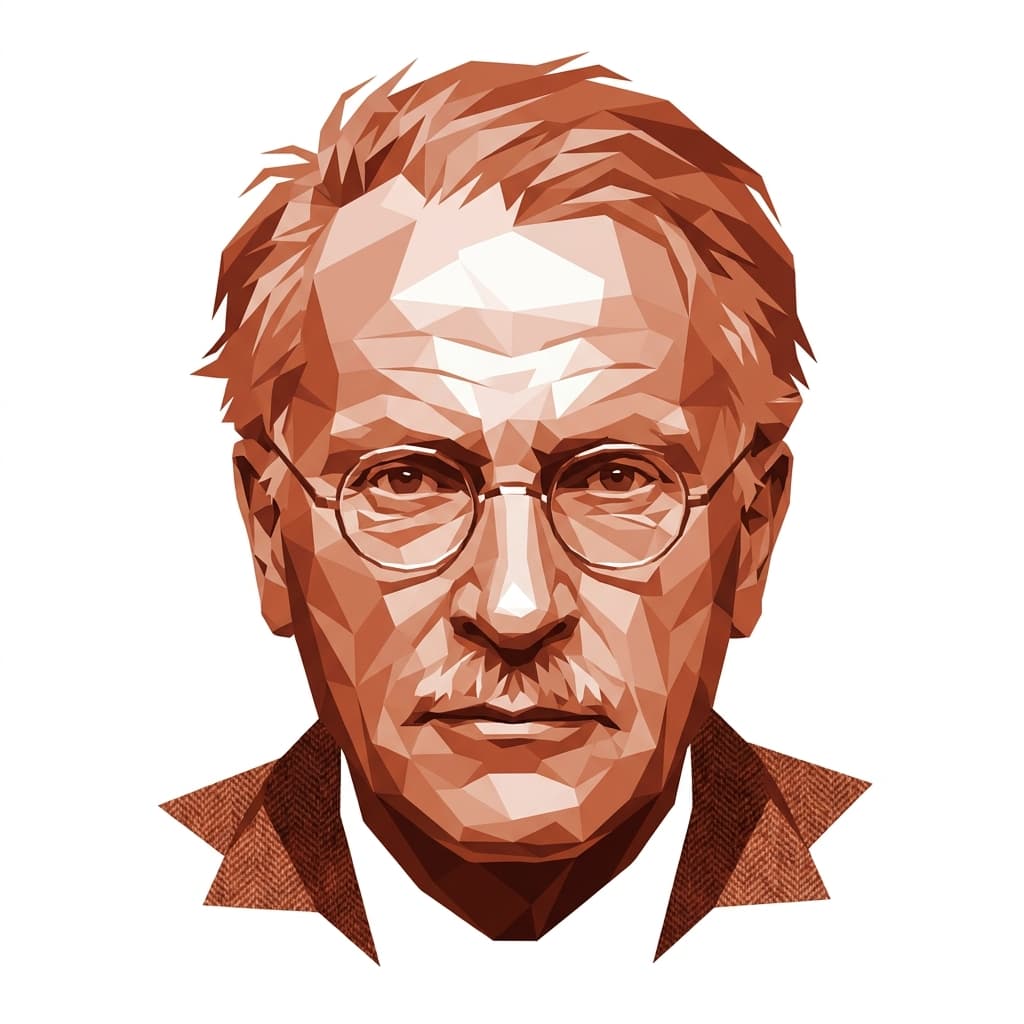
Swiss psychiatrist and founder of analytical psychology, pioneer of the collective unconscious and archetypes.
Design
- Q27.4
- h28.4
- R10.6
- g51.3
- i57.3
- S42.1
- T36.5
- U10.4
- V32.6
- W30.1
- X33.4
- Y3.5
- Z23.4
Personality
- Q31.2
- h41.2
- R2.3
- g21.2
- i48.2
- S39.5
- T53.3
- U26.5
- V32.4
- W49.6
- X7.2
- Y27.2
- Z23.5
Carl Jung was a Generator — built with the deep, sustained energy to dive into a single field and master it across a lifetime, which is exactly what he did with the human psyche. From his early days at the Burghölzli psychiatric hospital in Zürich under Eugen Bleuler, where he ran word-association experiments on schizophrenic patients, Jung showed the kind of stamina that let him sit with the same patient, the same symbol, the same dream image for years. His was not a flashy intellect that burned out; it was a slow, masterful burrowing into depth, refining the clinical method until it became a new way of seeing the mind.
His 2/4 profile — the hermit-opportunist — explains the strange double rhythm of his life. He needed long stretches of retreat to process what he had absorbed, which is why he built the stone tower at Bollingen on the lake, cooking over a fire, carving inscriptions, chopping wood, refusing electricity. And yet his career was made through relationships: Freud anointed him crown prince of psychoanalysis at a dinner in Vienna, Toni Wolff became his intellectual companion, and the wealthy women of the Psychological Club in Zürich gave his work its first home. Opportunities found him through his circle, not through cold pitching.
After his break with Freud in 1913, Jung entered what he called his confrontation with the unconscious — six years of visions, voices, and figures so intense he feared he was going mad. He sat with the imagery rather than running from it, painting and writing what would become the Red Book. This was Emotional Authority at full extension: he refused to publish for decades, letting the material settle through wave after wave until clarity emerged. The book appeared in 2009, forty-eight years after his death. He had waited out his own emotional weather until the truth was cool and clear.
His Strategy was to respond to what life put in front of him — a patient's dream, an alchemical manuscript a friend mailed him, a chance reading of the I Ching — and follow the gut tug into years of study. This is how he ended up an expert on Gnosticism, medieval alchemy, Eastern religion, UFOs, and mandalas. He didn't plan the curriculum; the symbols arrived and he answered. His drive to bring order to the chaos of the unconscious produced concepts — archetype, shadow, anima, individuation — that reorganized how the twentieth century talked about the inner life.
Jung had a gift for translating intricate inner experience into language readers could actually use, which is why bookstores still stock him. He carried a quiet revolutionary insistence on the individual's path against the collective, arguing that mass movements crushed the soul. And he held a near-mystical trust in the symbolic direction his life was pointing him, engraving Vocatus atque non vocatus, Deus aderit — Called or not called, God will be present — above his door.
By the end he was the reluctant guide a generation kept asking to lead them, receiving pilgrims at Küsnacht, fielding letters from strangers, and writing Memories, Dreams, Reflections only because Aniela Jaffé sat down with him and drew the stories out.
Sources: biography · birth data
What do you and Carl Jung have in common?
Enter your birth details to find out