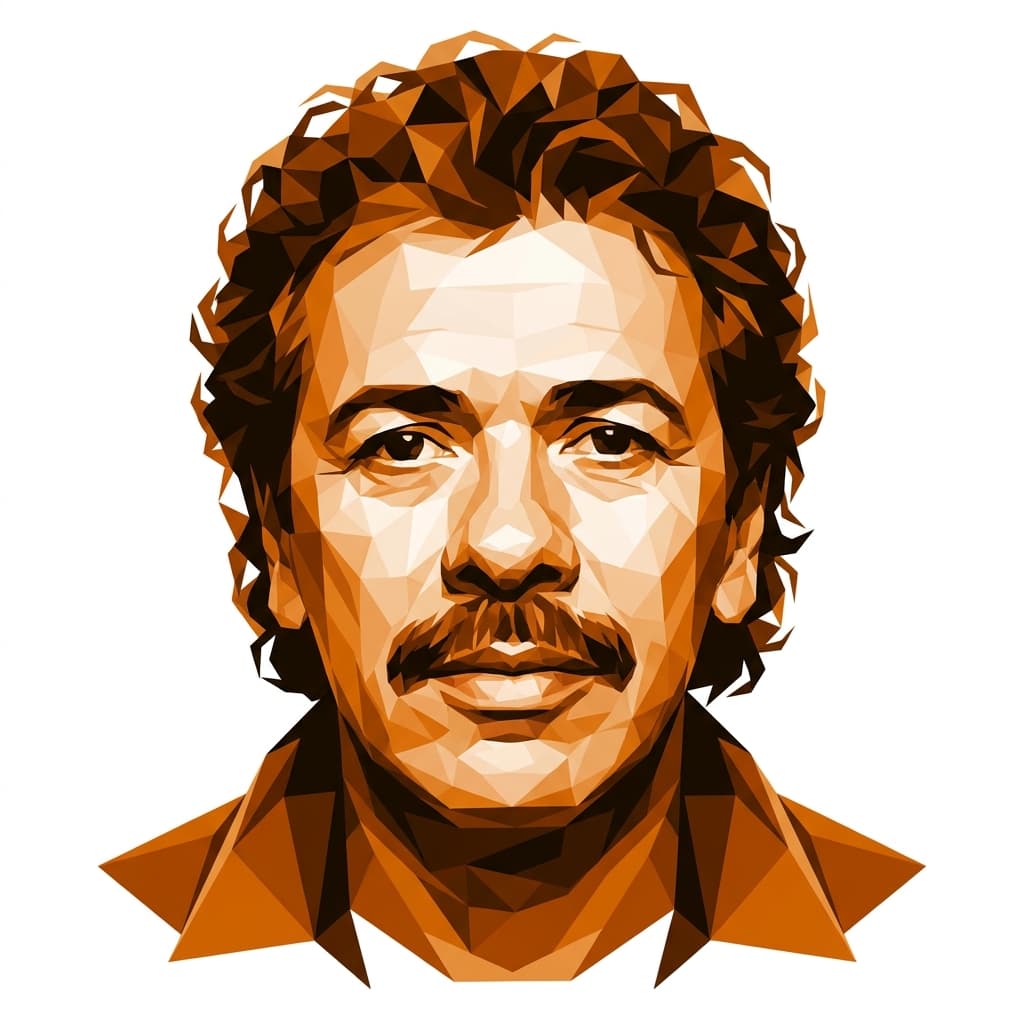
Mexican-American guitarist whose blues-rock-Latin fusion turned Woodstock and Supernatural into generational touchstones.
Design
- Q3.3
- h50.3
- R17.6
- g20.3
- i34.3
- S17.2
- T36.1
- U17.3
- V14.2
- W31.1
- X45.3
- Y18.6
- Z33.4
Personality
- Q56.1
- h60.1
- R29.3
- g20.1
- i34.1
- S53.4
- T39.6
- U35.3
- V1.5
- W33.3
- X12.2
- Y18.5
- Z33.6
Carlos Santana is a Manifesting Generator — wired to chase several musical languages at once and weld them together, which is exactly the shape of his career. Blues, salsa, jazz, African rhythm, devotional music, pop — he never picked one, and the refusal to pick became the sound. By the time his band hit Woodstock in 1969, he was twenty-two, terrified, and reportedly tripping on mescaline, and he still delivered an eleven-minute "Soul Sacrifice" that announced an entire genre. That kind of arrival doesn't happen without raw vitality routed through purpose.
He grew up in Autlán de Navarro and then Tijuana, the son of a mariachi violinist who taught him violin before guitar took over. The move to San Francisco in his teens dropped him into the Fillmore scene exactly when it was combusting, and he responded to what was already happening in the room rather than trying to invent a scene of his own — soaking up B.B. King and Tito Puente and John Lee Hooker, then finding a fresh way to braid them together that nobody had quite heard. His 1/3 profile — investigator who learns by doing — shows up in the way he studied his heroes obsessively and then tested everything on a bandstand until something broke open.
The first Santana band was a working democracy that didn't survive his appetite. He kept dismantling the lineup, kept breaking the structure that had just started working, and kept chasing the next sound before the last one had cooled. Caravanserai in 1972 was the pivot most fans didn't want — a jazz-fusion record made on the heels of multi-platinum success, the gut overruling the market. Around the same time he became a disciple of Sri Chinmoy, took the name Devadip, and spent a decade making music that frustrated commercial expectations while following an inner instruction he couldn't fully explain.
His guitar tone is its own argument. That long, vocal, vibrato-heavy single-note line — borrowed from Gábor Szabó and Bola Sete and then made entirely his own — is a voice waiting for exactly the right moment to land. Listen to "Europa" or "Samba Pa Ti" and the notes feel chosen one at a time, sustained until they mean something. He has said in interviews that he hears angels and that the guitar is a way of transmitting feeling more than information — pure Carlos, half mystic, half blues player.
The 1999 Supernatural comeback — Clive Davis pairing him with Rob Thomas, Lauryn Hill, Wyclef, Everlast — was a textbook responding to an invitation he didn't initiate. He was fifty-two, decades past his commercial peak, and the record sold thirty million copies and won nine Grammys. Since then he has used the platform to keep funding causes and educating audiences about where the music came from, running the Milagro Foundation for kids and refusing to let the Latin roots of American rock get quietly erased. He still tours, still chases the tone, still says yes to collaborations most legends would have aged out of.
Sources: biography · birth data
What do you and Carlos Santana have in common?
Enter your birth details to find out