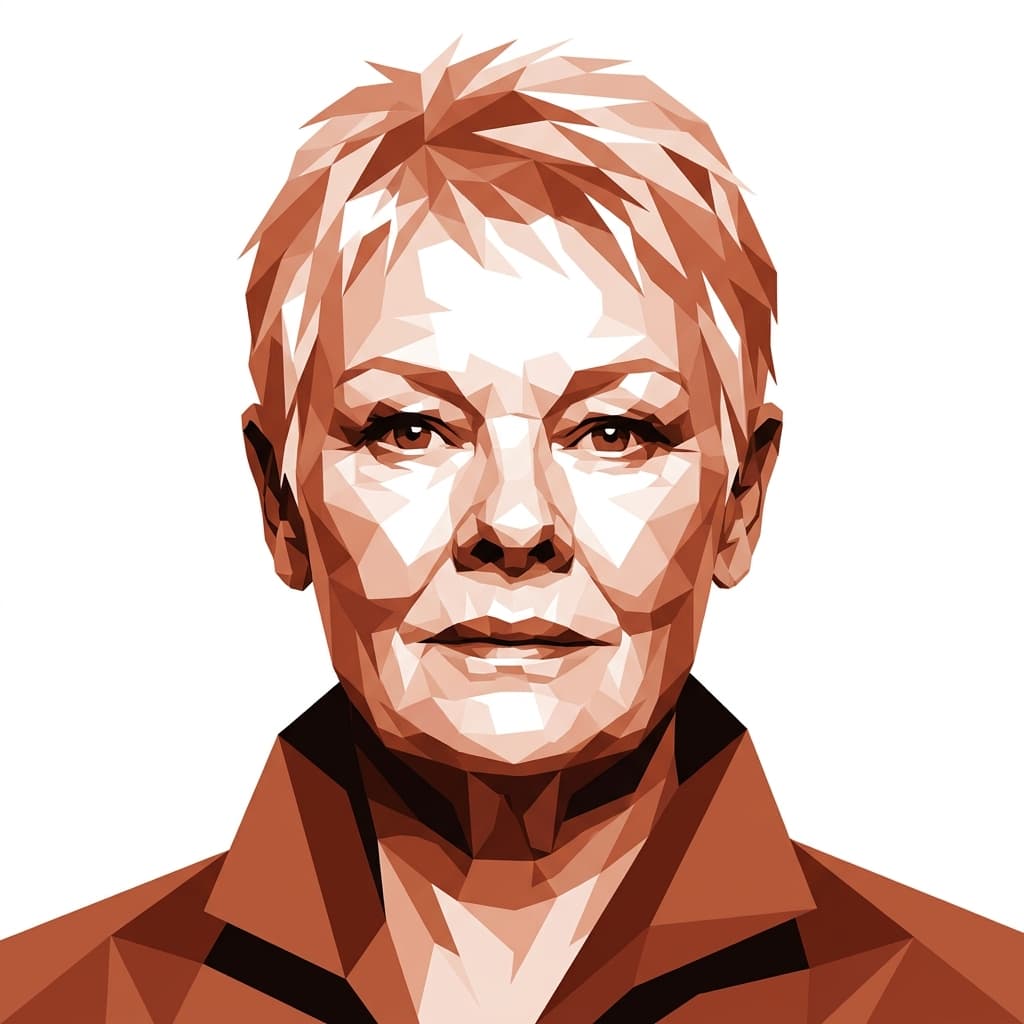
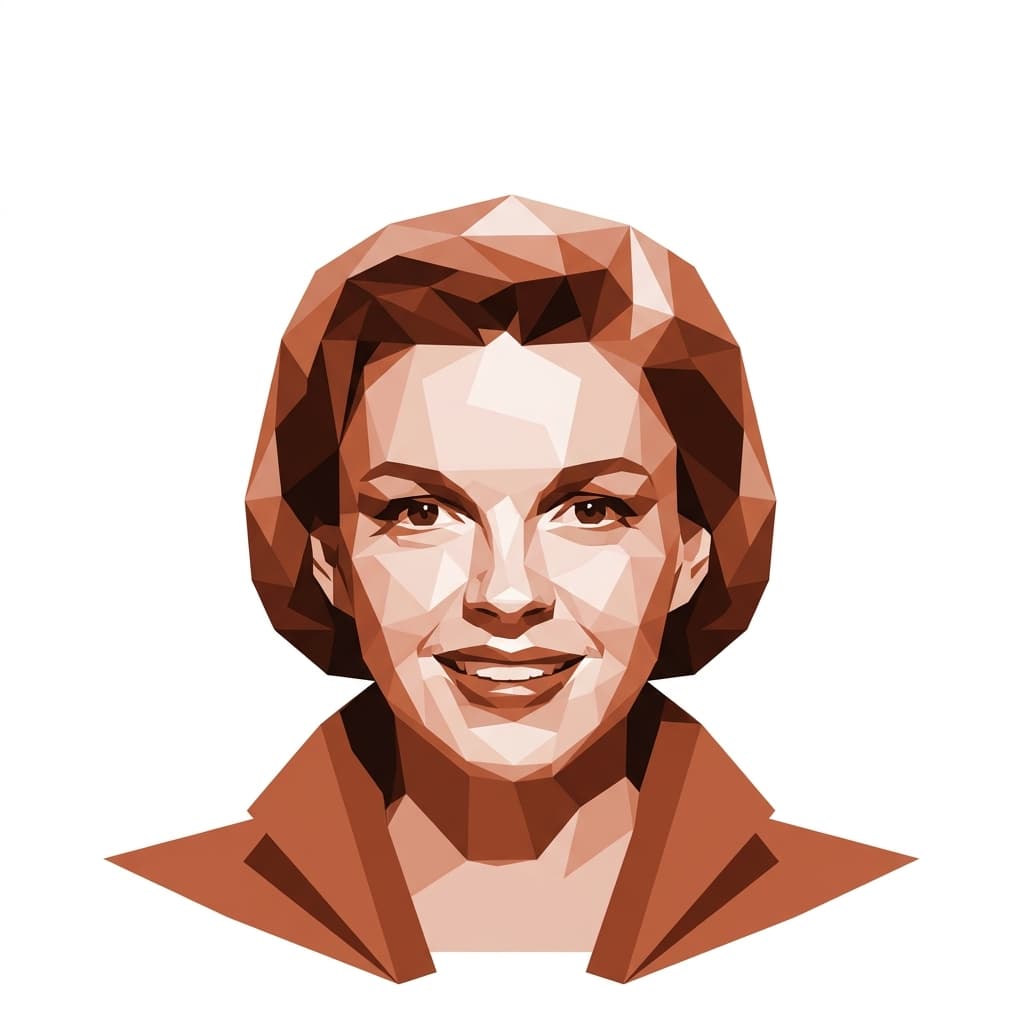
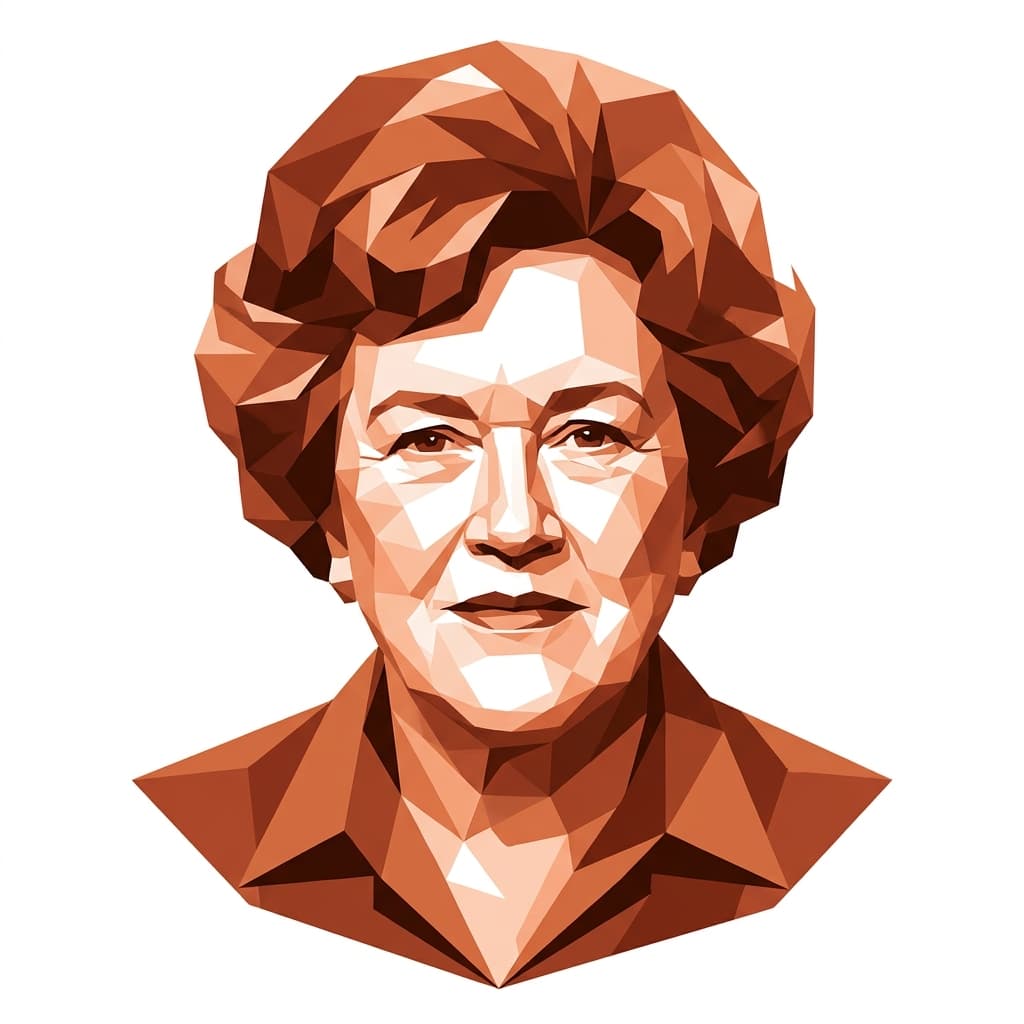
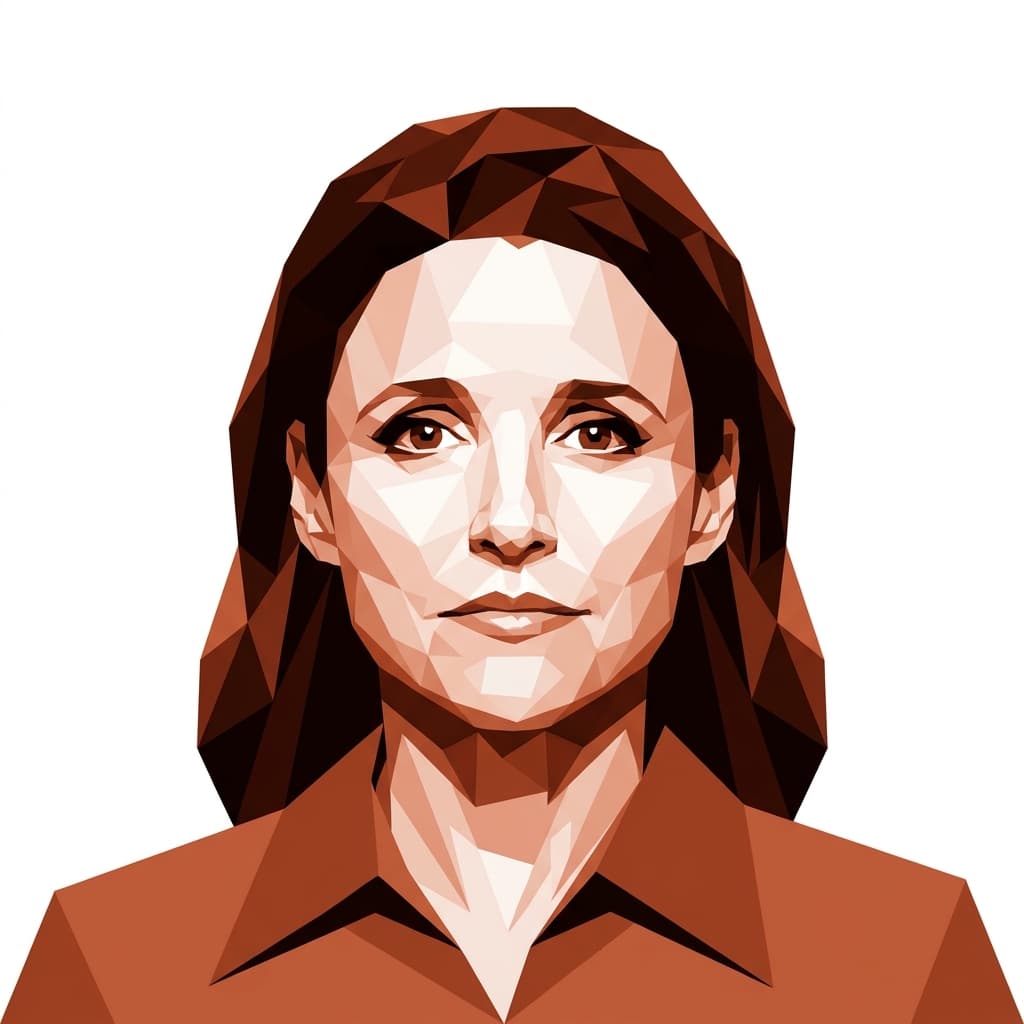
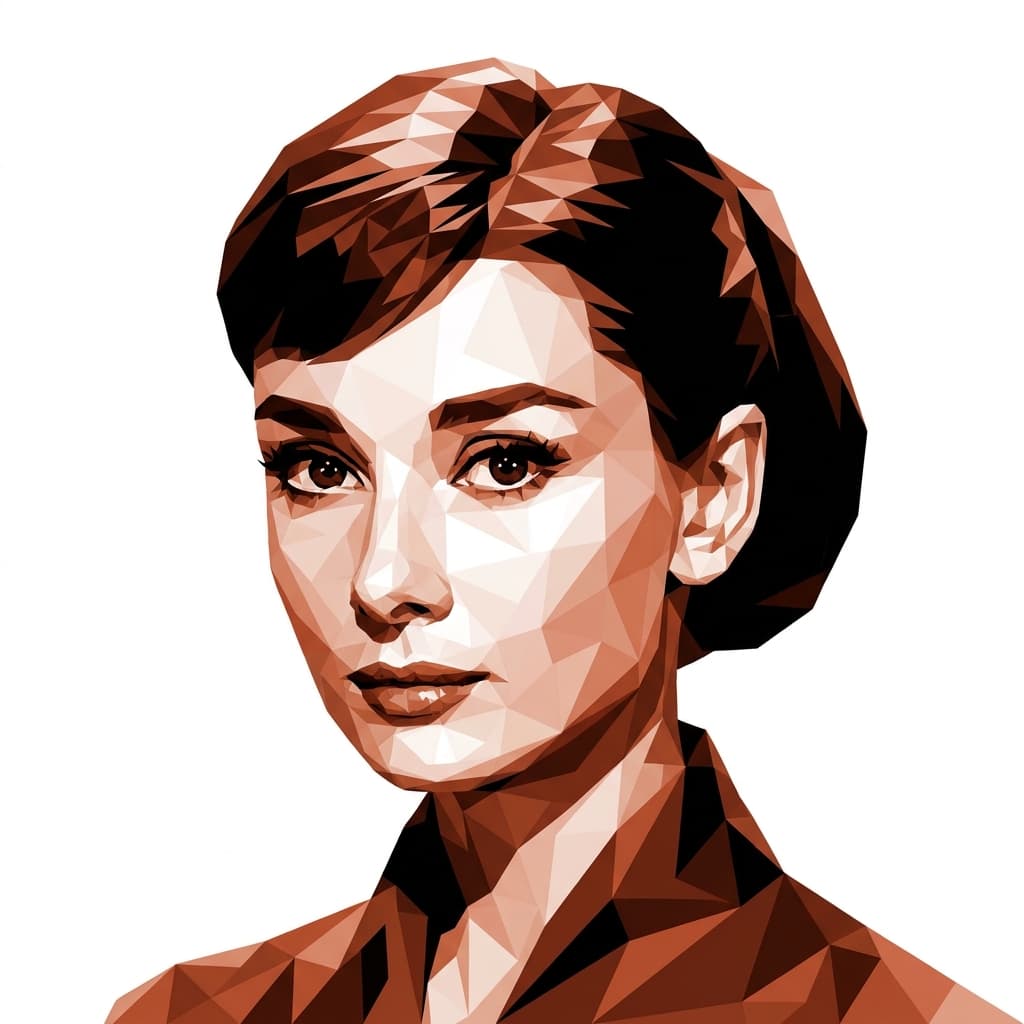
Actress and humanitarian whose luminous screen presence and later UNICEF work defined mid-century grace.
Design
- Q13.2
- h7.2
- R5.5
- g8.3
- i14.3
- S49.3
- T25.4
- U45.5
- V27.2
- W11.6
- X17.1
- Y59.1
- Z53.2
Personality
- Q24.6
- h44.6
- R37.1
- g23.3
- i43.3
- S20.1
- T42.3
- U62.5
- V23.3
- W10.2
- X17.6
- Y29.5
- Z53.2
Audrey Hepburn was a Generator — built for sustained, joyful work rather than restless self-promotion — and the rhythm of her career shows it: a girl who trained as a ballerina through wartime hunger, then quietly channeled that same disciplined stamina into film sets, marriage, motherhood, and eventually the field work that consumed her final years. She didn't chase Hollywood. Hollywood arrived, and she waited for it to land in front of her before saying yes.
The story of her being cast in Gigi on Broadway is often told as a fairy tale, but it was really her chart at work. Colette spotted her in a Monte Carlo hotel lobby and pointed. William Wyler cast her in Roman Holiday off a screen test where the camera kept rolling after she thought it stopped, catching her being herself. She was recognized before she pushed, which is exactly how her 6/2 profile — the role model who needs to be seen without asking — tends to work. She went home to Switzerland between films. She guarded her privacy fiercely. The withdrawal wasn't shyness; it was fuel.
On set she was famously exact. She knew what she'd wear, how she'd move, which take felt right in her body — a full-bodied yes she didn't try to explain. Givenchy became her lifelong collaborator not because a stylist arranged it but because she walked into his atelier in 1953 and something clicked instantly. Her collaboration with him ran forty years on the quiet loyalty of a bond that didn't need renegotiating. She kept the same rituals — the same daily walks, the same simple pasta, the same early bedtimes — and treated them as non-negotiable structure that held her together.
Her performances carried an unusual moral weight for such light material. As Holly Golightly, as Princess Ann, as Eliza Doolittle, she brought a wide-eyed openness that survived everything life had done to her — the wartime malnutrition in occupied Holland, the father who abandoned the family, two difficult marriages. She refused to play cynicism. Directors noticed she was a natural tastemaker with an eye for what would matter; the little black dress, the ballet flat, the gamine crop all became cultural grammar because she wore them first and meant them.
Then, at fifty-nine, she walked away from acting almost entirely and gave the rest of her energy to UNICEF. She traveled to Ethiopia, Somalia, Sudan, Bangladesh, Vietnam — over fifty missions in five years. She held children who were dying and did not perform composure for the cameras; she reported back with the plainspoken clarity of someone translating what she'd witnessed into language donors and governments couldn't dismiss. Her testimony before Congress and the World Health Organization was specific, numeric, quietly devastating. Friends said the work seemed to complete something for her — a cycle closing exactly as it was meant to.
She died of appendiceal cancer in 1993 at sixty-three, in the Swiss farmhouse she'd kept for decades. Her sons remembered her last months as unhurried. She had done what she came to do, and she had taken very good care of the people she'd chosen to take care of.
Sources: biography · birth data
What do you and Audrey Hepburn have in common?
Enter your birth details to find out