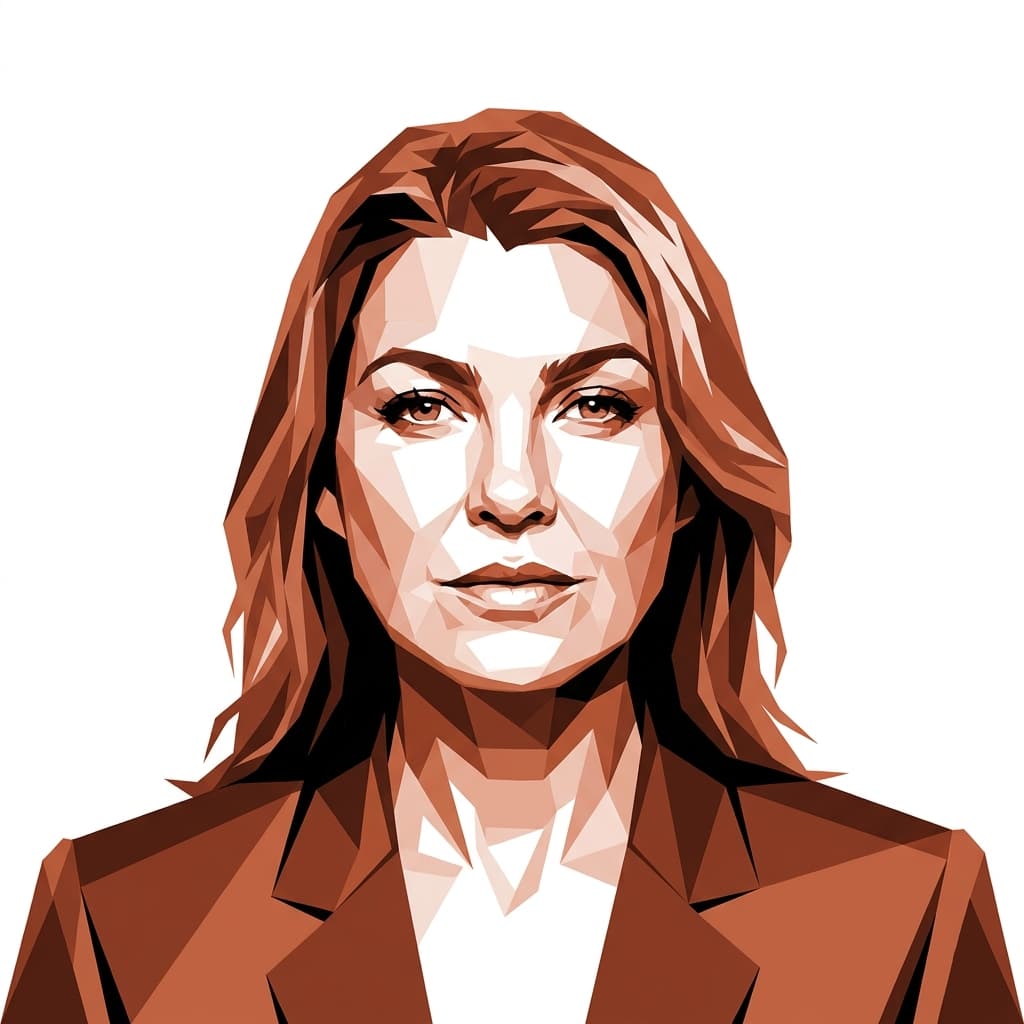
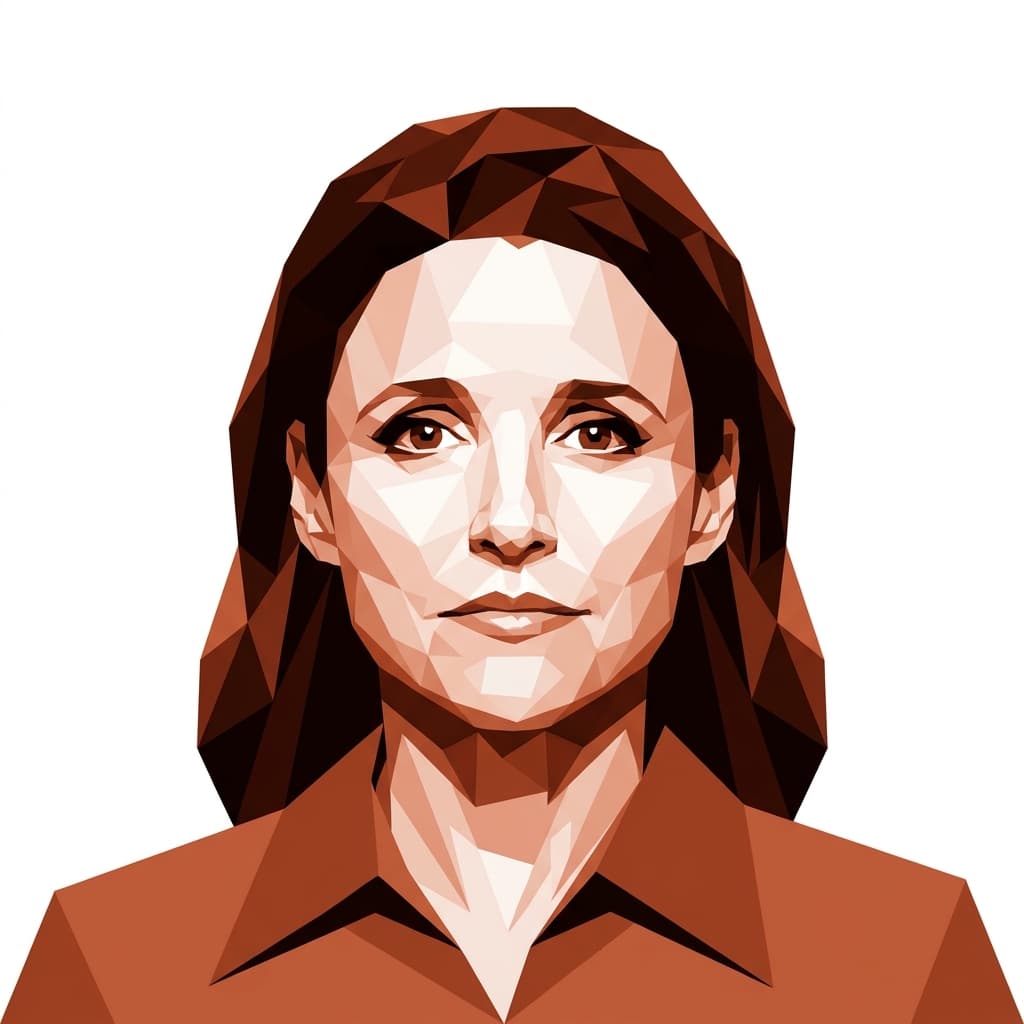
American actress and comedian known for Seinfeld, Veep, and a record-breaking Emmy run.
Design
- Q32.6
- h42.6
- R18.6
- g64.4
- i63.4
- S43.2
- T14.3
- U39.4
- V10.1
- W38.4
- X29.1
- Y44.1
- Z40.2
Personality
- Q61.4
- h62.4
- R5.4
- g40.2
- i37.2
- S60.3
- T37.5
- U15.6
- V54.3
- W61.1
- X29.1
- Y44.4
- Z40.3
Julia Louis-Dreyfus is a Generator — built for the long, satisfying haul of mastering a craft, and her four-decade run through sketch, sitcom, and prestige comedy is exactly that kind of stamina story. She joined Saturday Night Live at 21, the youngest woman cast at the time, and then spent the rest of her career proving that the people who looked past her there were wrong. She didn't break out by chasing roles; she kept showing up and saying yes to what her gut lit up around, and the right scripts kept finding her.
The Seinfeld years made her famous, but Veep is where her 4/6 profile — the role-model investigator who builds wisdom through lived experience before stepping into authority — actually clicked into place. By the time she played Selina Meyer, she had two decades of comic experimentation behind her: the failed pilots, the awkward post-Seinfeld stretch, the early SNL years she's openly called miserable. All of that was the training ground that taught her exactly what she now knows. She became, for a generation of comic actors, the example of how to do this work.
What makes her performances land is the precision underneath the chaos. Selina Meyer's profanity is symphonic because Louis-Dreyfus tracks every consonant; Elaine Benes's dancing is funny because the timing is forensic. There's a draftsman's eye for which exact word will detonate the joke, paired with a reflexive instinct for what isn't working in a script and needs surgery. Veep writers have described her notes as ruthless and almost always right. She's tenacious about the material in a way that reads as warrior-level when something matters to her, and indifferent when it doesn't.
Her 2017 breast cancer diagnosis, announced the day after her record-breaking sixth consecutive Emmy for Veep, became one of the more public chapters of a famously private life. She treated it the way she treats work: with the kind of follow-through that finishes what it starts, documented it lightly on social media, returned to set, and finished the show. She has since spoken about how the experience clarified what she actually wants to spend her energy on — a very Emotional Authority kind of recalibration, the clarity that arrives only after the wave passes.
Off-camera she's been married to Brad Hall since 1987, which in Hollywood arithmetic is roughly forever, and her loyalty to long collaborators — the Veep writers' room, her Seinfeld co-stars, her producing partners — has the quality of someone who treats community as the actual point, not the byproduct. Her podcast Wiser Than Me, launched in her sixties, is essentially this instinct made explicit: older women interviewed by someone genuinely interested in what they had to learn the hard way.
She's now in the part of her career her profile was always pointing toward — the elder, the example, the one younger comics study. She seems comfortable there. After a long stretch of being underestimated, she's apparently decided to stop performing for anyone's expectations and just be herself out loud.
Sources: biography · birth data
What do you and Julia Louis-Dreyfus have in common?
Enter your birth details to find out