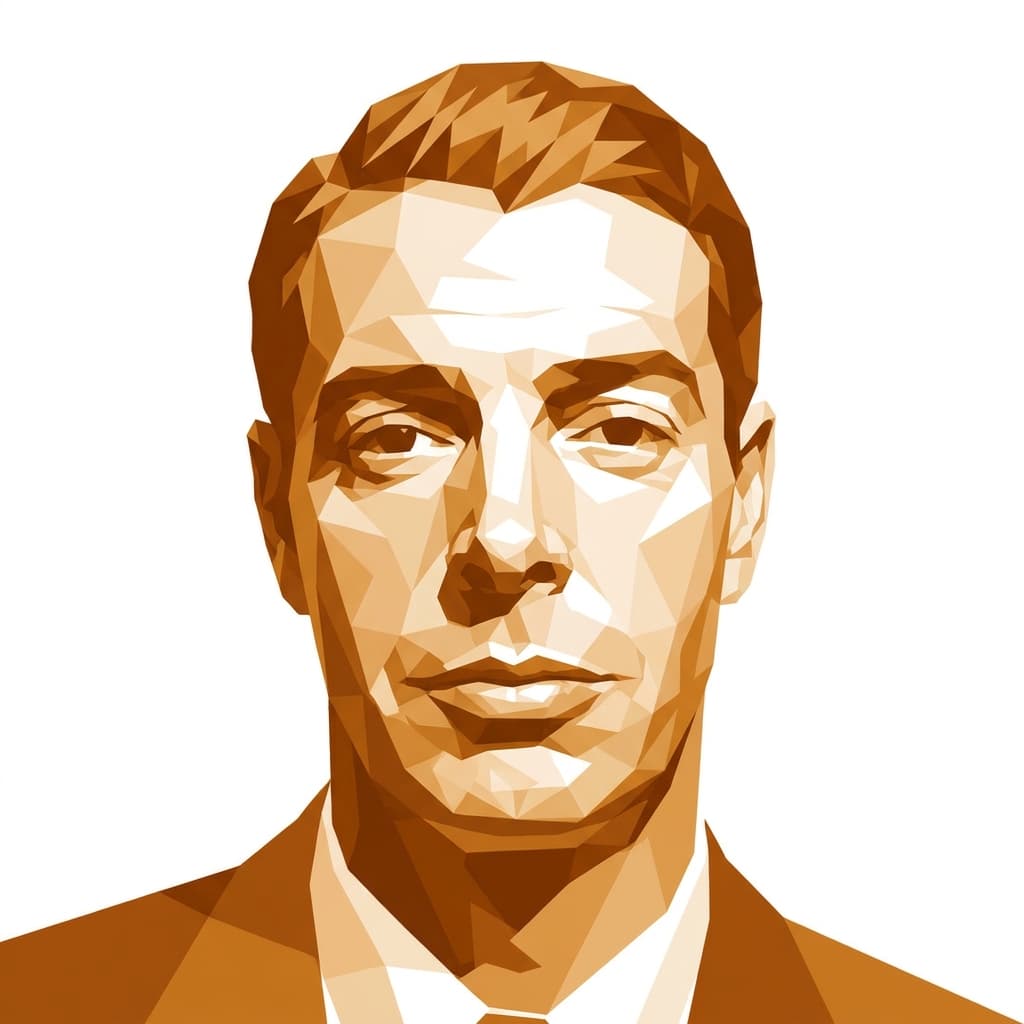
American modernist poet, editor, and provocateur who reshaped 20th-century literature and courted political disgrace.
Design
- Q33.3
- h19.3
- R51.1
- g6.5
- i36.5
- S40.1
- T59.4
- U15.3
- V40.3
- W15.6
- X46.3
- Y8.1
- Z20.4
Personality
- Q44.1
- h24.1
- R33.4
- g6.3
- i36.3
- S1.4
- T26.5
- U29.2
- V6.5
- W52.5
- X18.2
- Y8.1
- Z20.3
Ezra Pound was a Manifesting Generator — wired to chase several passions at once and drag whole literary movements along in his wake. From the moment he left Idaho for London in 1908, he was translating troubadour poetry, promoting unknown writers, editing little magazines, feuding with academics, and inventing schools of poetry more or less simultaneously. He rarely finished one project before starting three more, and the ones he did finish — Cathay, Hugh Selwyn Mauberley, the endless Cantos — kept rewriting themselves for decades.
His genius as an editor came from an instinct for spotting what deserved attention before anyone else saw it. He cut The Waste Land down to the poem we now read, pushed Joyce's Ulysses into print, championed Frost, H.D., Hemingway, and Wyndham Lewis, and treated the discovery of new talent as a personal vocation. Pound was also a natural persuader who could market anything he believed in — coining "Imagism," organizing "Vorticism," writing manifestos, hustling publishers, and generally acting as an unpaid one-man agency for modernism itself.
Underneath the impresario ran a 1/3 profile, the investigator who learns by digging to the bottom of things and then bruising himself against the world. He taught himself Provençal, Anglo-Saxon, Chinese, and economics with the same obsessive appetite, building frameworks that arrived after long stretches of solitary contemplation. The Cantos is essentially a lifetime of trial-and-error made into a poem — allusive, unfinished, brilliant in patches, catastrophically wrong in others. He wrote to friends that he was learning by "making it new," which was also a confession that he'd get plenty of it wrong first.
His emotional authority was the wave he never learned to ride. Pound made decisions inside the storm rather than after it passed, and the results reshaped his life — his infatuation with Mussolini, the wartime broadcasts from Rome that got him indicted for treason, the collapse into the cage at Pisa. There was a taste for extremes and edges most people would refuse in him, and a compulsion to shock the culture into new patterns that at his best produced Cathay and at his worst produced antisemitic radio rants. A critic's eye that couldn't stop naming what he thought was broken was aimed, disastrously, at usury, banking, and eventually whole populations.
After twelve years in St. Elizabeths psychiatric hospital in Washington, Pound was released in 1958 and returned to Italy, where he fell into a long, near-total silence. He told Allen Ginsberg his work had been "stupidity and ignorance all the way through" and that his worst mistake was "that stupid, suburban prejudice of antisemitism." It was, finally, the retreat and reflection he had always needed and rarely taken — an old man in Venice, waiting instead of initiating for perhaps the first time in his life. He died there in 1972, leaving behind a body of work that literature still can't quite hold or discard.
Sources: biography · birth data
What do you and Ezra Pound have in common?
Enter your birth details to find out