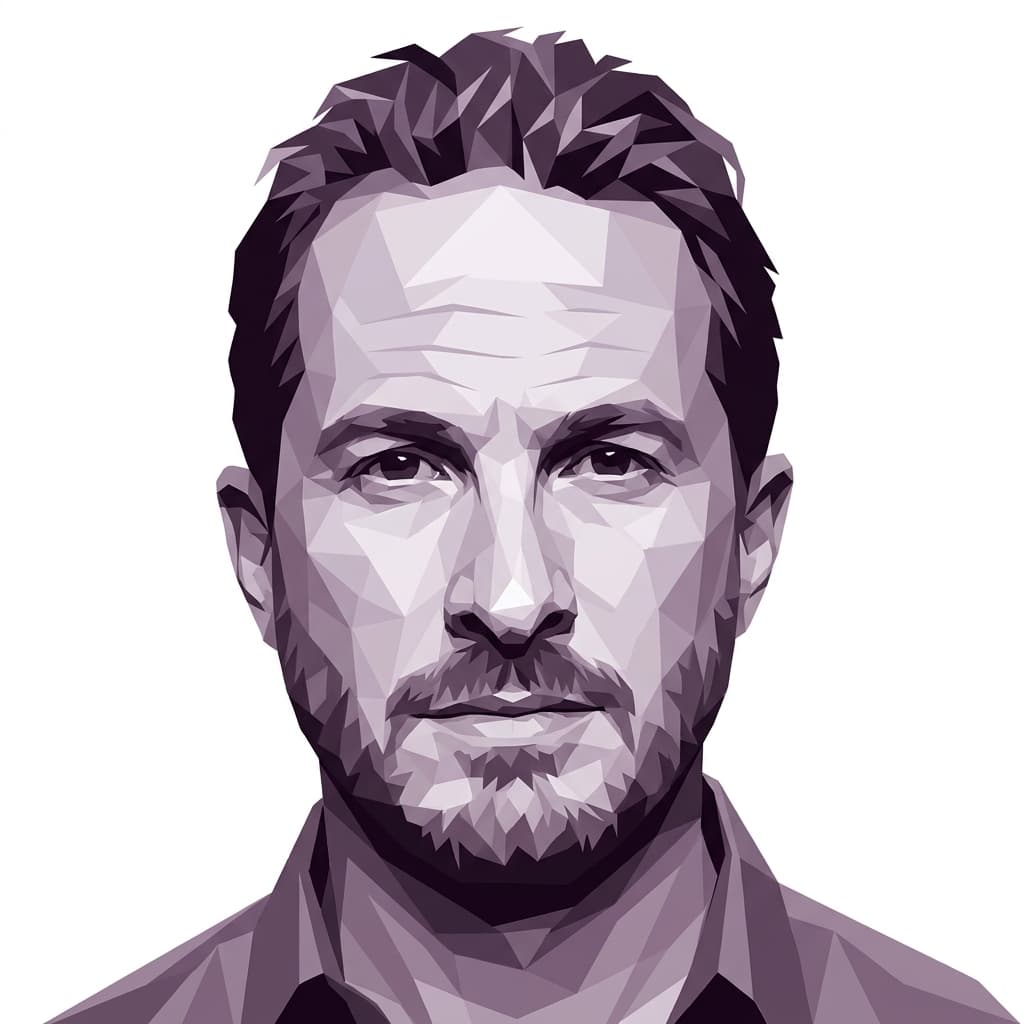
American stand-up comedian and social critic whose language-obsessed routines redefined comedy over five decades.
Design
- Q49.5
- h4.5
- R37.5
- g26.6
- i45.6
- S60.3
- T21.1
- U43.1
- V54.2
- W22.5
- X27.5
- Y47.2
- Z56.1
Personality
- Q23.3
- h43.3
- R45.5
- g5.5
- i35.5
- S23.1
- T51.5
- U34.1
- V60.1
- W25.4
- X24.3
- Y64.6
- Z56.1
George Carlin was a Manifestor — wired to disrupt, provoke, and drag audiences somewhere they hadn't planned on going — and he spent fifty years doing exactly that. He came up in the 1960s as a clean-cut, suit-and-tie comic doing Ed Sullivan spots and airline-food bits, then, sometime around 1970, blew the whole thing up. He grew the beard, ditched the tie, walked away from the Vegas rooms that were paying him, and started telling the truth as he saw it. Manifestors don't ask permission before they change lanes; Carlin just informed the industry by walking off the stage and rebuilding from scratch.
The reinvention was pure 3/5 profile — the experimenter who fails publicly, learns from the wreckage, then returns as the practical prophet everyone quotes. He got fired from Vegas. He got arrested in Milwaukee for "Seven Words You Can Never Say on Television." The 1978 Supreme Court case FCC v. Pacifica Foundation was, in essence, a legal opinion about a Carlin bit. He kept the receipts and turned each disaster into material, which is how a 3/5 profile mind builds authority — through trial, error, and the wisdom that only lived experience earns.
His whole comedic engine ran on language. Carlin kept notebooks and file cabinets full of phrases, euphemisms, and contradictions he'd overheard, and he'd sit alone for hours until a routine cohered into something distilled down to its essence. "Shell shock" became "battle fatigue" became "operational exhaustion" became "post-traumatic stress disorder" — that famous bit is a single Carlin insight, a knowing that arrived whole and then demanded articulation. He was a natural systems-noticer with a mind that couldn't rest until the pattern clicked into place, and he trusted the slow, nonlinear way clarity actually arrives.
Underneath the wordplay was a moralist. Carlin's later HBO specials — Jammin' in New York, You Are All Diseased, Life Is Worth Losing — were sermons from a man who genuinely believed the culture was rotting, and he named the rot with the specificity of someone who'd decided which fights were his. He wasn't performing outrage; he was reporting it. He was also, characteristically for a Manifestor, exhausted. He had two major heart attacks, a cocaine problem in the seventies, and the long grief of losing his wife Brenda in 1997. He kept working anyway, pushing his drive past what his body could sustain.
Carlin was famously prickly about commitments — he'd only do a project when his heart was fully in it, and he was blunt about turning down what didn't interest him. He hosted the first-ever Saturday Night Live in 1975, voiced Fillmore in Cars, narrated Thomas & Friends for American kids, and taped fourteen HBO specials, but the through-line was always the solo set — one man, one mic, shocking audiences out of the comfortable phrases they'd stopped hearing. He died in 2008, days after taping his final special. The last bit he wrote was about the afterlife. He didn't believe in one, but he had jokes ready in case something surprising showed up.
Sources: biography · birth data
What do you and George Carlin have in common?
Enter your birth details to find out