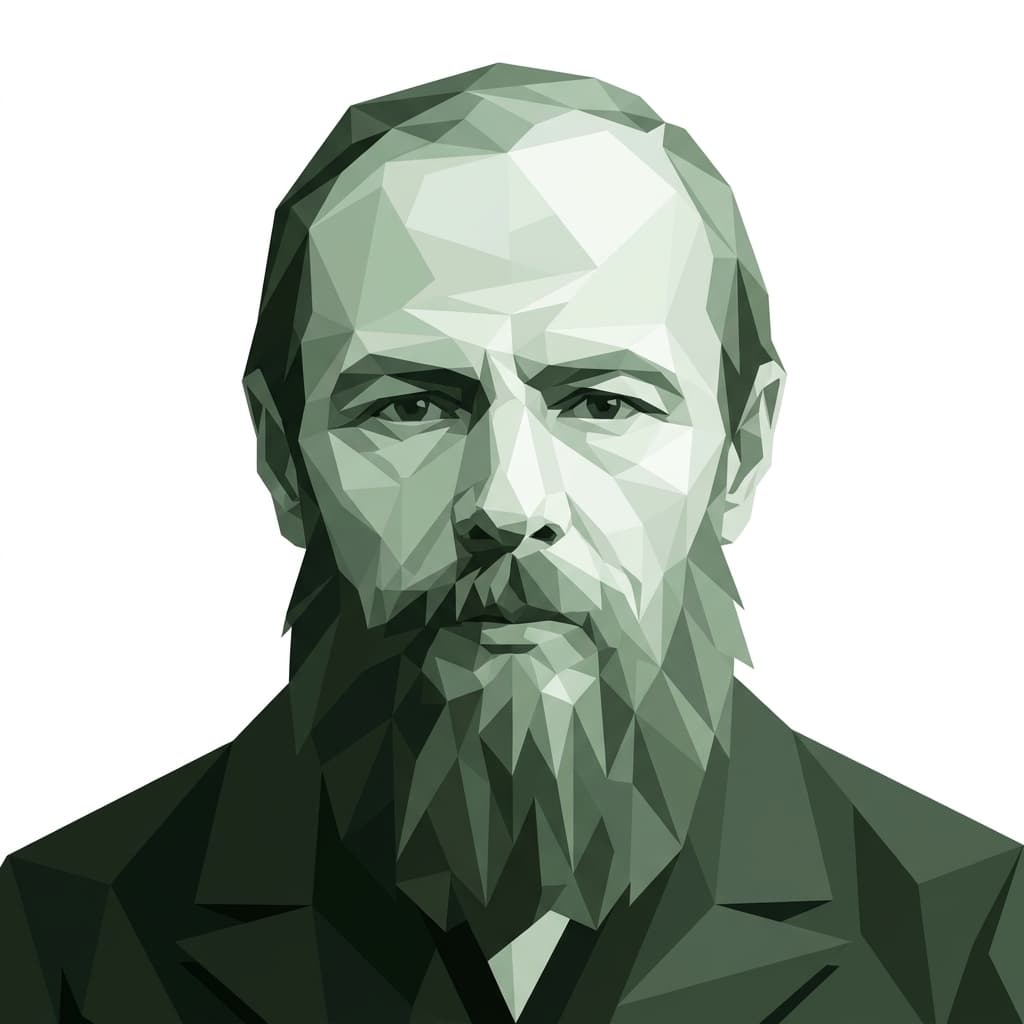
American novelist, essayist, and political provocateur known for acid wit and patrician contrarianism.
Design
- Q39.3
- h38.3
- R5.6
- g31.3
- i41.3
- S56.2
- T56.5
- U31.4
- V54.4
- W44.1
- X36.4
- Y4.3
- Z39.4
Personality
- Q48.1
- h21.1
- R3.2
- g31.1
- i41.1
- S18.4
- T43.2
- U46.6
- V38.5
- W44.6
- X36.1
- Y4.6
- Z39.6
None
Gore Vidal was a Reflector — the rarest configuration in Human Design, wired to mirror the health of a room, a culture, an empire — and he built an entire literary career out of holding the American republic up to the light and telling it, dryly, what he saw. Born at West Point to a family threaded through with senators and aviation pioneers, he grew up reading aloud to his blind grandfather T.P. Gore on the Senate floor, an early apprenticeship in pulling truth out of a room by provoking it.
He published his first novel, Williwaw, at nineteen, then detonated his own early career at twenty-three with The City and the Pillar, whose matter-of-fact homosexuality got him blacklisted by The New York Times. A 1/3 profile learns by investigation and by crashing into things; Vidal did both, retreating to write mysteries under a pseudonym and scripts for MGM before returning to serious fiction with the historical novels — Julian, Burr, Lincoln — that were built on a foundation of genuine, obsessive research. He never stopped studying the American past for the patterns that predicted its future.
The essays were where his Reflector gift became a public art form. From his perch at La Rondinaia above Ravello, he watched the United States from a distance and mailed back diagnoses — of empire, of the "United States of Amnesia," of the national-security state — with a critic's instinct for exactly what was broken and why. He ran for Congress in 1960 and for Senate in 1982, lost both, and seemed to prefer it that way: the Lunar Authority rhythm of slow, ambient assessment suited a man who needed months, not minutes, to render a verdict.
Television gave him a stage for his more theatrical energies. His 1968 debates with William F. Buckley Jr. — culminating in the famous "crypto-Nazi" exchange — showed a man who would pick a fight when the fight was worth something and who understood that a well-timed story lands harder than any argument. His feuds with Mailer, Capote, and Updike were partly sport and partly the restlessness of someone always imagining the next confrontation. He collected enemies the way other writers collect awards, and seemed happiest when ordering the chaos of American public life into a sentence someone would remember.
His Strategy of waiting a lunar cycle mapped onto a life spent in carefully curated rooms — the villa in Italy, the house in the Hollywood Hills, the salons where Paul Newman and Princess Margaret and Christopher Hitchens circulated. Vidal amplified whatever environment he was in, and he chose environments where his particular frequency would be invited to hold forth on where the country was heading. He preferred to speak when asked, which was, given his fame, most of the time.
He died in 2012 in the Hollywood Hills, having outlived most of his rivals and having produced, across sixty years, a body of work whose central subject was America itself — seen from the outside, described from within, and never quite forgiven.
Sources: biography · birth data

What do you and Gore Vidal have in common?
Enter your birth details to find out