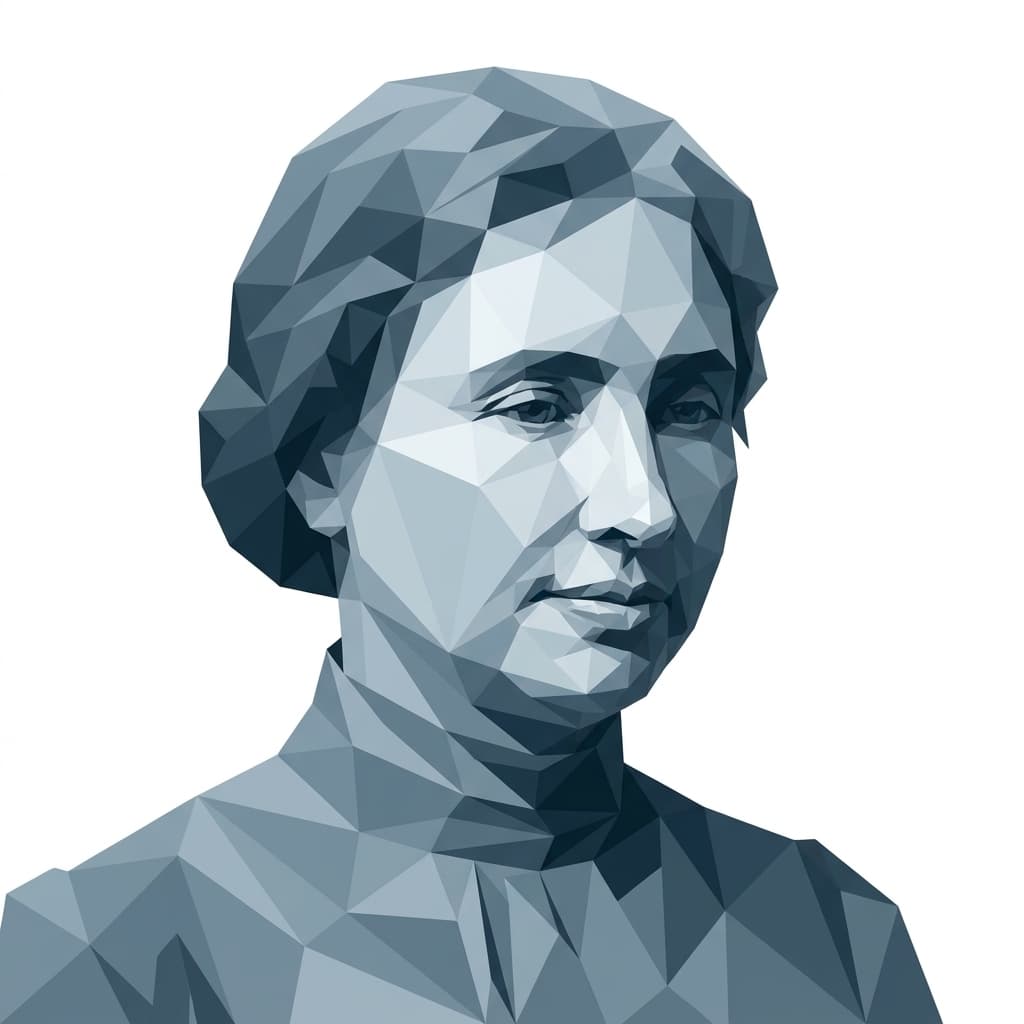
American film actor known for moral gravitas, star of To Kill a Mockingbird and Roman Holiday.
Design
- Q54.3
- h53.3
- R37.6
- g19.1
- i33.1
- S60.6
- T13.4
- U29.6
- V36.1
- W39.4
- X13.1
- Y56.6
- Z15.4
Personality
- Q51.1
- h57.1
- R23.3
- g41.4
- i31.4
- S17.3
- T8.6
- U33.5
- V21.4
- W39.1
- X13.6
- Y56.4
- Z15.4
Gregory Peck was a Projector — not the tireless workhorse Hollywood usually rewarded, but a quieter kind of leading man whose authority came from perspective rather than performance. He stood six-foot-three, moved without hurry, and became famous for playing men whose decency had weight. Directors said he could hold a scene by doing almost nothing. That stillness wasn't a technique. It was a temperament.
Born in La Jolla in 1916, he was shuttled between his divorced parents and a grandmother, then sent to a Catholic military school at ten. He studied pre-med at Berkeley before an English professor pulled him into student theater, and the pull was total. He rowed on the crew, walked everywhere, and eventually took the train east with almost no money to study at the Neighborhood Playhouse in New York. This was the 1/3 profile at work — the investigator who needed a foundation of real training, and the experimenter willing to fail his way toward what fit. A back injury during dance class (not, as studio publicity later insisted, a wartime wound) kept him out of the military and free to work when Broadway leads suddenly opened up.
Four of his first five films earned him Oscar nominations. He arrived in Hollywood already recognized, which is exactly how his kind of career is meant to begin — not by hustling, but by being seen. He refused long-term studio contracts when everyone else signed them, insisting on picking his own projects one at a time. He talked decisions through endlessly with his agent, his wife Veronique, and trusted friends, finding clarity by hearing himself speak it aloud rather than by taking anyone's advice. When something felt right in his own voice, he committed. When it didn't, no amount of money moved him.
The role that defined him was Atticus Finch in To Kill a Mockingbird (1962), and it defined him because it wasn't a stretch. He carried the quiet insistence on doing the decent thing into every part of his life — presiding over the Academy during the blacklist's aftermath, chairing the American Cancer Society, campaigning against the Vietnam War, refusing to name names when asked. Nixon put him on the enemies list. He took that as confirmation. His screen presence had the gravity of someone who says only what needs saying, and audiences read it, correctly, as continuous with the man.
He was a producer as well as a star, and ran his own projects with quiet, autonomous control — developing The Big Country, Pork Chop Hill, and Cape Fear through his own company when studios wouldn't. Between films he retreated to Europe for long stretches with Veronique and their children, taking the space to process before returning. He lost his eldest son Jonathan to suicide in 1975 and rarely spoke of it publicly, absorbing the grief without performing it.
In later years he toured a one-man show of stories from his life, weaving anecdotes into something people leaned forward to hear. He was in his eighties, unhurried, still recognizable at a glance. He died in 2003 in Los Angeles, holding Veronique's hand, having built a life shaped almost entirely around loyalty to the people who valued him.
Sources: biography · birth data

What do you and Gregory Peck have in common?
Enter your birth details to find out