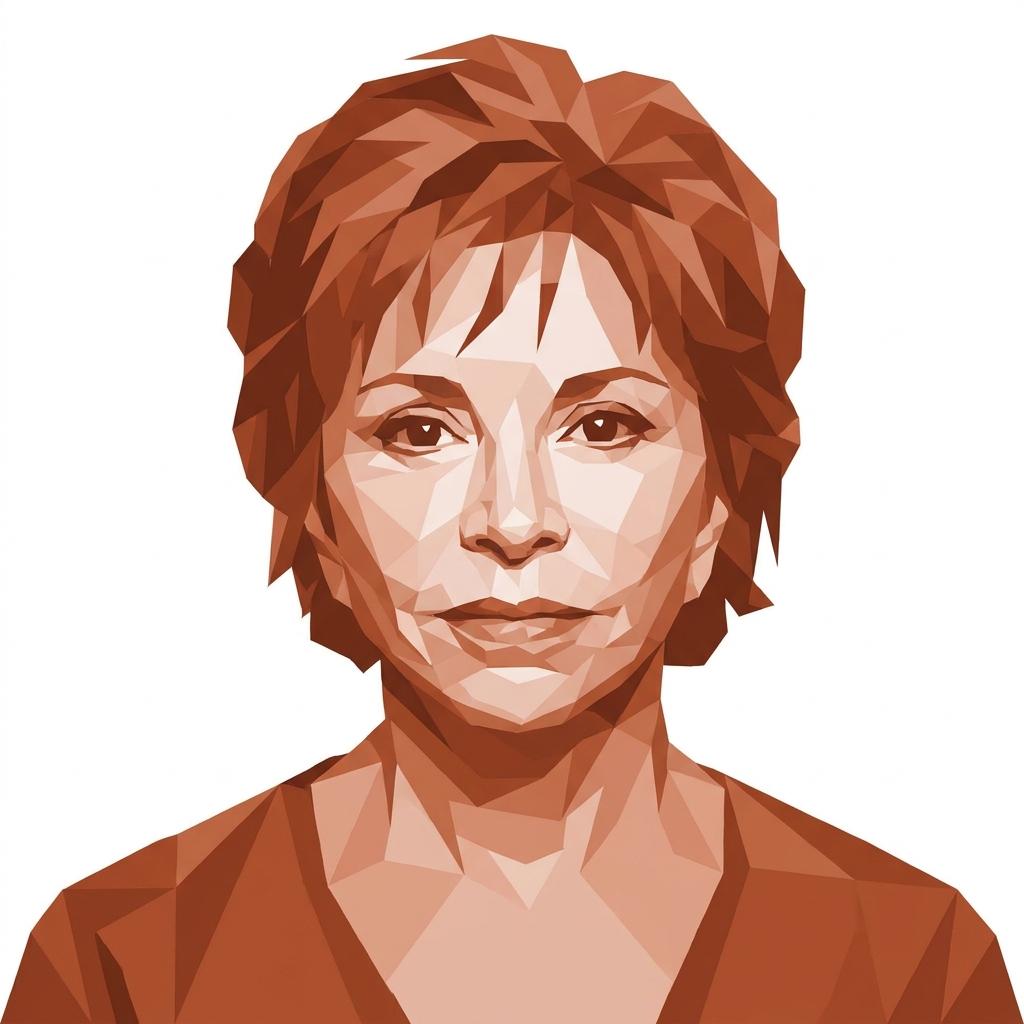
Chilean-American novelist who turned exile, grief, and family memory into bestselling magical-realist fiction.
Design
- Q24.5
- h44.5
- R9.4
- g64.1
- i63.1
- S8.2
- T36.5
- U52.1
- V45.5
- W8.6
- X8.6
- Y6.6
- Z31.2
Personality
- Q33.3
- h19.3
- R42.6
- g59.5
- i55.5
- S33.3
- T39.4
- U59.1
- V39.3
- W16.5
- X20.5
- Y6.6
- Z31.4
Isabel Allende is a Generator — a writer whose decades-long output comes not from forcing a career but from showing up, day after day, to the thing that consistently lights her up. She famously begins every new book on January 8th, the date she started her first novel, The House of the Spirits, as a letter to her dying grandfather in 1981. That ritual is pure Generator: a body that knows what satisfies it and returns to the well on schedule, trusting the work to come when she sits down and waits for something to pull her in.
The House of the Spirits itself was the archetypal 3/5 profile accident — she wasn't trying to write a novel, she was trying to say goodbye. The letter grew into 500 pages; publishers in Venezuela turned it down; a Spanish agent eventually said yes. The pattern of her career has been exactly this: experiments that look like failures until they don't, and then the wisdom gets packaged into something the wider world leans in to receive. She has been candid, in interviews and in her memoirs, about learning the hard way and telling the story afterward, which is why her nonfiction — Paula, The Sum of Our Days — reads less like reflection than like someone handing you a map drawn in her own blood.
Her decisions have never been quick. She left Chile in 1975, more than a year after the coup that killed her cousin Salvador Allende, only when the danger to her own family became undeniable. She married her second husband, the California lawyer Willie Gordon, after a long courtship that she describes as her sitting with the feeling for months. This is the slow, wave-riding way of choosing that only settles when the emotional weather clears. The same patience shows up in her prose, which seems to wait for the right image to arrive rather than hunting it down.
The engine underneath all of it is grief and the willingness to go into it. Her daughter Paula died in 1992 after a year in a coma, and Allende wrote the book about her while sitting at the bedside. Few writers have made a whole body of work out of surrendering to emotional intensity the way she has. Her novels orbit women who provoke the truth out of the men and regimes around them, and her sentences carry the particular fullness of someone who refuses to look away from feeling. The Isabel Allende Foundation, which she started in Paula's name, channels this into protection for women and girls — a practical, resource-managing leadership that insists wealth is meant to circulate.
She is also, famously, a woman who loves bonding. Three marriages, enormous extended family, friends she cooks for constantly; her work is full of characters who can't survive without the people they love, and she has said in interviews that intimacy is the real subject under every plot. At eighty-plus, still writing a book a year, still falling in love, she is a living demonstration of what a Generator looks like when she has spent a lifetime using up her energy on exactly the things that satisfy her — and lets the rest go.
Sources: biography · birth data
What do you and Isabel Allende have in common?
Enter your birth details to find out