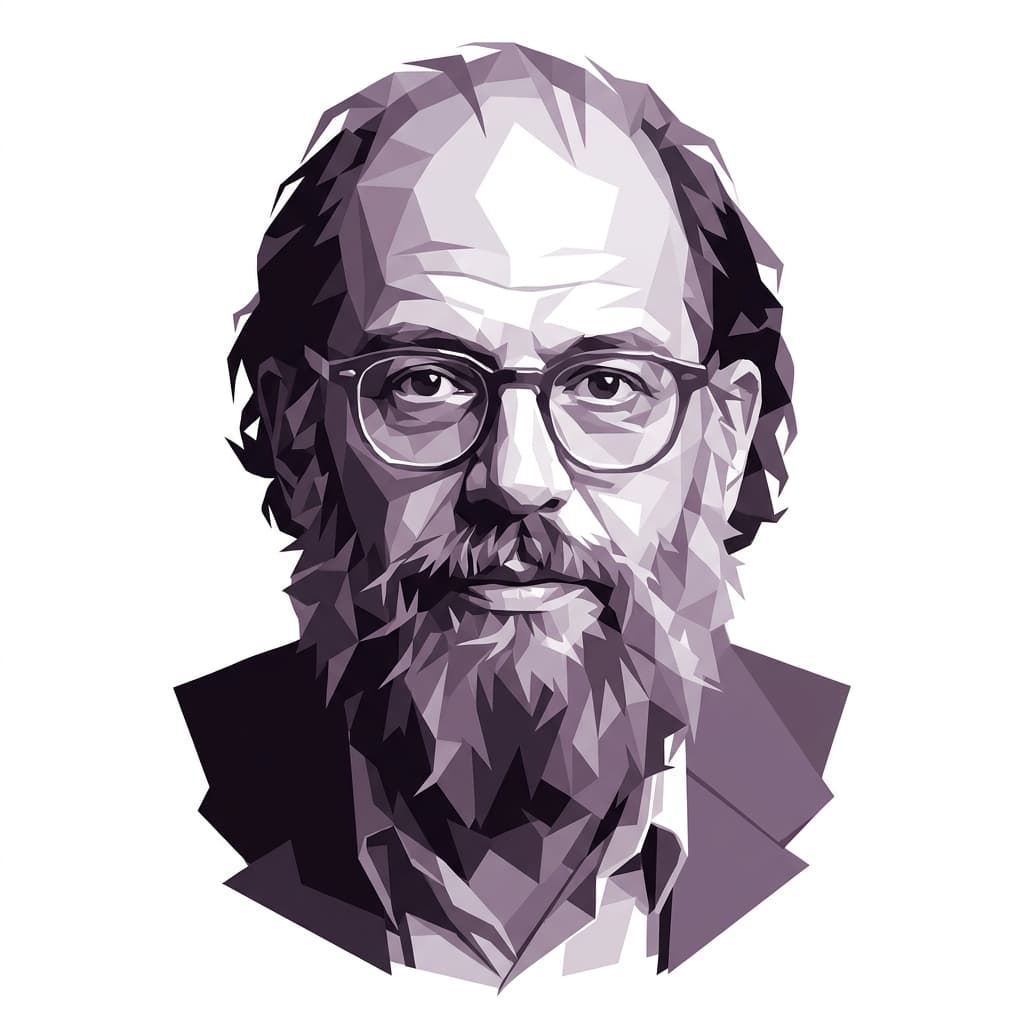
American comedian, filmmaker, and telethon host who reinvented physical comedy and directed his own films.
Design
- Q11.6
- h12.6
- R49.4
- g62.6
- i61.6
- S9.6
- T19.6
- U43.6
- V61.6
- W43.3
- X22.6
- Y29.1
- Z39.5
Personality
- Q36.3
- h6.3
- R3.5
- g62.3
- i61.3
- S21.4
- T13.3
- U61.5
- V13.3
- W14.2
- X36.3
- Y4.4
- Z39.4
Jerry Lewis was a Manifestor — wired to start things nobody had asked for, on his own terms, without waiting for permission from studios, partners, or the culture around him. He barreled into vaudeville as a teenager doing a record-pantomime act, met Dean Martin in 1946, and within a year the two of them had rewritten what a nightclub act could be: a crooner and a screaming id, improvising over each other until audiences wept. It was pure act-first-and-tell-people-after energy — they'd throw out the script mid-show and dare the room to keep up.
Martin and Lewis burned bright and burned out fast. By 1956 Lewis was solo, and rather than shrink he expanded: writing, producing, directing, starring. He talked Paramount into letting him direct The Bellboy in 1960 on a shoestring, shot it in a Miami hotel between stage gigs, and used it to pioneer the video-assist system — a monitor that let a director watch his own performance in real time. That was the mind that had to understand why every piece worked meeting the obsessive focus on tiny mechanical details. He'd rewatch a single take twenty times to catch a frame where his hand landed wrong.
His 3/6 profile is written all over the career — the messy experimental decades followed by the elder-statesman phase, with plenty of public bruises in between. The Nutty Professor, The Ladies Man, The Errand Boy were laboratories; some worked, some didn't, and he learned by doing rather than by theorizing. Then came The Day the Clown Cried, the Holocaust film he shot in 1972 and locked away — a project he committed to fully before knowing where it would land, and one whose emotional weight he never quite metabolized in public.
Off-camera he was volatile, generous, imperious, and impossible — emotional weather that ran hot and cold on the same afternoon. He fired collaborators and rehired them. He wept on cue and then made his crew laugh. His annual Labor Day telethon for the Muscular Dystrophy Association, which he hosted for forty-four years, was the purest expression of his instinct to sense what people needed and drive himself to provide it, even as critics argued about the pity politics of it. He raised nearly $2.5 billion and lost his voice on live television more than once.
He provoked, constantly. He said things in interviews that got him in trouble for decades — the impulse to stir the room and pull a real reaction out of it never left him. The French adored him as an auteur while American critics rolled their eyes; he took the vindication personally and wore his Légion d'honneur like armor. Late in life he softened into the sage role his profile promised, playing dramatic parts in The King of Comedy and Max Rose, dropping the perfectly-timed line with the weight of everything behind it.
What he left behind was a body of work built on insisting on total creative control of the machinery — the writing, the directing, the editing, the invention of the tools themselves. He was one of the first comedians to treat comedy as a filmmaker's problem, and the breakthrough that arrived whole, without an argument attached was his native language. He died in 2017, having outlived most of the people who told him it couldn't be done.
Sources: biography · birth data

What do you and Jerry Lewis have in common?
Enter your birth details to find out