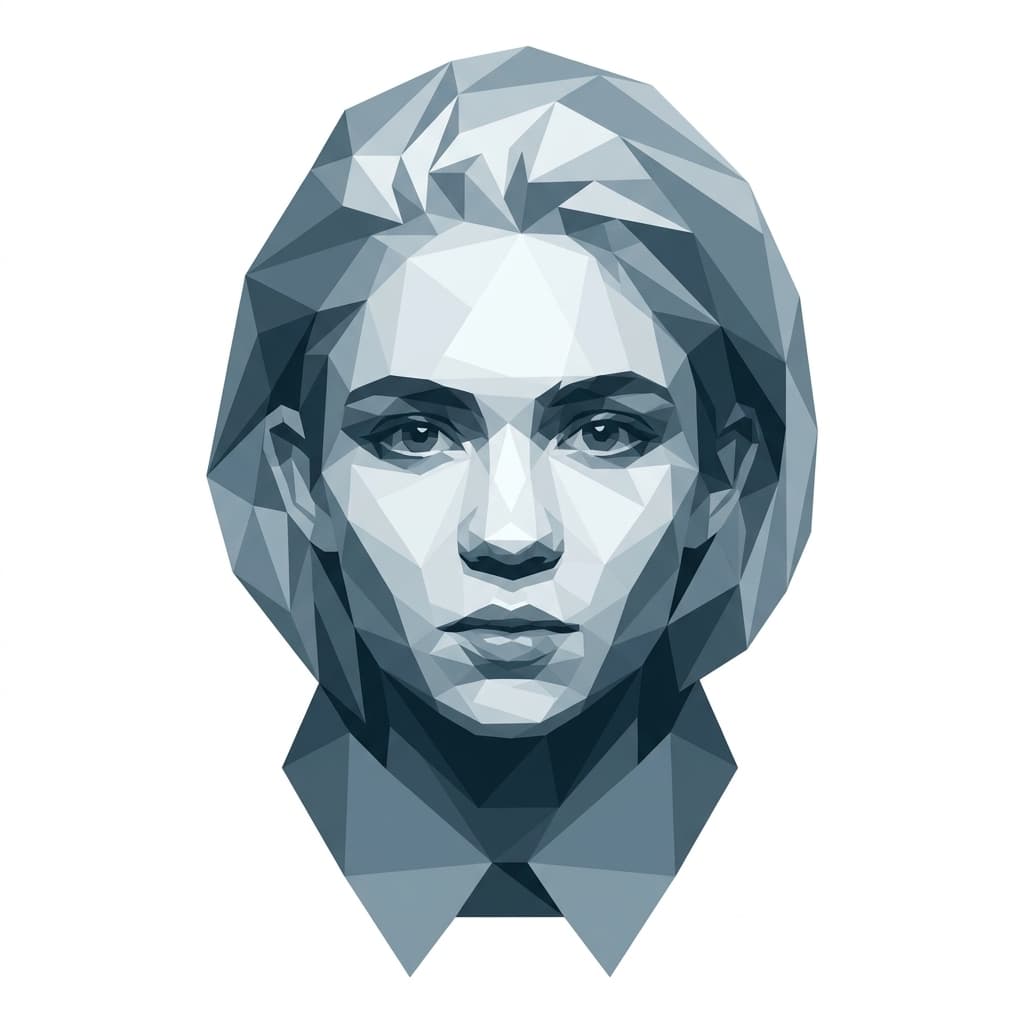
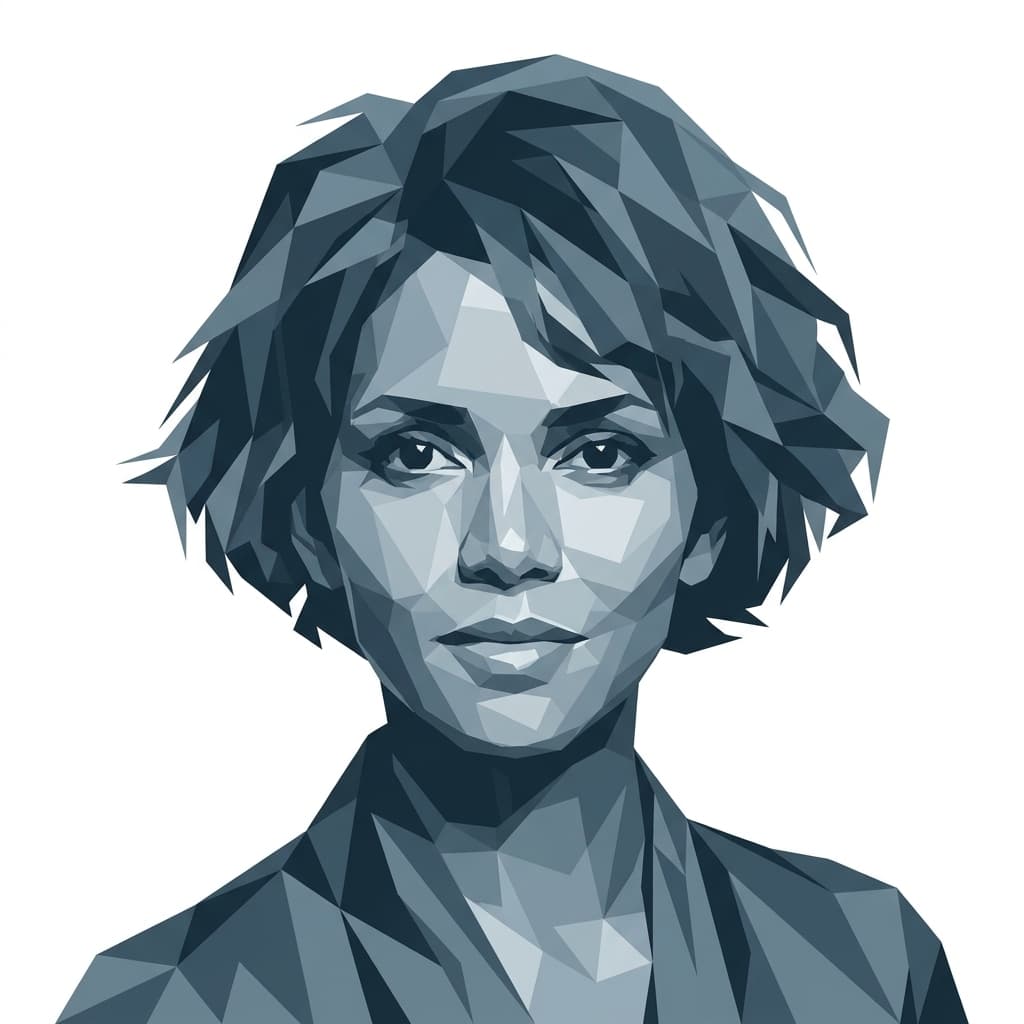
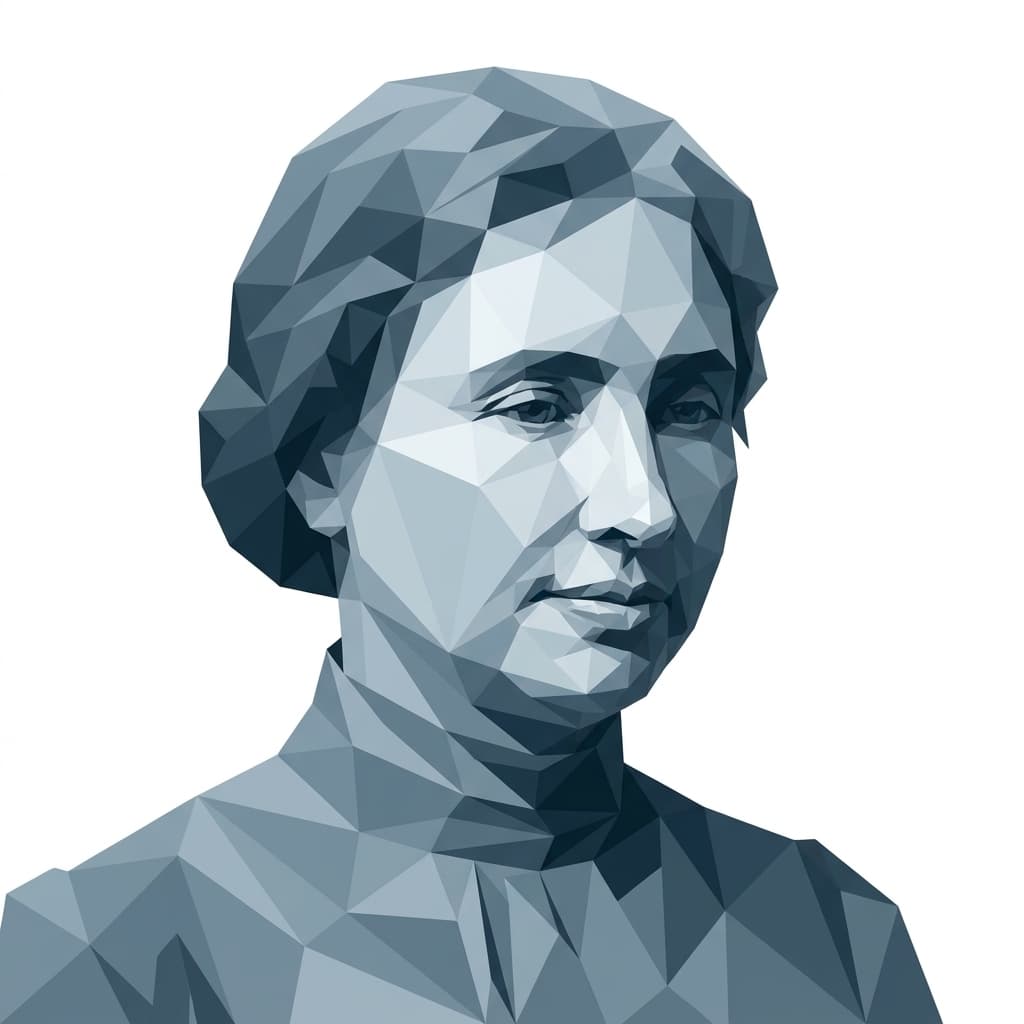
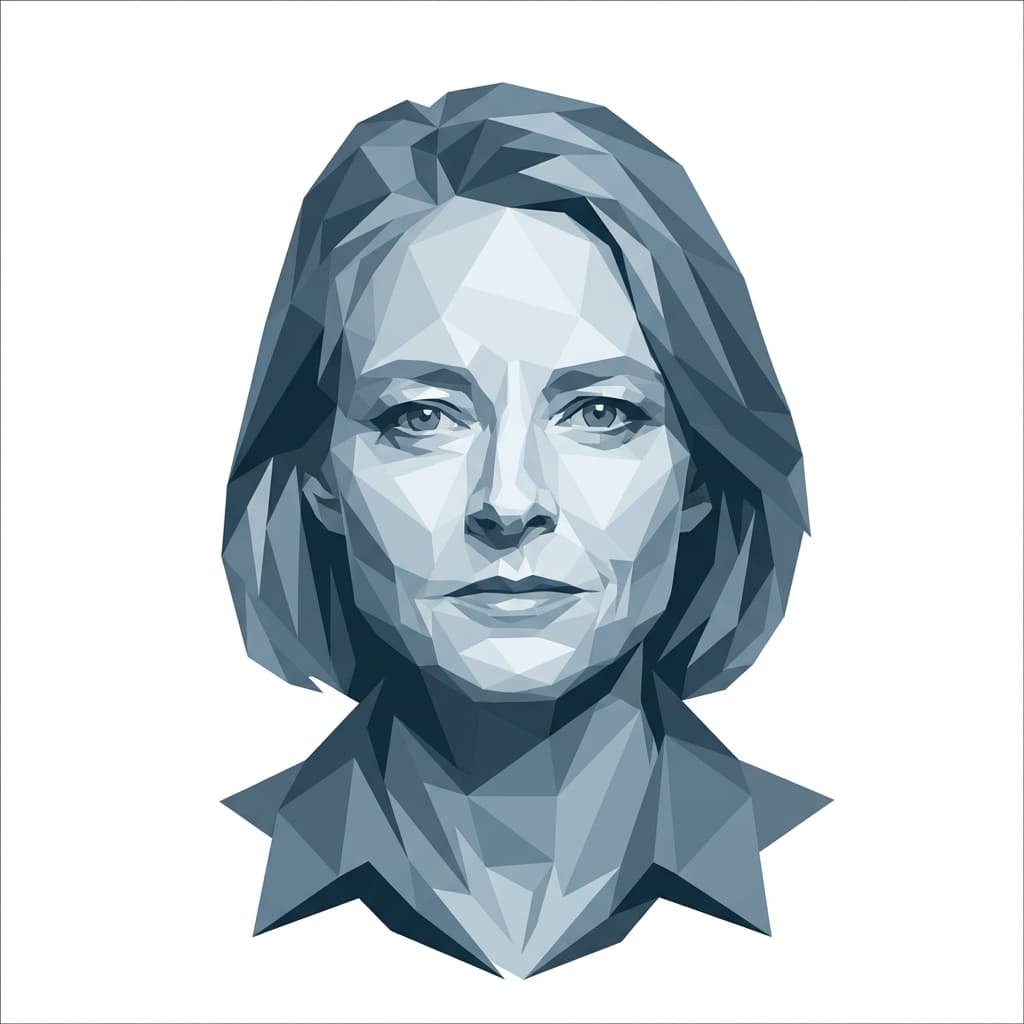
Two-time Oscar-winning actor and director who grew up on camera and quietly built one of Hollywood's most deliberate careers.
Design
- Q29.5
- h30.5
- R8.5
- g33.2
- i19.2
- S47.3
- T48.6
- U15.2
- V37.4
- W41.5
- X59.1
- Y44.4
- Z40.4
Personality
- Q14.3
- h8.3
- R59.4
- g31.1
- i41.1
- S43.6
- T1.3
- U7.5
- V55.4
- W41.5
- X59.6
- Y1.1
- Z64.1
Jodie Foster is a Projector — someone wired to see people and systems with unusual clarity rather than to grind through the industry on brute output — and her career reads like a fifty-year experiment in guarding that particular kind of attention. She started working at three, went to Yale, and by her twenties had already survived the level of public scrutiny that ends most child actors. What she built instead was a working life defined by selectivity: fewer films than her peers, longer gaps, and a habit of vanishing between projects that Hollywood has never quite known what to do with.
Her 3/5 profile — the experimenter who becomes a reluctant authority — shows up in almost every choice she's made publicly. She's spoken often about learning the craft on the job, trying things that didn't work, dropping accents that embarrassed her, taking parts (Nell, The Beaver) that critics openly disliked. She treats each role as a hands-on experiment rather than a résumé line, and the wisdom she brings to directing younger actors comes directly from having lived every version of the mistake herself. That 5th-line quality — being projected onto as the icon, the survivor, the feminist standard-bearer — is something she's negotiated her whole life, mostly by refusing to perform the role others want her to play.
She is famously private, and that privacy has the specific texture of needing solitude to metabolize experience before speaking about it. Her 2013 Golden Globes speech, where she came out obliquely and pointedly declined to explain herself further, was a masterclass in this: saying only what she'd actually processed, in her own time, refusing the industry's pressure to translate her life into legible confession. She waited decades. When she finally spoke, it was on her terms and nobody else's — the classic shape of a decision that had ridden out every emotional wave before landing.
As a director she's most alive — Little Man Tate, Home for the Holidays, episodes of Black Mirror and True Detective — and the work reveals an eye that keeps spotting the unusual talent in the room before anyone else does. Clarice Starling, Sarah Tobias, Nell, the mother in Panic Room: she has consistently chosen women who are underestimated and then turn out to see patterns and threats the men around them completely miss. Her acting isn't showy. It's a study in containment — the intelligence of a character who is thinking three moves ahead while barely moving her face.
She's turned down more than she's said yes to, and the record of what she declined (the Princess Leia audition, countless studio offers through the '90s) is arguably as revealing as her filmography. She works when genuinely called in by material or a filmmaker she respects, and she seems to know the difference between being wanted for her name and being wanted for her particular perspective. In her sixties, directing episodic television, mentoring, and finally winning her third acting nomination for Nyad, she looks like someone who arranged her life so that the guidance she offers — to actors, to her sons, to the industry — comes from wisdom actually earned in the doing, not performed for the camera.
Sources: biography · birth data
What do you and Jodie Foster have in common?
Enter your birth details to find out