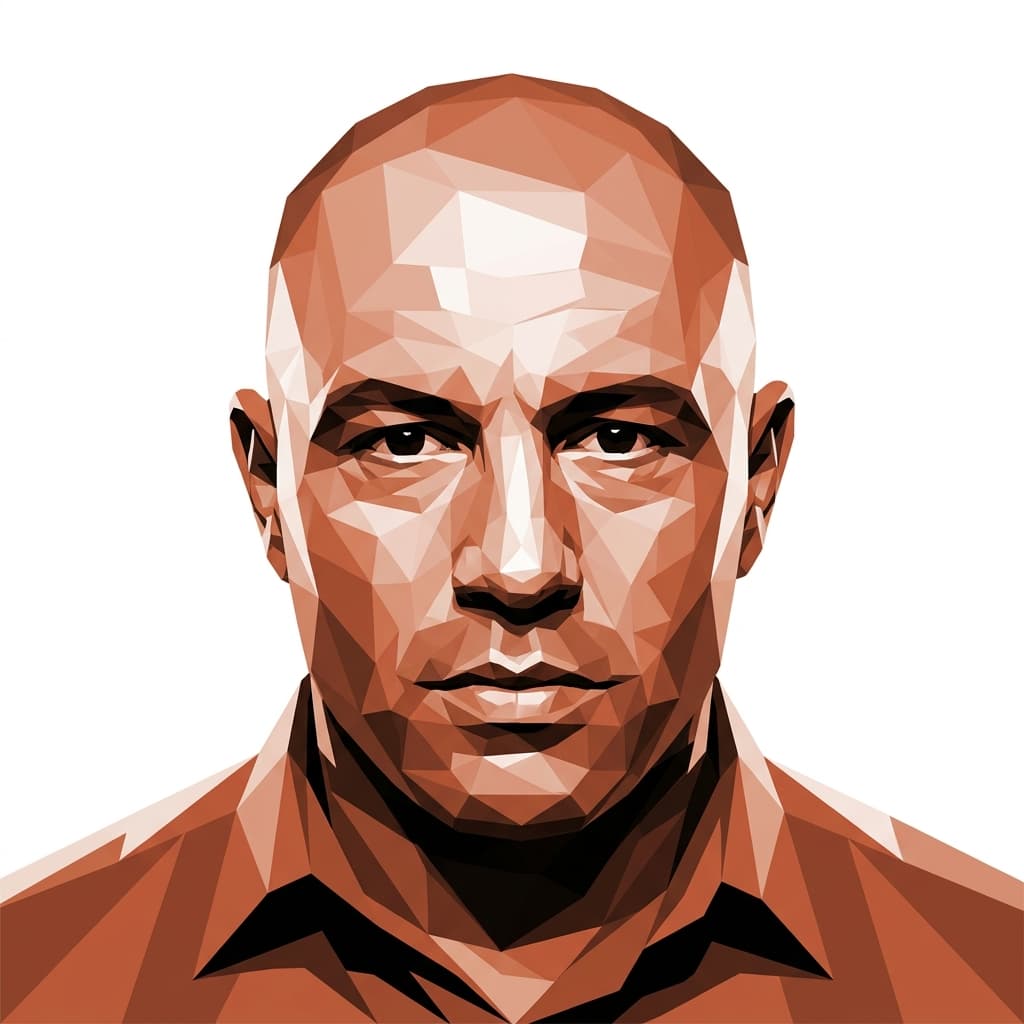
Podcaster, stand-up comedian, and UFC commentator whose long-form conversations reshaped modern media.
Design
- Q23.2
- h43.2
- R16.2
- g27.6
- i28.6
- S23.1
- T15.4
- U57.2
- V56.2
- W17.5
- X47.4
- Y43.5
- Z47.2
Personality
- Q7.5
- h13.5
- R32.6
- g3.5
- i50.5
- S31.3
- T64.3
- U44.5
- V7.3
- W21.3
- X47.6
- Y43.3
- Z47.3
Joe Rogan is a Generator — built for stamina, repetition, and the kind of relentless engagement that turns a curiosity into a career. He started as a Taekwondo kid in Newton, Massachusetts, won a lightweight championship at 19, taught martial arts, and then quit because he didn't want to spend his life yelling at teenagers about their kicks. The through-line from that dojo to a three-hour podcast is the enthusiasm for mastering something through sheer repetition — do the reps, get better, move to the next thing.
Comedy was the next rep. He drove to open mics in Boston, moved to New York, then Los Angeles, and worked the road for decades before he was famous for anything else. NewsRadio came and went. Fear Factor made him a household name and also the guy who ate bugs on television, a job he took because it paid and left him time to keep doing stand-up. That's a 5/2 profile at work — the practical problem-solver who quietly protects the hours that actually matter to him, which in his case meant the Comedy Store and the gym. He's spoken openly about being a homebody who'd rather be in his garage than at a party, a very 2nd-line hermit trait.
The UFC job is where his voice found its shape. Calling fights required an instant, gut-level read on what was happening in front of him — no time to think, just narrate the collision. He was also drawn to the extremes of what human bodies could do, the kind of intensity that would exhaust most commentators. He turned down a salary for years and did it for love, which is the Generator thing: when the work lights you up, you don't need to be pushed.
The Joe Rogan Experience started in 2009 as two guys and a webcam and became, somehow, the most listened-to podcast on earth. The format is his real invention — no producer in his ear, no time limit, long conversations that draw stories out of people they've never told anyone. He'll sit with a physicist, a hunter, a comic, and a conspiracy theorist in the same week and ask the same childlike question: wait, how does that actually work? He is genuinely trying to make his own logical sense of complicated things out loud, which is why fans love him and critics find him maddening — he thinks in public, in real time, and often lands somewhere he didn't start.
That public thinking is also where the trouble lives. The pandemic-era controversies, the ivermectin arguments, the Spotify letters — all of it comes from the same wiring that makes the show work: taking whatever cutting-edge idea just landed and putting it into plain language, sometimes before the timing or the audience is ready for it. He moved the whole operation to Austin, built a bigger studio, kept going. He does DMT, hunts elk with a bow, runs the sauna, lifts heavy, and reads a lot — a life organized around chasing what feels meaningful through struggle rather than what looks respectable from the outside. Whatever you make of him, the man is using up his energy exactly the way he wants to.
Sources: biography · birth data
What do you and Joe Rogan have in common?
Enter your birth details to find out