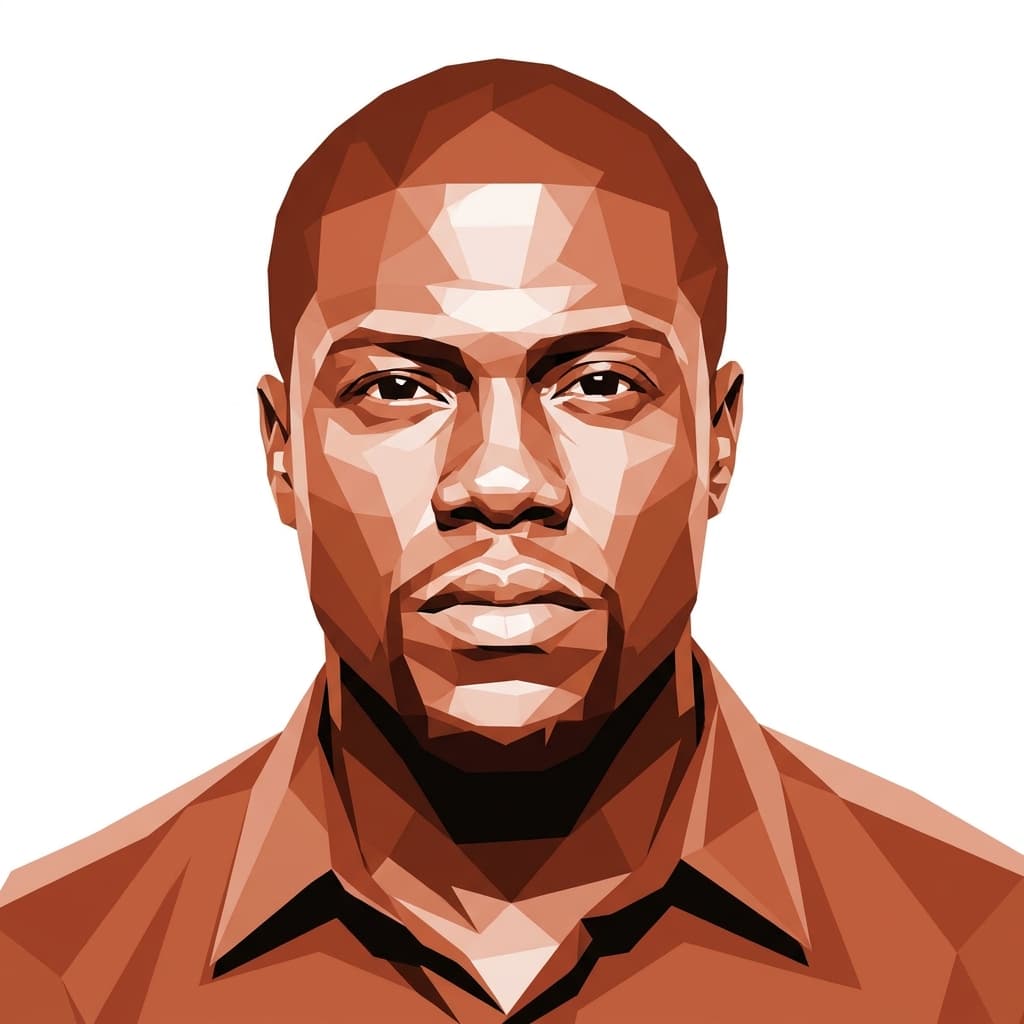
Radiohead frontman and restless sonic experimenter whose voice reshaped what rock music could feel like.
Design
- Q53.1
- h54.1
- R26.2
- g21.5
- i48.5
- S12.4
- T62.1
- U39.2
- V59.4
- W42.5
- X6.4
- Y43.6
- Z47.4
Personality
- Q48.5
- h21.5
- R42.3
- g21.1
- i48.1
- S50.5
- T44.6
- U40.5
- V47.6
- W42.3
- X46.3
- Y14.1
- Z6.1
Thom Yorke is a Generator — built for deep, sustained immersion in the work that lights him up, and Radiohead's thirty-year catalog is the receipt. He met the four other members of the band at Abingdon School as a teenager and spent the next several decades in near-continuous creative labor with them, which is exactly the kind of long, patient mastery Generator energy is designed for. What sets his output apart isn't speed but the willingness to keep going deep into what matters long after most peers would have coasted on a formula.
The pivot from The Bends to OK Computer to Kid A is the clearest look at his 5/1 profile in action — the researcher-heretic who disappears to study something (Warp Records, Autechre, Aphex Twin, modular synths, Penderecki) and reemerges with a solution to a problem the rest of the culture didn't know it had. He famously threw out most of a guitar-based follow-up to OK Computer because it bored him, refusing to finish what no longer excited him, and rebuilt the record from software and process. The 5/1 tension — being cast as spokesman for a generation while just wanting to research drum machines — has shadowed him ever since.
His public persona has always been visibly Emotional Authority at work: prickly interviews, long silences, mood-driven decisions, occasional walk-outs, and then, weeks later, a considered statement that lands with weight. The voice itself is Gate 12 made audible — a falsetto that waits for the exact moment and then breaks open something the listener didn't know they were carrying. Onstage he oscillates between withdrawn and possessed, a body tuning to when to speak and when silence serves better.
Politically, he's never been shy about pulling truth out of a room by provoking it. He walked Radiohead away from the major-label system with In Rainbows' pay-what-you-want release in 2007, torched the streaming economy in interviews, and turned climate grief into the emotional bedrock of The King of Limbs and A Moon Shaped Pool. The band's decision to self-manage, control their own masters, and take charge of their own resources reads as textbook — a refusal to let industry structures dictate what the work should be.
Away from Radiohead, he keeps starting new things — Atoms for Peace with Flea and Nigel Godrich, the Suspiria score, Tomorrow's Modern Boxes, The Smile with Jonny Greenwood and Tom Skinner. Each side project looks like a breakthrough insight arriving whole, a form he needed to invent because existing forms couldn't carry it. He talks openly about anxiety, about the need to retreat and recharge alone, about the fear of repeating himself — the pattern-alertness that keeps him watching for old mistakes even as he pushes forward.
What holds it all together is that he still seems, at fifty-plus, genuinely obsessed. He dances badly and on purpose. He makes records slowly. He speaks when it matters. The work is what lights him up, and the work is unmistakably his.
Sources: biography · birth data
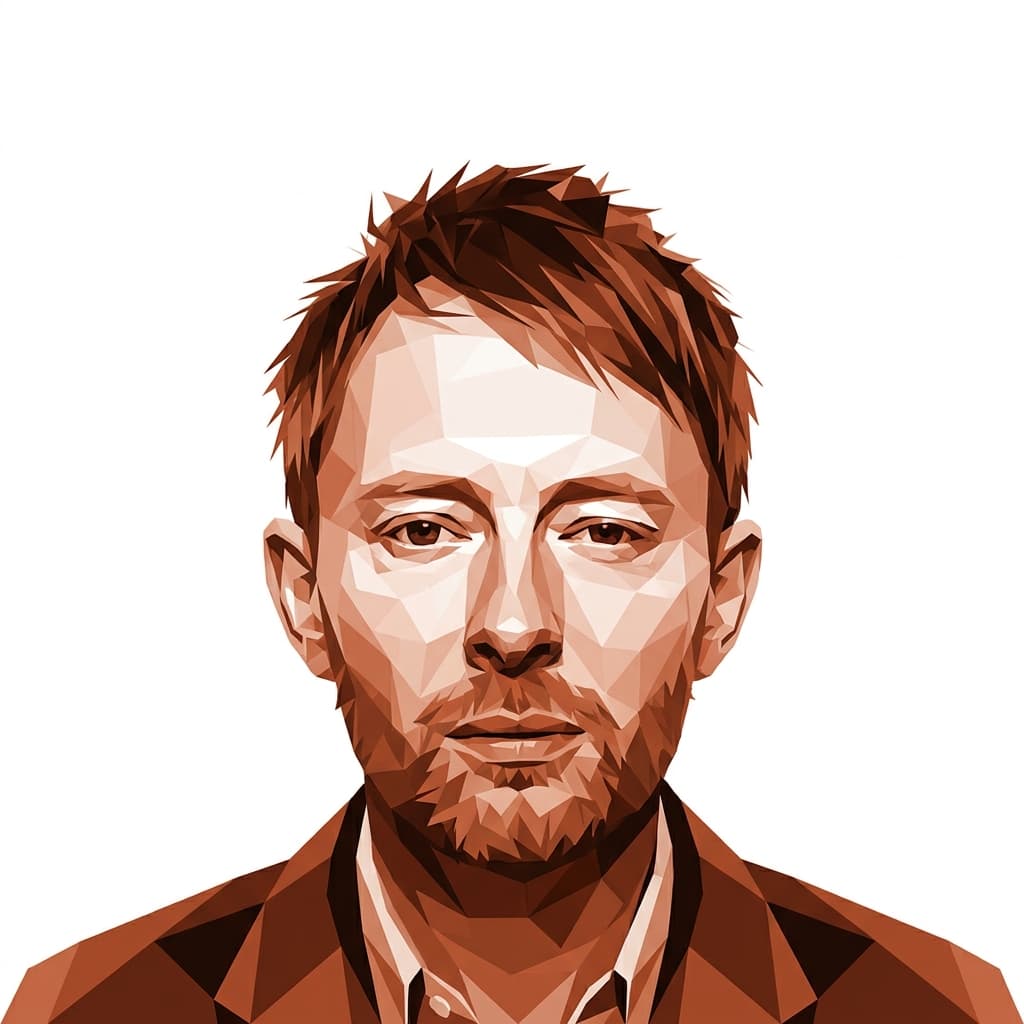
What do you and Thom Yorke have in common?
Enter your birth details to find out