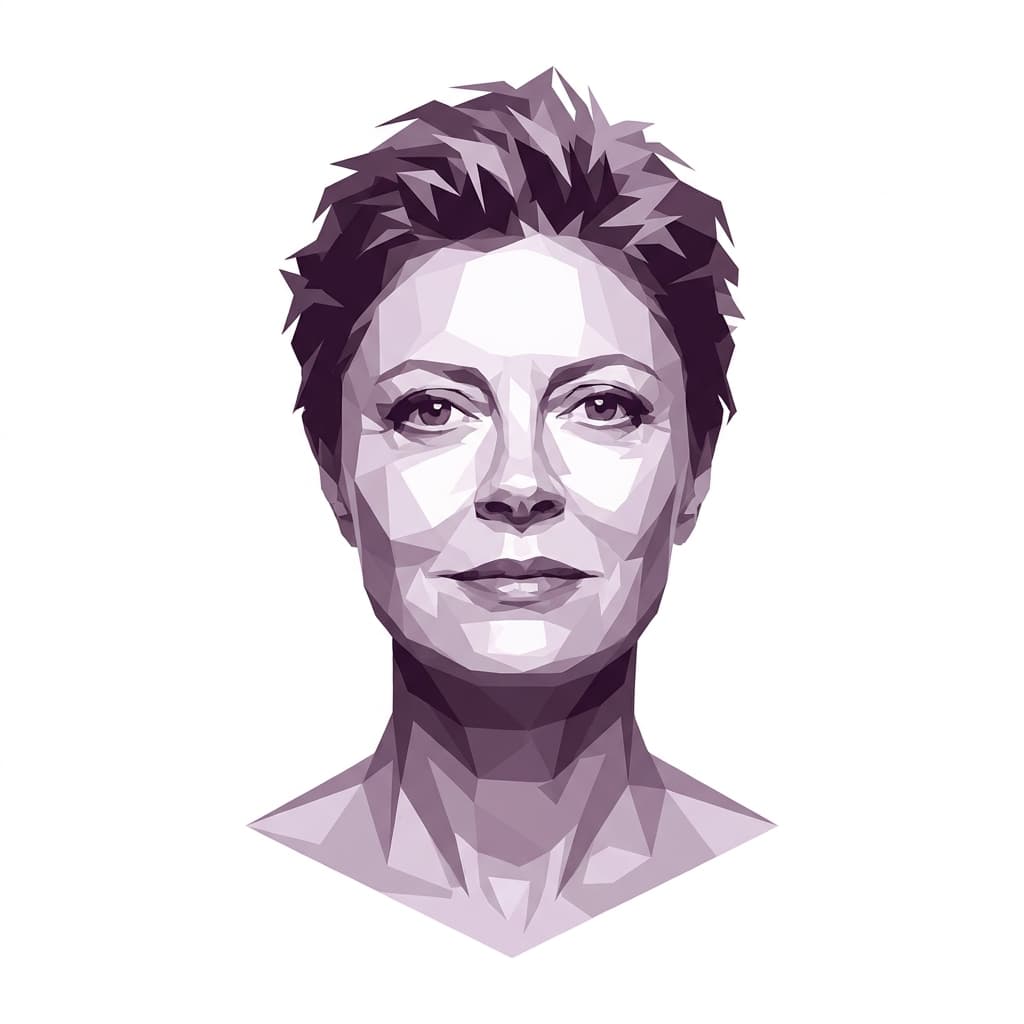
Indian yogi and monk who brought Kriya Yoga to the West and authored Autobiography of a Yogi.
Design
- Q57.3
- h51.3
- R35.5
- g24.1
- i44.1
- S57.5
- T59.3
- U13.3
- V51.6
- W18.2
- X28.4
- Y16.6
- Z16.5
Personality
- Q54.1
- h53.1
- R29.2
- g27.4
- i28.4
- S11.1
- T26.1
- U17.2
- V51.2
- W48.4
- X44.3
- Y16.4
- Z16.3
Paramahansa Yogananda was a Manifestor — an initiator wired to cross oceans without waiting for permission, and the arc of his life is exactly that. In 1920, at 27, he boarded a ship from Calcutta to Boston with almost no English, no institutional backing in America, and an invitation to speak at a Congress of Religious Liberals. He got off the boat and started a movement. Within a few years he had planted the Self-Realization Fellowship in Los Angeles, filled auditoriums from Carnegie Hall to the Philharmonic, and become the first Hindu teacher of any real stature to make the United States his home.
His approach carried the fingerprint of a 1/3 investigator-experimenter. Before he ever taught, he spent a decade at the feet of Sri Yukteswar in Serampore, drilling into scripture, cosmology, and the mechanics of Kriya Yoga until the foundation was unshakable. Then he did what a 3 line does — he tried things. He opened a boys' school at Ranchi in 1917 that blended yoga with Western academics, testing what worked and discarding what didn't. Some of his American experiments — a "How-to-Live" magazine, correspondence lessons mailed to farmers in Iowa, staged demonstrations of yogic control — landed brilliantly. Others quietly folded. He treated each one as data.
The engine of his teaching was an endless overflow of concepts and metaphors, stitched into logical frameworks that could withstand a skeptic's cross-examination. He would talk for three hours about the astral body and then produce a diagram. His genius was translation: taking Vedantic ideas that had never crossed the Pacific and rendering them in the vocabulary of Edison, Einstein, and the New Thought movement. Autobiography of a Yogi, published in 1946, is essentially a long act of deep listening — a lifetime of collected stories about saints, levitators, and householder mystics, retold with a novelist's ear.
He moved with the quiet, immediate knowing that doesn't stop to explain itself. He decided to leave India, decided to buy the Mount Washington property in LA sight-unseen, decided which disciples to keep close and which to send away — often within moments of meeting them. He was also unmistakably a salesman of the sacred, unembarrassed about promotion, robes, publicity photos, and the theatrics of a good lecture. He believed the message deserved the marketing.
What sustained the four-decade mission was a dogged capacity to say yes and stay once he'd committed. Manifestors classically start things and hand them off; Yogananda started something and then, unusually, stayed with it for the rest of his life, pouring in a caretaker's steady energy toward monastics, correspondents, and the institution itself. The cost was visible — he spoke openly of exhaustion in his final years, of longing for the Himalayas.
He died in 1952 at a banquet honoring India's ambassador, mid-speech, reciting his own poem My India. Witnesses said he simply slid to the floor. It was, for a man who had spent his life initiating others into thresholds they were afraid to cross, a fitting exit — informing the room, then going.
Sources: biography · birth data
What do you and Paramahansa Yogananda have in common?
Enter your birth details to find out