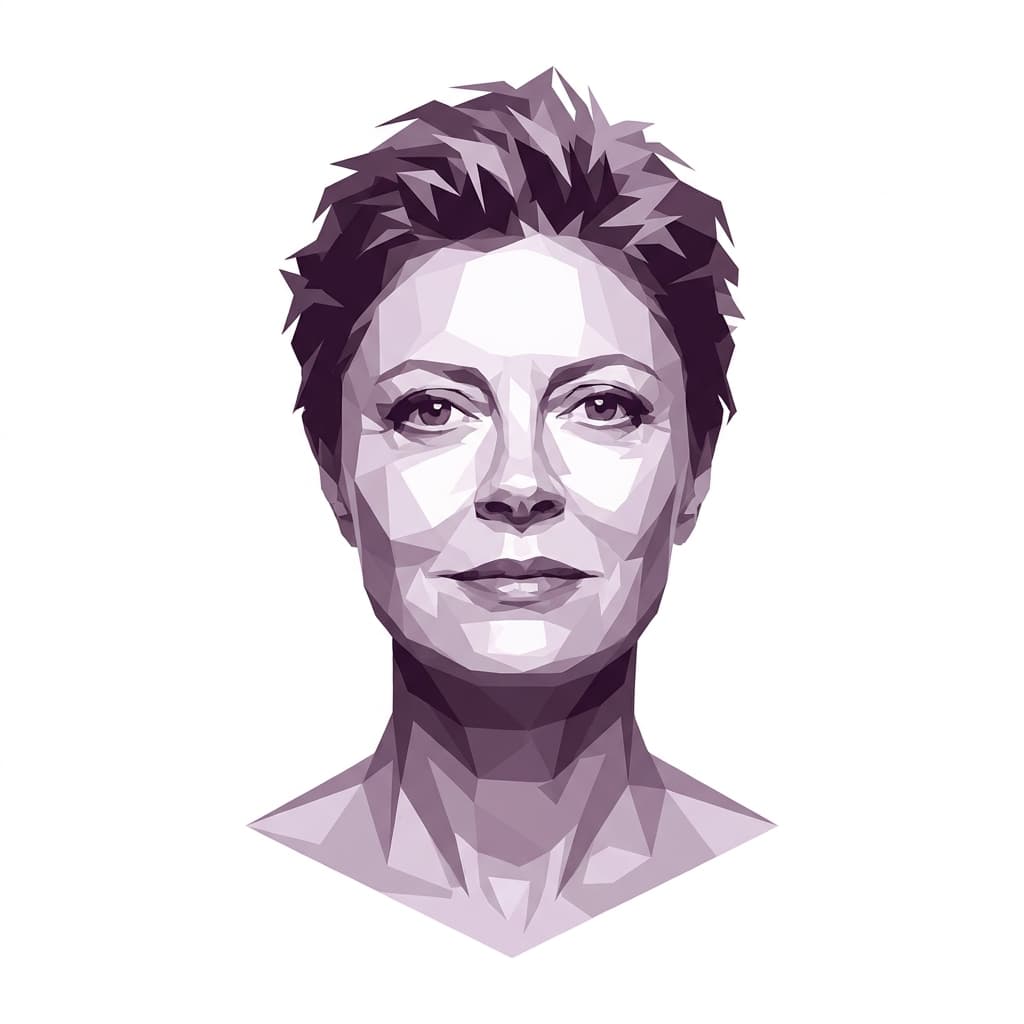
Oscar-winning American actress and outspoken political activist known for Thelma & Louise, Dead Man Walking, and decades of dissent.
Design
- Q39.4
- h38.4
- R18.3
- g45.4
- i26.4
- S33.2
- T4.2
- U40.4
- V57.4
- W56.1
- X45.3
- Y18.3
- Z33.4
Personality
- Q48.2
- h21.2
- R60.1
- g35.3
- i5.3
- S32.5
- T43.6
- U28.6
- V50.6
- W31.6
- X45.6
- Y18.5
- Z33.6
Susan Sarandon is a Manifestor — wired to initiate, disrupt, and move ahead of the room whether or not the room is ready — and her fifty-year career reads like a long argument for doing exactly that. She fell into acting almost by accident, tagging along to an audition with her then-husband Chris Sarandon in 1968, and walked out with a role in Joe. From there she declined the standard studio pathway, turning down long-term contracts and picking scripts by feel rather than career logic.
That feel is her operating system. She's spoken often about choosing projects on gut — a very Splenic Authority way of working, where the yes or no arrives instantly and she doesn't bother constructing a rationale afterward. It's how she said yes to Rocky Horror when it looked like a career risk, yes to Bull Durham when she was told she was too old for Annie Savoy, and yes to Thelma & Louise the moment she read it. Her 2/4 profile shows in the rhythm around those choices: long stretches of privacy and reading at home in New York, then emergence through a tight network of collaborators — Louis Malle, Tim Robbins, Ridley Scott, Paul Newman — who kept bringing her the roles that mattered.
Sarandon has an unusual instinct for what's worth fighting for and the stamina to keep swinging long after the polite moment has passed. She was booed at the 1993 Oscars for using her presenter slot to speak about Haitian refugees with HIV being held at Guantánamo. She was arrested protesting the killing of Amadou Diallo, arrested again at an immigration rally in 2018, and has spent decades attaching her name to causes — nuclear disarmament, Standing Rock, Bernie Sanders, Palestinian rights — that reliably cost her work. She informs the room she's about to move rather than asking whether she should, which is precisely why some doors close and others open wider.
Her performances carry a similar willingness to provoke feeling out into the open. Sister Helen Prejean in Dead Man Walking, the role that finally won her the Oscar in 1996, is the clearest example — a character built almost entirely from restraint, moral clarity, and the refusal to look away. She's talked in interviews about her drive to keep understanding why things happen the way they do, a curiosity that shows up in her research for roles and in the political homework she does before lending her voice. When she speaks about where the culture is headed, people tend to listen, even when they'd rather not.
Off-screen she's a natural steward of the people she considers hers — her three children, her longtime friends, the young actors and activists she mentors. She ran the Manhattan ping-pong bar SPiN for years, which fits: a material-world project run on her own terms, part community hub, part stubborn experiment. At nearly 80 she still treats each new decade as material to work with, showing up in Feud, Blue Bloods, small indies, protest lines, and Instagram fights, apparently uninterested in the version of aging she's supposed to perform.
Sources: biography · birth data
What do you and Susan Sarandon have in common?
Enter your birth details to find out