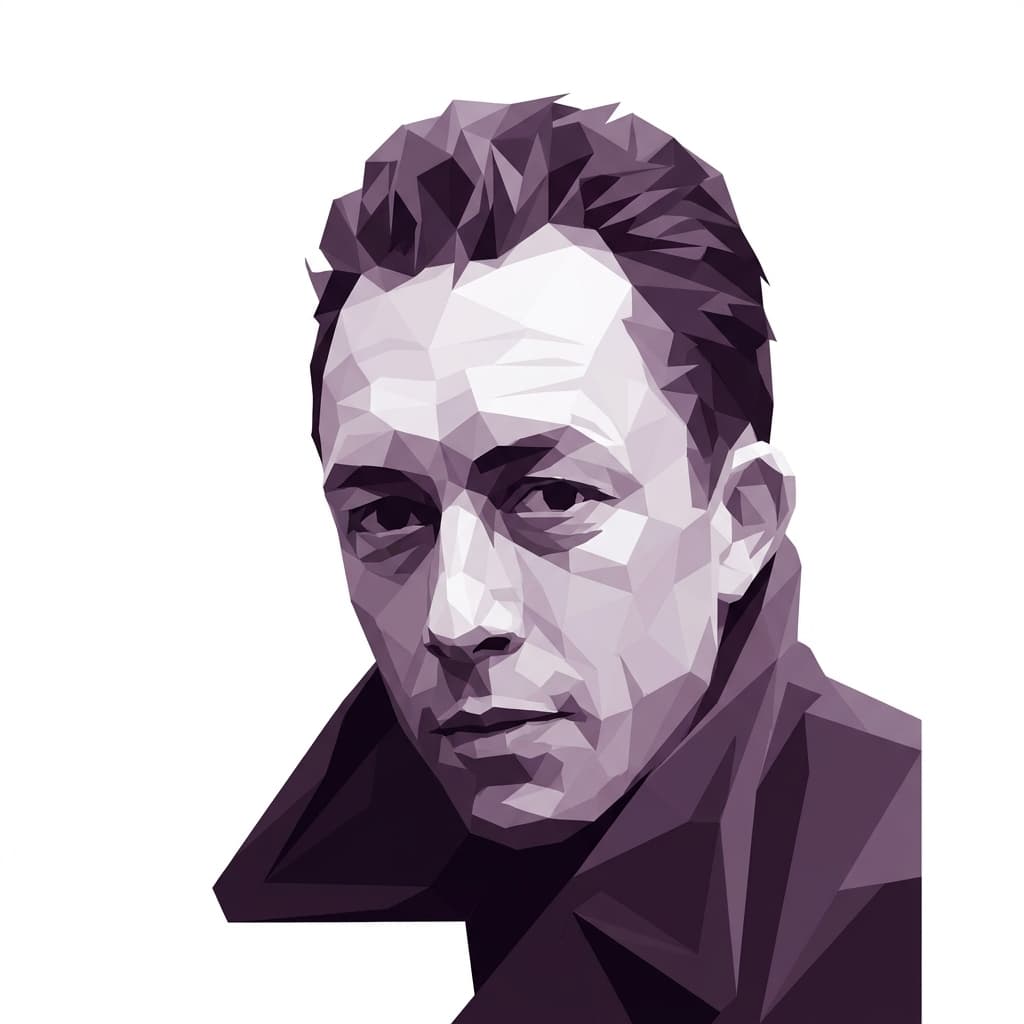
American actor whose intense, method-driven performances defined a generation of American cinema from The Godfather onward.
Design
- Q41.6
- h31.6
- R6.2
- g32.3
- i42.3
- S41.4
- T63.1
- U51.2
- V17.2
- W42.5
- X2.6
- Y6.3
- Z56.6
Personality
- Q27.4
- h28.4
- R26.5
- g57.6
- i51.6
- S21.3
- T45.4
- U35.5
- V42.5
- W27.3
- X23.3
- Y6.1
- Z56.5
Al Pacino is a Manifestor — the kind of performer who doesn't wait for permission to detonate a scene, and whose entire career reads like a series of unannounced arrivals. He grew up in the South Bronx, was raised largely by his mother and grandparents, and dropped out of school at seventeen to chase acting through a string of dishwashing and mailroom jobs. When he finally landed at the Actors Studio under Lee Strasberg, the discovery wasn't technique — it was permission to burn as hot as he already did.
His breakthrough came when Francis Ford Coppola fought Paramount to cast him as Michael Corleone in The Godfather. The studio wanted someone taller, more handsome, more bankable; Pacino was small, brooding, and largely unknown. What he brought instead was the willingness to shock a room out of its expectations — a stillness so coiled it made the film's louder actors seem to be performing. He nearly got fired in the first week. Then came the restaurant scene, and everyone shut up. That combative early stretch is textbook 4/6 profile — the messy experimental first act that eventually crystallizes into the role model others study frame by frame.
Through the seventies he made Serpico, Dog Day Afternoon, and …And Justice for All in rapid succession, and the pattern of his working life became clear. He'd disappear into a character with obsessive research, then explode across a shoot, then vanish. This is Ego Authority in its purest cinematic form — a heart that either wants something ferociously or refuses to show up at all. Directors who tried to talk him into projects his heart wasn't in usually got a polite no or an unusable performance. Sidney Lumet learned to just point the camera and let him find it.
The Pacino voice — that rasping, italicized, sometimes-whispered, sometimes-bellowed instrument — is a whole language for saying only what the moment requires, even when the moment requires him to scream "attica." He built characters through a storyteller's instinct for making a life legible, whether Sonny Wortzik's cornered bravado or Tony Montana's operatic decline. And underneath the volume there's always the fighter looking for something actually worth the fight — he turned down countless paydays for years, then took a role like Scarface because something in him needed the risk.
His middle period was famously uneven. He walked away from film for four years in the mid-eighties to return to the stage, which he'd never really left, and to reset. When he came back with Sea of Love and then finally won the Oscar for Scent of a Woman, the Academy was catching up to what New York theater audiences had known all along. He'd been initiating without waiting for the industry's blessing the whole time.
In late career he became a kind of institution — the Actors Studio co-president, the mentor figure, the guy Scorsese builds The Irishman around. His directorial passion project Looking for Richard revealed the persuasive teacher underneath the roles, a man genuinely trying to sell Shakespeare to Americans who'd given up on it. It's the 4 speaking to his community — the wisdom of someone who spent his whole life inside the work, finally turning to explain how it's done.
Sources: biography · birth data

What do you and Al Pacino have in common?
Enter your birth details to find out