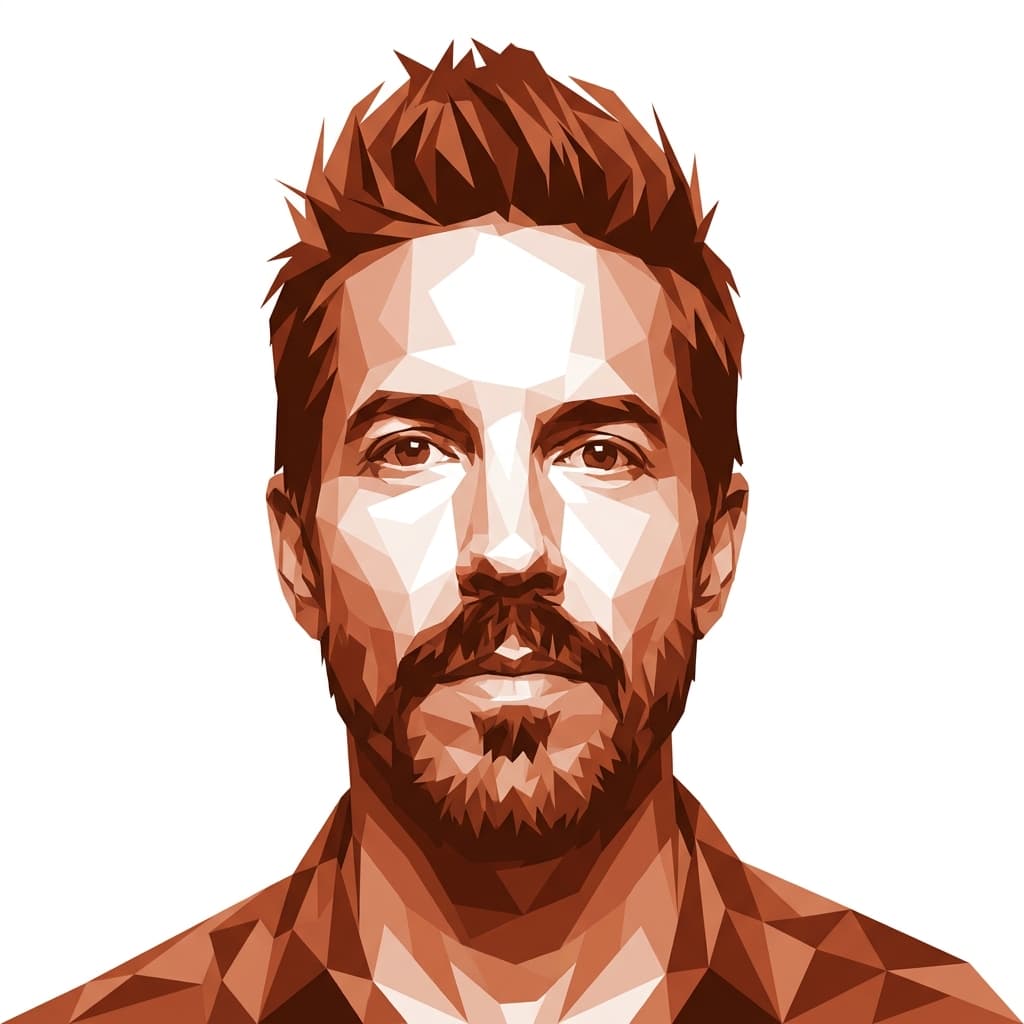
Frontman of Red Hot Chili Peppers, memoirist, and one of rock's most enduring survivors.
Design
- Q33.4
- h19.4
- R64.1
- g33.2
- i19.2
- S7.3
- T6.2
- U45.1
- V37.6
- W19.1
- X29.6
- Y44.4
- Z40.4
Personality
- Q44.1
- h24.1
- R26.6
- g31.2
- i41.2
- S32.4
- T14.2
- U33.3
- V55.3
- W41.4
- X59.5
- Y44.6
- Z64.1
Anthony Kiedis is a Generator — built for stamina, repetition, and the kind of decades-long commitment that turns a scrappy Hollywood punk-funk band into a stadium act without ever quite losing its street. Since 1983 he has fronted the Red Hot Chili Peppers, and the throughline of his career is exactly what a well-used Generator engine looks like: show up, work the same instrument (a voice, a body, a band), and let the mastery accumulate.
He came up in Los Angeles as a teenage hanger-on to his father's Sunset Strip scene, and the band itself was formed not from a plan but from responding to what showed up — a one-off gig at the Rhythm Lounge with Flea, Hillel Slovak, and Jack Irons that got a laugh and a callback. Kiedis has a 1/4 profile, the investigator-opportunist, and it shows in how he works: he goes deep on a lyric or a running obsession alone, then brings it back to the same tight circle of collaborators he's known since high school. His most durable relationships — Flea especially — are the community-as-work engine that a 1/4 needs, and he has been notably bad at operating outside it.
The addiction narrative is the part of his life that most clearly reads as Emotional Authority run through decades of not waiting for the wave to settle. He wrote in Scar Tissue about decisions made at emotional peaks — scoring, quitting, relapsing, proposing — and the corresponding wreckage. Slovak's overdose in 1988 was the pivot; Kiedis's own recovery took another fourteen years and multiple relapses, and his lyrics on Californication and By the Way have the quality of someone finally distilling wisdom from experience rather than reporting from inside it.
His writing voice carries a specific texture: sensory, image-flooded, nonlinear. Songs like "Under the Bridge" and "Scar Tissue" work by assembling fragments of memory until a pattern emerges, and his lyrics circle themes of need, hunger, and being taken care of with unusual openness for a rock frontman. He is also, plainly, a persuader with a nose for what will sell — the band's shirtless-with-socks image, the MTV-era videos, the willingness to court pop production with Rick Rubin were all his instincts as much as anyone's.
Onstage he is magnetic in a way that only works when he's genuinely lit up, and flat when he isn't — which is why the Chili Peppers' live reputation swings so hard between eras. His romantic life has run on the same emotional wave: intense, fast bonds that transformed and then combusted, from Ione Skye to Heather Christie, the mother of his son Everly. In his sixties he still fronts the band with the same lope and the same selective intimacy that keeps most people at arm's length while letting a few all the way in — a Generator who found the work that lit him up early and, against considerable odds, is still doing it.
Sources: biography · birth data
What do you and Anthony Kiedis have in common?
Enter your birth details to find out