Legendary singer, actress, and director whose perfectionism and singular voice reshaped American entertainment.
Design
- Q41.4
- h31.4
- R8.2
- g64.4
- i63.4
- S49.6
- T13.5
- U27.6
- V35.1
- W23.3
- X8.3
- Y46.2
- Z31.3
Personality
- Q27.2
- h28.2
- R33.4
- g64.1
- i63.1
- S24.1
- T22.1
- U15.1
- V45.4
- W8.4
- X8.5
- Y6.6
- Z31.2
Barbra Streisand is a Projector — the kind of performer whose gift isn't stamina but perspective, an uncanny ability to see exactly what a song, a scene, or a shot needs and to steward it there. From the Bon Soir nightclub in Greenwich Village in 1960 to Funny Girl on Broadway four years later, she didn't climb; she was recognized. Producers and audiences kept extending the invitations her strategy is built around, and each one pulled her further into a career she seemed to design in real time.
Her 2/4 profile — the hermit who works through her network — reads across her whole life. She's famously private, retreating to her Malibu compound for years between projects, then re-emerging through the small circle of collaborators (Marty Erlichman, her manager since 1961; Jon Peters; a handful of directors and writers) who form her actual working world. The public reads her as reclusive; the people close to her know she's simply protecting the solitude where the work gets refined. Opportunities have almost always come through the community she already trusts, not from strangers pitching cold.
The way she makes decisions is unmistakable to anyone who's worked with her: she talks. Endlessly, on the phone, in the studio, in meetings — thinking out loud until the right answer becomes audible. Directors on Yentl and The Prince of Tides, which she directed herself in 1983 and 1991, describe the same ritual: she would circle a creative problem in conversation, listening to her own voice work through it, and only commit once the words landed cleanly. This is also why her interviews feel unusually unguarded — the voice is the processing.
Streisand's artistic signature is the compulsion to strip a lyric down to what it actually means and then deliver it with a grace that makes the room lean in. "People," "The Way We Were," "Evergreen" — she treats phrasing as argument. That perfectionism is legendary and occasionally exhausting to her collaborators; she'll do forty takes to catch one syllable. It's the same instinct that made her an early tastemaker for material other singers wouldn't touch, from Sondheim deep cuts to the Bergman-scored Yentl score she fought Hollywood to make.
She's also the rare star who took the whole system on directly — suing to get Yentl made her way, becoming only the first woman to write, produce, direct and star in a major studio film, and later putting her name and money behind causes (women's heart health, LGBTQ rights, Democratic politics) with the seriousness of someone who thinks values are non-negotiable. The "Streisand Effect," coined after her 2003 attempt to suppress a photo of her house, is really just this energy misfiring in public: an insistence on how things should be that doesn't always translate outside her studio.
What holds it together is an appetite for range — Broadway, film, jazz standards, Broadway again, directing, memoir — paired with the willingness to fight for whatever she's decided is worth it. At 82, she published My Name is Barbra, a 992-page memoir written in the same talking-it-through voice her whole career has been built on.
Sources: biography · birth data
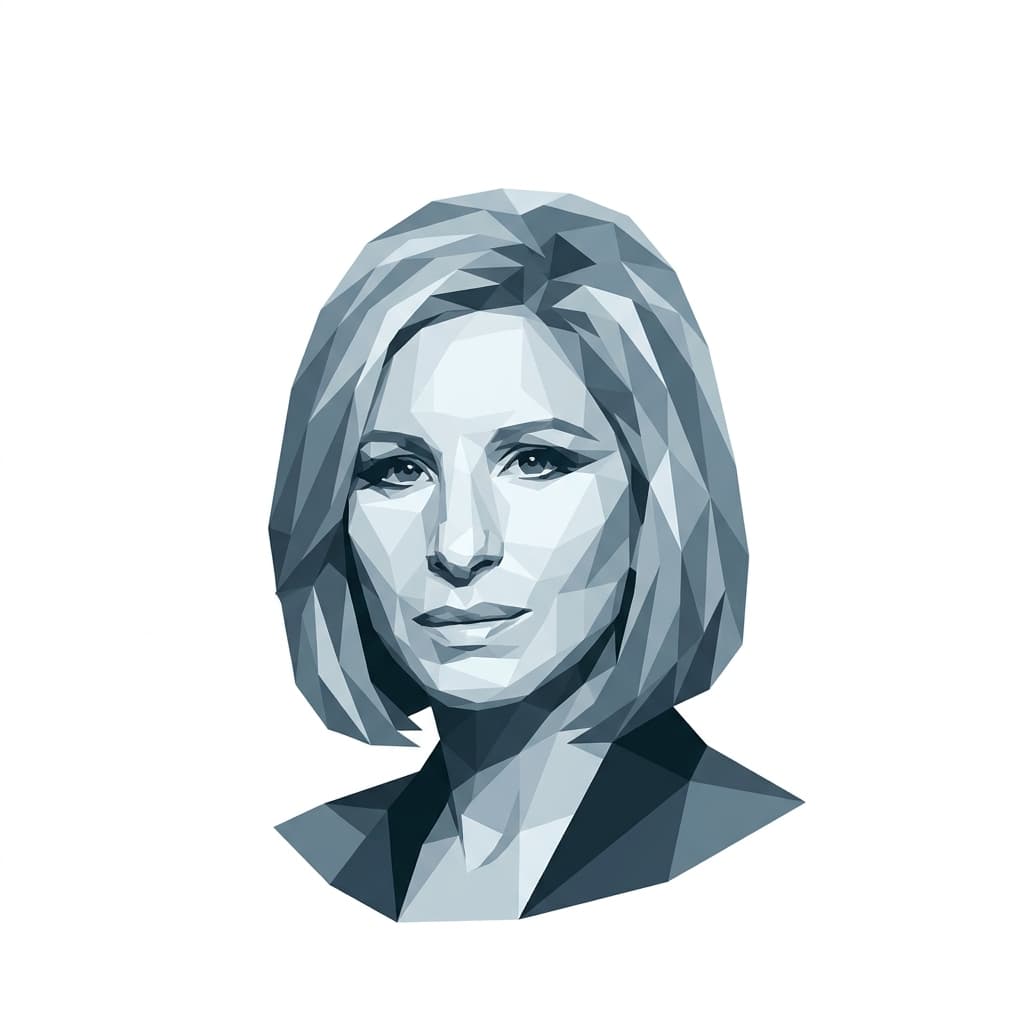
What do you and Barbra Streisand have in common?
Enter your birth details to find out