Oscar-winning American actor known for wildly eclectic roles, operatic intensity, and a singular acting philosophy.
Design
- Q57.4
- h51.4
- R4.1
- g53.1
- i54.1
- S46.5
- T50.4
- U43.2
- V21.5
- W13.4
- X40.3
- Y1.2
- Z64.2
Personality
- Q54.2
- h53.2
- R32.6
- g39.2
- i38.2
- S58.6
- T13.6
- U61.6
- V21.3
- W49.3
- X40.5
- Y1.5
- Z64.3
Nicolas Cage is a Projector — built not for the industrial grind of Hollywood output but for the piercing, idiosyncratic perspective he brings to every role he agrees to inhabit. Born Nicolas Kim Coppola, he changed his name early to escape his uncle Francis's shadow, an early act of self-recognition that set the tone for a career built on refusing the obvious path. He didn't want to be handed a career; he wanted to be seen for what he actually did.
His approach to acting has always been closer to a private research project than a job. He talks about "Nouveau Shamanic" acting; he studied German Expressionist silent film for Vampire's Kiss; he ate a live cockroach for the role. This is the 2/4 profile at work — the hermit-scholar who disappears to study, then emerges into the community with something strange and fully formed. His best performances feel like the fruit of long solitary obsession, an actor chasing metaphysical questions the industry didn't ask him to answer.
He picks roles the way splenic people pick anything — in an instant, without a defensible rationale. Leaving Las Vegas, Adaptation, Pig, Mandy, and also The Wicker Man and Deadfall: the hit rate isn't the point, the immediate yes is. When he told an interviewer he doesn't distinguish between his "serious" films and his broad ones, he meant it. He is a working actor who takes work, and the freedom to say an instant yes to anything that sparks has produced both his masterpieces and his infamous meltdowns. Both are the same instrument.
The debt years — when he owed the IRS millions after a spree of castles, dinosaur skulls, and a pyramid tomb — pushed him into a decade of relentless direct-to-video output. He worked to pay it back rather than declare bankruptcy, and the sheer volume of that period is a fighter's response to a losing position, the refusal to fold dressed up as filmography. It also drained him. Projectors aren't built for that pace, and the bitterness in some of those performances is audible. His recent renaissance — Pig, Dream Scenario, The Unbearable Weight of Massive Talent — came only after he'd cleared the debt and could wait to be invited into the roles that actually recognized him.
What he's always had, underneath the memes and the outsized reactions, is a completely original idea of what acting can be. He'll pitch his voice into a register no one asked for; he'll hold a scene an extra beat past comfort; he'll play grief with a stillness that makes the room forget he's Nicolas Cage. His filmography reads like someone who cannot bear to repeat himself, starting again and again in tones no one predicted. He collects comic books and old cars and stories the way he collects roles — as a lifelong student of what moves him, then offers it back to whoever's paying attention.
His public persona — the intensity, the eccentricity, the willingness to be laughed at — is an instinct that fear of embarrassment isn't the boss of him. Cage seems to know, quietly, that the thing that makes him uncool is exactly the thing that makes him great, and he has spent forty years refusing to sand it down.
Sources: biography · birth data
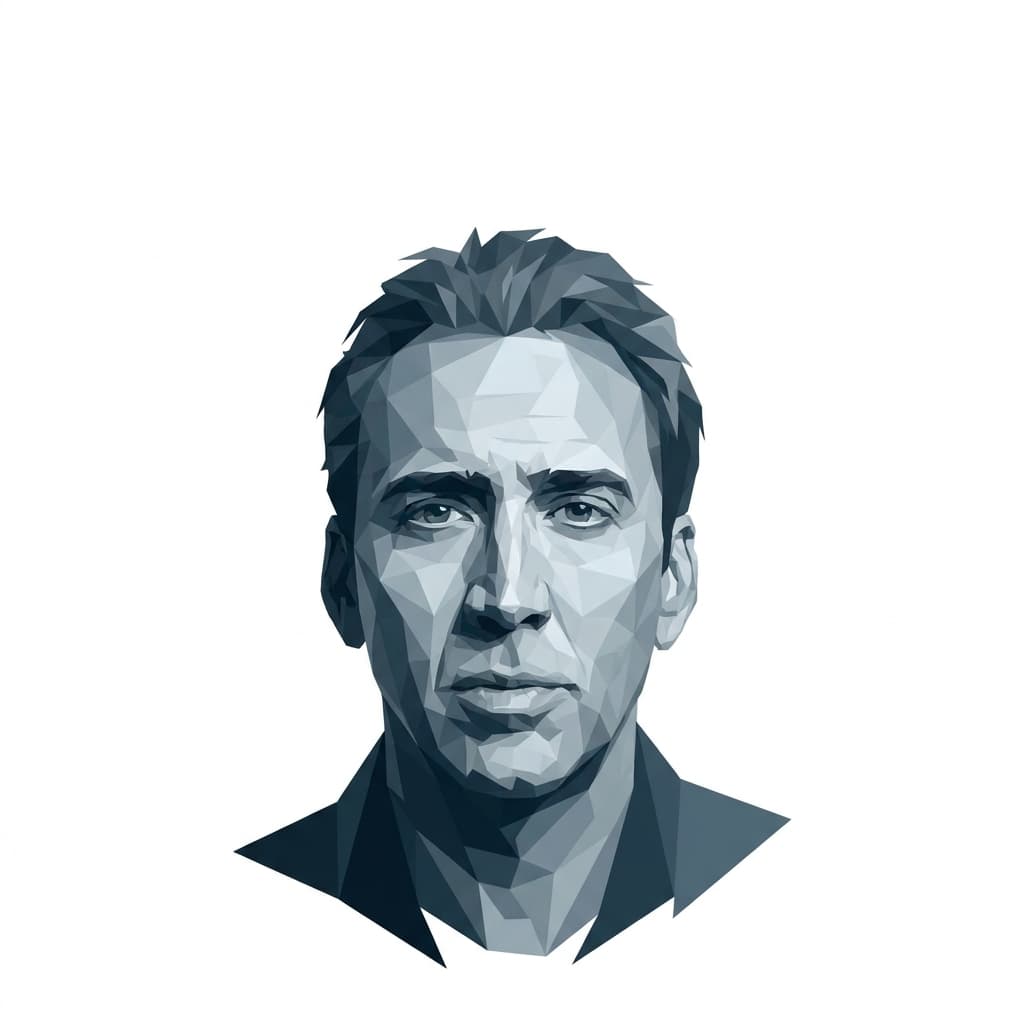
What do you and Nicolas Cage have in common?
Enter your birth details to find out