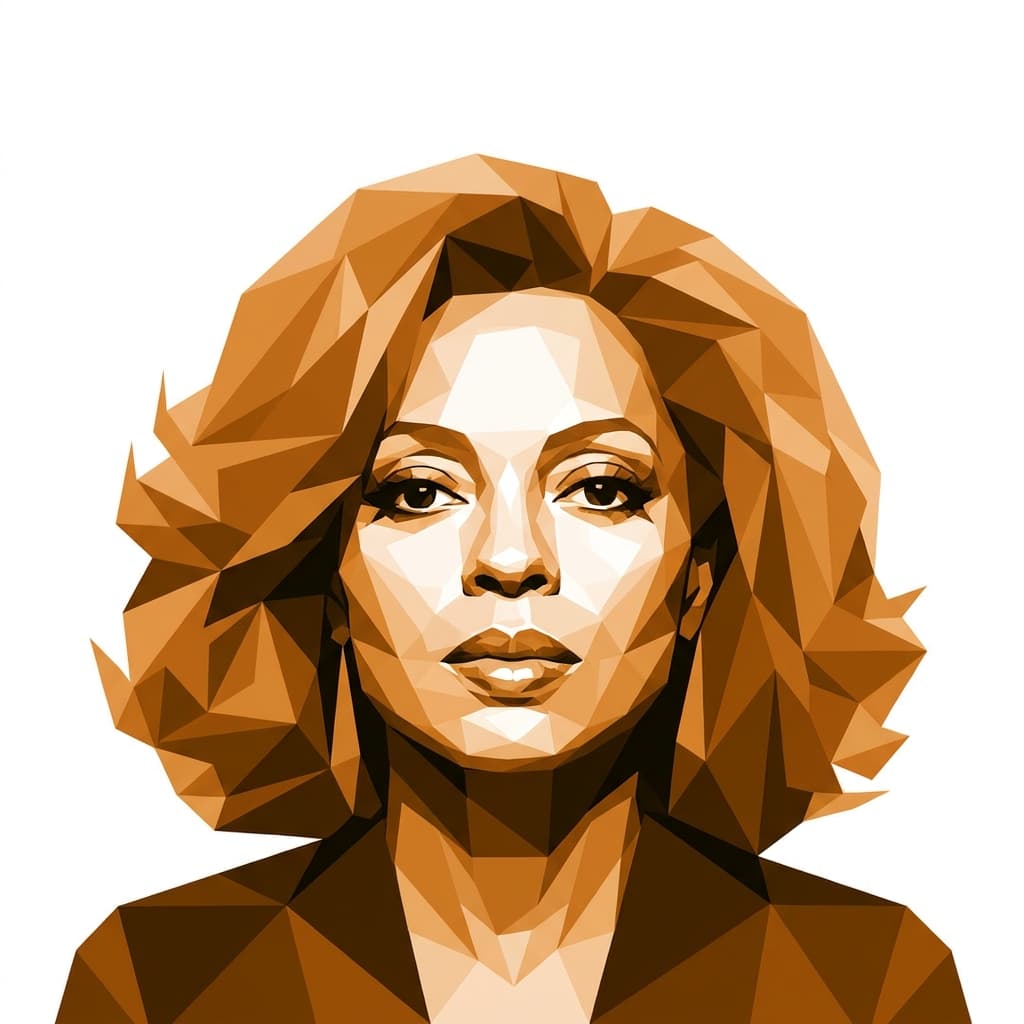
Motown-era singer, actress, and cultural icon who fronted The Supremes before a landmark solo career.
Design
- Q58.5
- h52.5
- R30.6
- g31.6
- i41.6
- S61.5
- T14.2
- U20.6
- V29.3
- W45.6
- X20.6
- Y18.1
- Z33.1
Personality
- Q17.3
- h18.3
- R24.6
- g31.3
- i41.3
- S51.1
- T63.2
- U15.2
- V7.5
- W45.5
- X20.6
- Y46.5
- Z31.5
Diana Ross is a Manifesting Generator — built for speed, multiple lanes, and the kind of stamina that turns a Detroit teenager singing on a Brewster-Douglass porch into a global brand within a decade. She never picked between singing, acting, and running her own show; she did all of it, often at once, and the shape of her career is exactly that.
The Supremes were her first great experiment. As a 3/5 profile, she learned by doing — auditioning, being turned down, coming back, tweaking the harmonies, the hair, the gowns, the choreography until "Where Did Our Love Go" hit in 1964. Twelve number-one singles later, she had figured out through pure trial and error what a crossover pop group could be. The public pressure that came with being the face out front was intense, and she was often criticized for it, but her instinct to keep refining what wasn't quite working yet is exactly the engine that produced that run.
Her leadership inside the group, and later inside her own productions, ran on Berry Gordy's recognition and her own natural pull toward the front of the room. When she left Motown in 1981 for a reported $20 million RCA deal — one of the largest recording contracts of its time — she was operating from the instinct to steward her own resources rather than let someone else steward them for her. She produced her own albums, ran her own tours, and structured her career around ownership at a moment when Black women artists were rarely offered that seat.
The pivots kept coming. She stepped into film with Lady Sings the Blues in 1972 and earned an Oscar nomination on her first try; then Mahogany, then The Wiz. She reinvented her sound with Chic on "Upside Down" and "I'm Coming Out" in 1980, embracing disco just as most of her peers were fleeing it — a very Manifesting Generator move to chase what's alive right now rather than protect an old brand. Her appetite for radically different rhythms and reinventions — Motown pop, jazz standards, disco, adult contemporary, Broadway — kept her career oxygenated for six decades.
She has an Emotional authority, and the public record of her big decisions — leaving The Supremes, leaving Motown, the 1983 Central Park concert in the pouring rain that she refused to abandon — suggests someone who feels her way toward yes over time and then commits absolutely. That depth of feeling and desire for meaningful, high-stakes experiences is all over her performances; so is her willingness to walk onstage into weather nobody else would. The Central Park rain show, restaged the next night in front of a bigger crowd, is a small monument to both.
In her seventies and eighties she has kept touring, released the well-received Thank You in 2021, and continues to headline festivals. Her long arc reads as one very consistent instruction to herself: say yes only to what genuinely lights you up, and see it all the way through.
Sources: biography · birth data
What do you and Diana Ross have in common?
Enter your birth details to find out