Country music icon, songwriter, and businesswoman whose warmth and work ethic built an entertainment empire.
Design
- Q50.6
- h3.6
- R12.5
- g15.4
- i10.4
- S1.3
- T18.4
- U62.4
- V48.4
- W62.5
- X45.1
- Y18.4
- Z33.5
Personality
- Q60.4
- h56.4
- R59.1
- g15.2
- i10.2
- S54.1
- T60.1
- U62.1
- V50.1
- W62.1
- X35.3
- Y18.6
- Z33.4
Dolly Parton is a Generator — built with the kind of consistent, deep-well energy that lets a person write over 3,000 songs and still get up at 3 a.m. to write more. Born the fourth of twelve children in a one-room cabin on the Little Pigeon River, she was writing songs before she could write words, dictating lyrics to her mother. That capacity to work — cheerfully, relentlessly, for decades — is the whole engine underneath the wigs and rhinestones.
Her 4/6 profile shows up in a very particular way: Dolly is a role model who never actually left her community. She still refers to Sevier County as home, still funds it, still shows up. The early years were the "experimentation" phase this profile is famous for — the Porter Wagoner Show, the big hair, the campy Vegas years — and by her fifties she'd transitioned into the elder-stateswoman role, the living example people trust because she lived it. She has said many times that she figured out who she was going to be at a young age and never wavered, which is the kind of unshakeable self-acceptance that lets her joke about her own looks before anyone else can.
The Porter Wagoner departure in 1974 is the cleanest example of her gut-level yes-or-no decision-making. Wagoner had made her a star; he also wouldn't let her leave. She wrote "I Will Always Love You" as a goodbye letter, walked out anyway, and later turned down Elvis Presley's request to record it because his manager wanted half the publishing. Both decisions looked crazy at the time. Both were correct. She waited for the right offers to arrive — Whitney Houston's version eventually earned her generational money — rather than grabbing the first big check on the table.
The songwriting itself is where her gates get loud. "Coat of Many Colors," "Jolene," and "9 to 5" are stories that turn one specific life into something everybody recognizes, and they land because she has an unerring sense of when to sing plain and when to break your heart. "Jolene" was written in about the same afternoon as "I Will Always Love You" — a burst of pure creative output that seems to arrive whole. She talks openly about writing being the thing that lights her up most, the private act underneath all the public performance.
Then there's Dollywood, the Imagination Library, the Dollywood Foundation, the $1 million she gave to Moderna's vaccine research. This is Gate 45 leadership as stewardship — using resources to lift the community that raised her, mailing free books to millions of children a month. She's built an empire without ever losing sight of who it's for, and she's done it while refusing to be sorted into anyone's political camp, keeping her audience broad by keeping her values clear and her opinions personal.
At the core is a depth she rarely shows in interviews but pours into songs — the Smoky Mountain girl who knew, with real precision, exactly how she wanted to be seen, and built a fifty-year career on the difference between the costume and the person wearing it.
Sources: biography · birth data
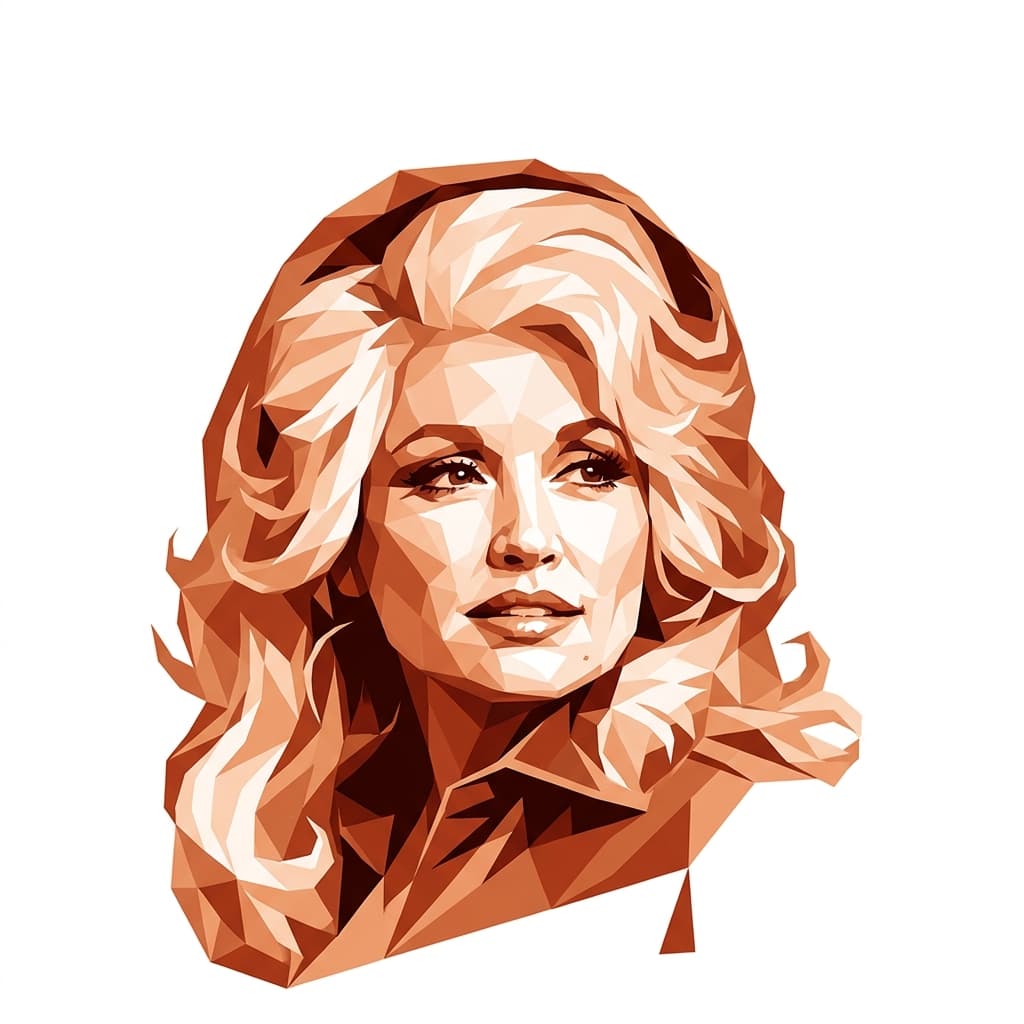
What do you and Dolly Parton have in common?
Enter your birth details to find out