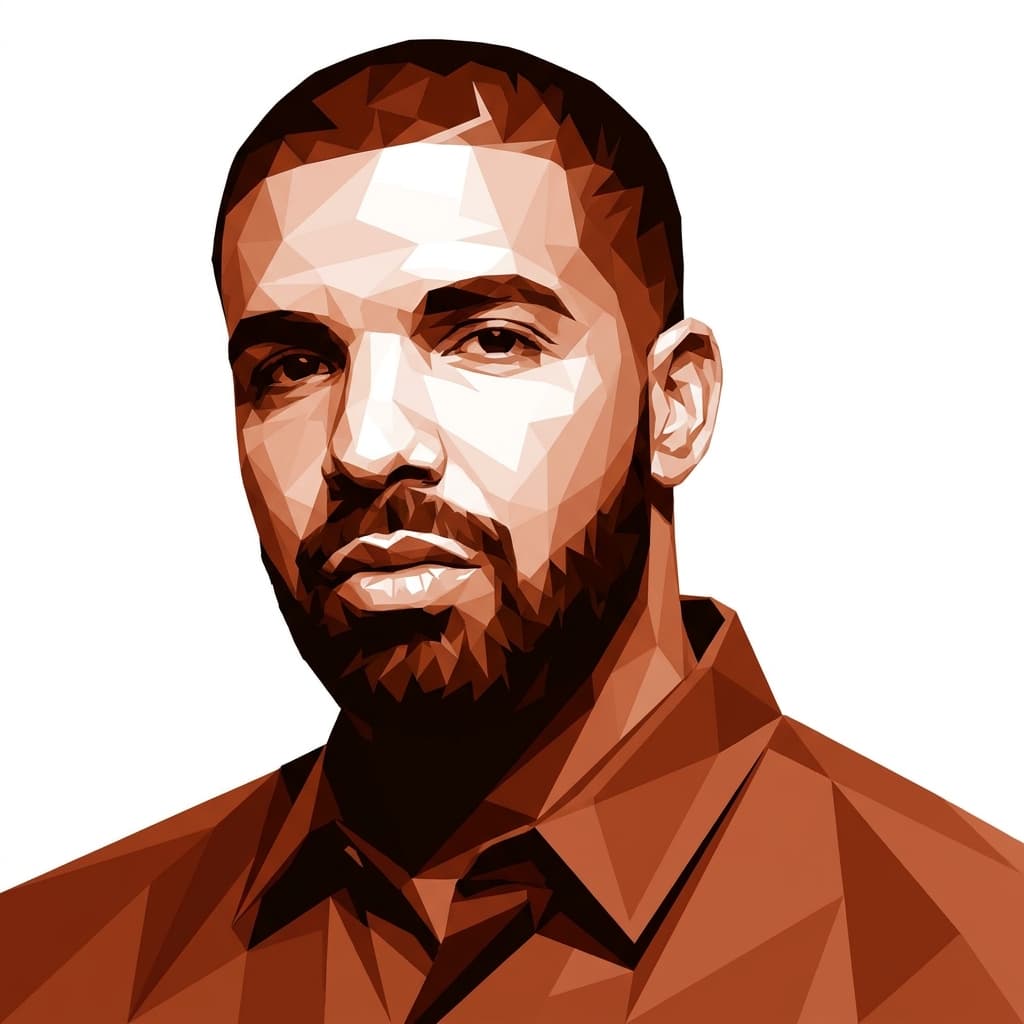
Canadian rapper, singer, and cultural force whose emotional vulnerability reshaped hip-hop in the 2010s.
Design
- Q31.1
- h41.1
- R25.2
- g42.5
- i32.5
- S56.3
- T64.5
- U38.5
- V22.6
- W34.4
- X26.2
- Y10.6
- Z28.3
Personality
- Q50.5
- h3.5
- R39.3
- g42.1
- i32.1
- S14.1
- T43.1
- U19.2
- V63.3
- W9.2
- X26.3
- Y10.6
- Z28.6
Aubrey Drake Graham is a Generator — built with the kind of deep, replenishable stamina that lets him release a mixtape, a studio album, a surprise project, and a feature run in the same calendar year without obviously running out of fuel. Before the music, there was Degrassi: The Next Generation, where a teenage Drake spent the better part of the 2000s playing Jimmy Brooks. He wasn't an overnight star; he was a working actor responding to whatever Toronto offered him, letting the next opportunity light up his gut before chasing it.
The pivot to rap was less a leap than a long, patient build. Room for Improvement, Comeback Season, and finally So Far Gone in 2009 — three mixtapes of methodical refinement before he ever signed to Young Money. That arc is textbook 5/1 profile: research the craft obsessively, build a real foundation, then step out as the practical problem-solver the genre didn't know it needed. He solved rap's emotional-honesty problem. He sang on rap songs when peers were still pretending they didn't have feelings, and he did it with the kind of emotional presence that turns a hook into a confession.
His decision-making has always looked like following an in-the-moment body yes rather than a strategic plan. The "Hotline Bling" video, the If You're Reading This It's Too Late surprise drop, the Meek Mill response tracks in 2015 — these weren't focus-grouped. They were quick, instinctive moves that worked because the gut was already three steps ahead of the discourse. When the gut said go, he went; when the gut said wait, OVO's release calendar quietly cleared.
The business is its own art form. Drake built OVO Sound, partnered with Nike on the OVO line, opened restaurants, signed a brand deal with Virginia Black whiskey, and turned his Toronto loyalty into a global aesthetic. This is the energy of someone who can make almost anything marketable, paired with an instinct for what's worth preserving and what's just hype. He passes on more deals than he takes. The ones he takes tend to compound. There's also a real drive to be the best at the thing, full stop — the streaming records, the Billboard chart longevity, the relentless feature appearances are not accidents.
The shadow side runs honest too. The Pusha T exchange in 2018, the Kendrick Lamar battle in 2024 — these are moments where the fighter energy got pulled into a battle the gut maybe shouldn't have green-lit, and where the urge to provoke a response found a target it couldn't quite metabolize. He's at his strongest when he's stirring up clarity rather than just stirring, turning chaos into a clean hook, a clean verse, a clean album rollout. Take Care, Nothing Was the Same, Views — those are records made by someone closing a cycle on purpose before opening the next one, reflecting on the run before extending it. Whatever the next chapter looks like, the rhythm has been the same since Jimmy Brooks: respond, build, release, repeat.
Sources: biography · birth data
What do you and Drake have in common?
Enter your birth details to find out