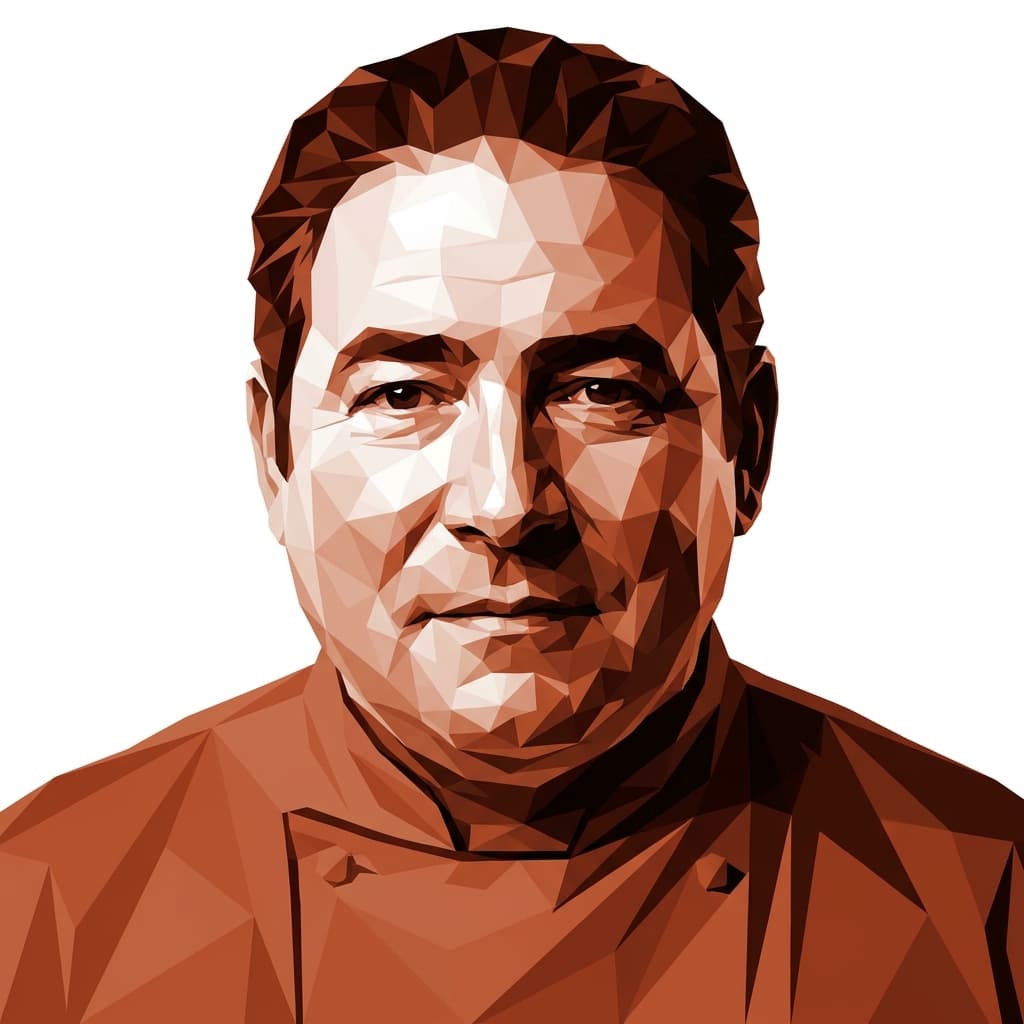
American celebrity chef, restaurateur, and television personality who built a New Orleans-rooted culinary empire.
Design
- Q62.3
- h61.3
- R34.6
- g18.4
- i17.4
- S7.5
- T40.1
- U29.4
- V43.4
- W10.5
- X7.3
- Y28.3
- Z59.3
Personality
- Q32.1
- h42.1
- R17.5
- g18.1
- i17.1
- S44.2
- T40.3
- U32.6
- V34.2
- W10.4
- X4.2
- Y28.5
- Z59.6
Emeril Lagasse is a Generator — built for sustained, hands-on work, the kind of person who can stand at a stove for fourteen hours and feel more alive at the end of it than the beginning. Growing up in Fall River, Massachusetts, he started working in a Portuguese bakery at ten years old, kneading bread before school. That early grind set the pattern for everything that came after: stamina, repetition, and the particular pleasure of building mastery one shift at a time.
He turned down a music scholarship to attend Johnson & Wales for cooking, then spent years in the kitchens of New York, Paris, and Lyon before Ella Brennan recruited him in 1982 to replace Paul Prudhomme at Commander's Palace. He was 23. The pressure was enormous, and Lagasse's 1/3 profile — the investigator-experimenter who learns by doing and occasionally failing publicly — was perfectly suited to it. He absorbed Creole technique by getting his hands dirty for seven years, studying suppliers, fishermen, farmers, until he understood the why behind every dish on the menu.
In 1990 he opened Emeril's in a converted pharmacy in the New Orleans Warehouse District, betting on a neighborhood nobody thought would work. The bet paid off because he had a nose for what would actually last — which ingredients were worth the cost, which servers were worth training, which risks were worth taking. When the Food Network launched in 1993, he said yes to a cooking show that nobody, including the network, expected to become a phenomenon. "Essence of Emeril" and later "Emeril Live" turned him into the first true celebrity chef on television, complete with a studio audience, a house band, and the catchphrases "Bam!" and "Kick it up a notch."
The on-camera persona was loud, but the work underneath it was disciplined. He'd respond to what excited him — a new restaurant concept, a cookbook, a line of cookware — and then commit completely, often grinding through development for years before launch. He has been blunt about the failures: a short-lived NBC sitcom, restaurants that closed, a 2007 sale of his media company to Martha Stewart that didn't go the way either side hoped. He treats each one as data. The gut yes or no that drives his decisions has rarely been wrong about the food itself; the misses tend to be about everything around it.
Lagasse built a family-style culture in his kitchens, providing for his crews like an extended household and demanding loyalty in return. His restaurants became feeders for a generation of American chefs, and he funneled much of his wealth into the Emeril Lagasse Foundation, which supports culinary education programs for kids — a direct echo of the ten-year-old in the Fall River bakery. He has opinions about what's wrong with the restaurant industry, about training, about wages, about respect, and he'll share them when asked, grounded in three decades of specifics rather than abstractions. After all the television, the empire still runs on the same engine it started with: showing up, tasting everything, and bringing real energy to the line.
Sources: biography · birth data
What do you and Emeril Lagasse have in common?
Enter your birth details to find out