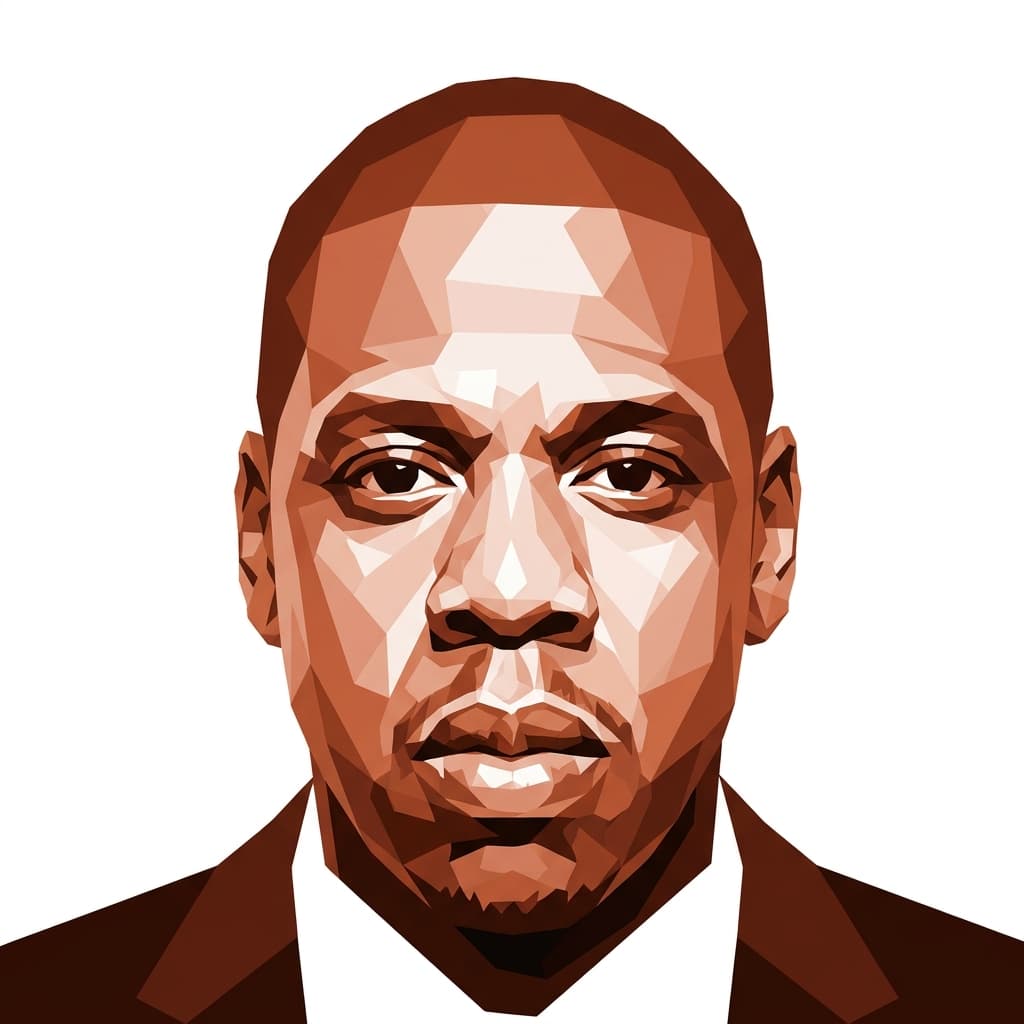
Brooklyn-born rapper turned mogul who built a hip-hop empire from Marcy Projects hustle.
Design
- Q64.3
- h63.3
- R53.2
- g22.5
- i47.5
- S48.2
- T33.3
- U26.5
- V18.6
- W24.2
- X46.6
- Y14.2
- Z6.3
Personality
- Q5.1
- h35.1
- R18.2
- g22.1
- i47.1
- S26.6
- T14.6
- U49.3
- V50.2
- W27.1
- X18.5
- Y14.5
- Z6.5
Shawn Carter is a Generator — built for the long, masterful grind, with the stamina to spend three decades deep inside one craft and still find new rooms to walk into. The Jay-Z story isn't a sudden ascent. It's a Brooklyn kid from Marcy Projects selling tapes out of a car, getting turned down by every label, and finally launching Roc-A-Fella with Dame Dash and Kareem Burke because no one else would put him on. The doing came first; the empire followed.
His 1/3 profile shows up in how he learned the business — by getting it wrong, often, and very publicly. The Reasonable Doubt era was foundation-laying, an investigator figuring out distribution, pressing CDs, working corners of the industry no major was paying attention to. The trial-and-error of Roc-A-Wear, the early stumbles with Rocawear partners, the failed Reebok deal that became the wildly successful S. Carter sneaker — each was the kind of education only experience gives you, refining his sense of what a deal should actually look like.
He's famous for not writing his rhymes down, which is essentially Sacral decision-making made audible — verses arriving fully formed in the booth, no overthinking, no editing on the page. The same gut tells him when to walk into a meeting and when to walk out. He sold his stake in the Brooklyn Nets the moment the Roc Nation Sports conflict appeared. He passed on Spotify for Tidal. He turned down the Super Bowl halftime show, then took over its production years later on his own terms. The decisions look strategic from the outside; from the inside they're a body-level yes or a clean no.
The persuasion gift is hard to overstate. He talked Def Jam into buying Roc-A-Fella and naming him president. He brokered the Samsung deal that made Magna Carta Holy Grail platinum before it shipped. He's the negotiator who finds the angle nobody else sees, and he pairs it with a real instinct for what something is actually worth — champagne, streaming rights, sports agencies, bourbon. He sells what he uses. The wealth follows because the belief is real.
His ear is the other thing. Twenty-plus years in, he still hears what's coming before the room does — signing a young Kanye when nobody at Roc-A-Fella wanted to, pushing Rihanna's first single, betting on Rocawear when hip-hop fashion was barely a category. The skepticism is constructive: he tests an idea against his own logic until it holds. And when he gets quiet — the long retreats between albums, the year of silence before 4:44 — that's the processing time a Brooklyn kid had to learn to take, distilling what he's witnessed into something worth saying.
What 4:44 made plain is that he's still in trial-and-error mode, just at a different altitude. The infidelity verses, the financial-literacy verses, the apology to his mother — these are revelations that only land after years of sitting with the pattern. He's now the elder who turns lived experience into the kind of wisdom younger artists actually use, still building, still responding to what lights him up.
Sources: biography · birth data
What do you and Jay-Z have in common?
Enter your birth details to find out