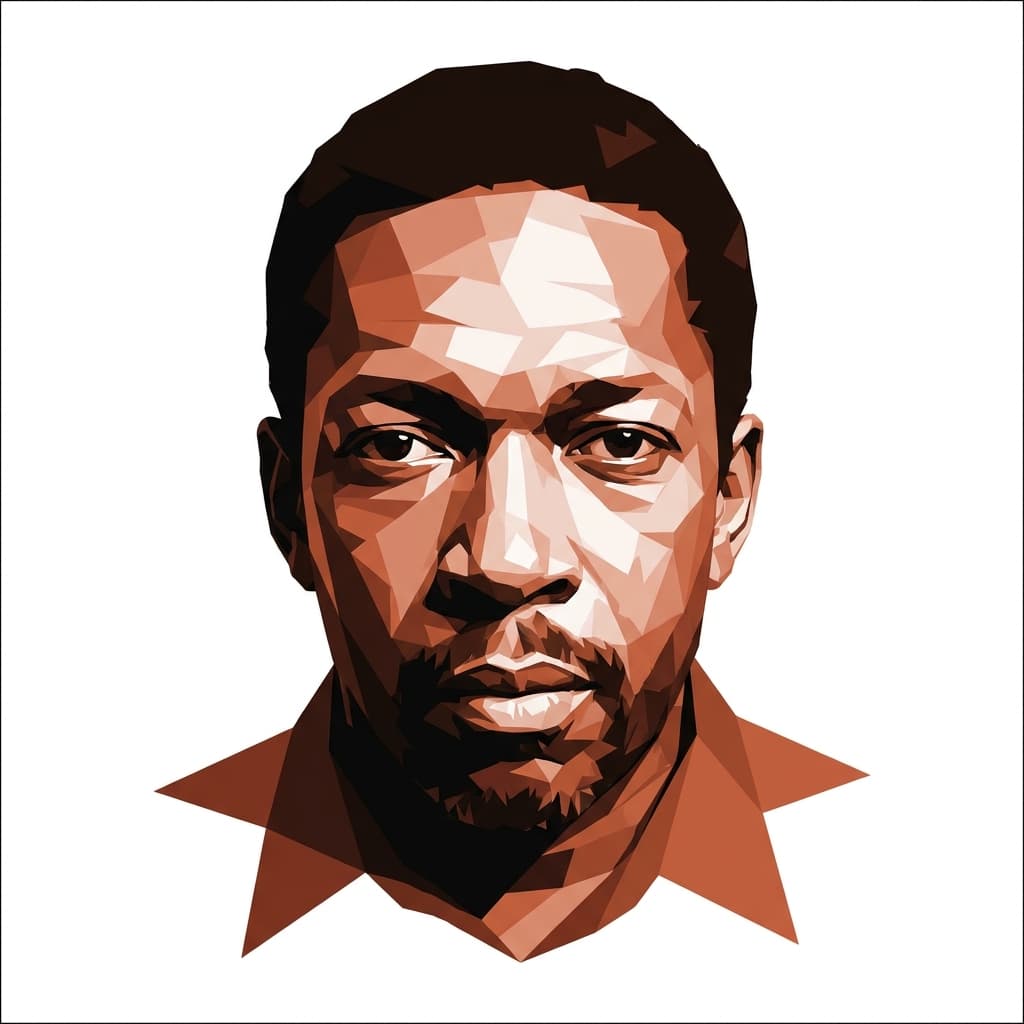
Visionary jazz saxophonist and composer who transformed improvisation into spiritual practice.
Design
- Q15.5
- h10.5
- R5.1
- g53.2
- i54.2
- S62.2
- T8.1
- U17.3
- V30.3
- W43.2
- X25.2
- Y4.5
- Z39.5
Personality
- Q46.2
- h25.2
- R3.3
- g39.4
- i38.4
- S46.6
- T64.4
- U23.1
- V13.6
- W43.4
- X36.6
- Y29.2
- Z53.1
John Coltrane was a Generator — built for the long, obsessive labor of mastery, with the stamina to practice ten, twelve, fourteen hours a day and still reach for the horn after dinner. Friends and bandmates told the same story with different details: Coltrane walking the halls with a mouthpiece between his teeth, Coltrane falling asleep with the saxophone across his chest, Coltrane running scales in the dressing room until someone physically pulled him toward the stage. His genius was not a flash. It was accumulation.
He came up through Philadelphia clubs and Navy bands, then landed the sideman job that changed him — Miles Davis's quintet in 1955 — largely by waiting until the right call came and saying yes with his whole body. Miles was famously terse; Coltrane responded by playing longer, denser, more searching solos than anyone had heard. When Miles asked why his solos ran so long, Coltrane reportedly said he didn't know how to stop. That was the gut answer that didn't need a logical justification — the sound was pulling him and he was following.
His 2/5 profile, the hermit who becomes a savior figure, showed up in the shape of his life. He was a private, deeply reserved man who needed hours alone with the horn to feel like himself, and yet the jazz world kept projecting messianic possibility onto him — first as a technician, then as a visionary, finally as something close to a saint. He retreated to woodshed obsessively between gigs, pursuing understanding as though the answers were a moving target, and when he emerged the vocabulary had shifted underneath him again.
The 1957 kick — quitting heroin cold in his mother's apartment over four days of water and prayer — was the initiation that reset his relationship to what he was doing. He came out of it convinced music was a spiritual discipline, and the work that followed carried that weight. Giant Steps was pure logical architecture, a chord cycle he drilled into a system nobody had heard organized that way before. My Favorite Things was the same restless mind finding a ritual he could inhabit night after night and still find new territory inside. A Love Supreme, recorded in a single 1964 session, was the breakthrough that arrived whole, not built brick by brick.
The classic quartet with McCoy Tyner, Jimmy Garrison, and Elvin Jones was the container for his most sustained run — and Coltrane committed to it with the kind of endurance that lifts everyone around it. He treated each night as a search rather than a performance, and audiences either surrendered or walked out. By the mid-sixties he was pushing into free jazz territory with Pharoah Sanders and Alice Coltrane, choosing the edges other players considered too intense to visit and distilling decades of harmonic language down to something closer to prayer than technique.
He died of liver cancer in July 1967, forty years old, still practicing. The horn was reportedly by the bed.
Sources: biography · birth data
What do you and John Coltrane have in common?
Enter your birth details to find out