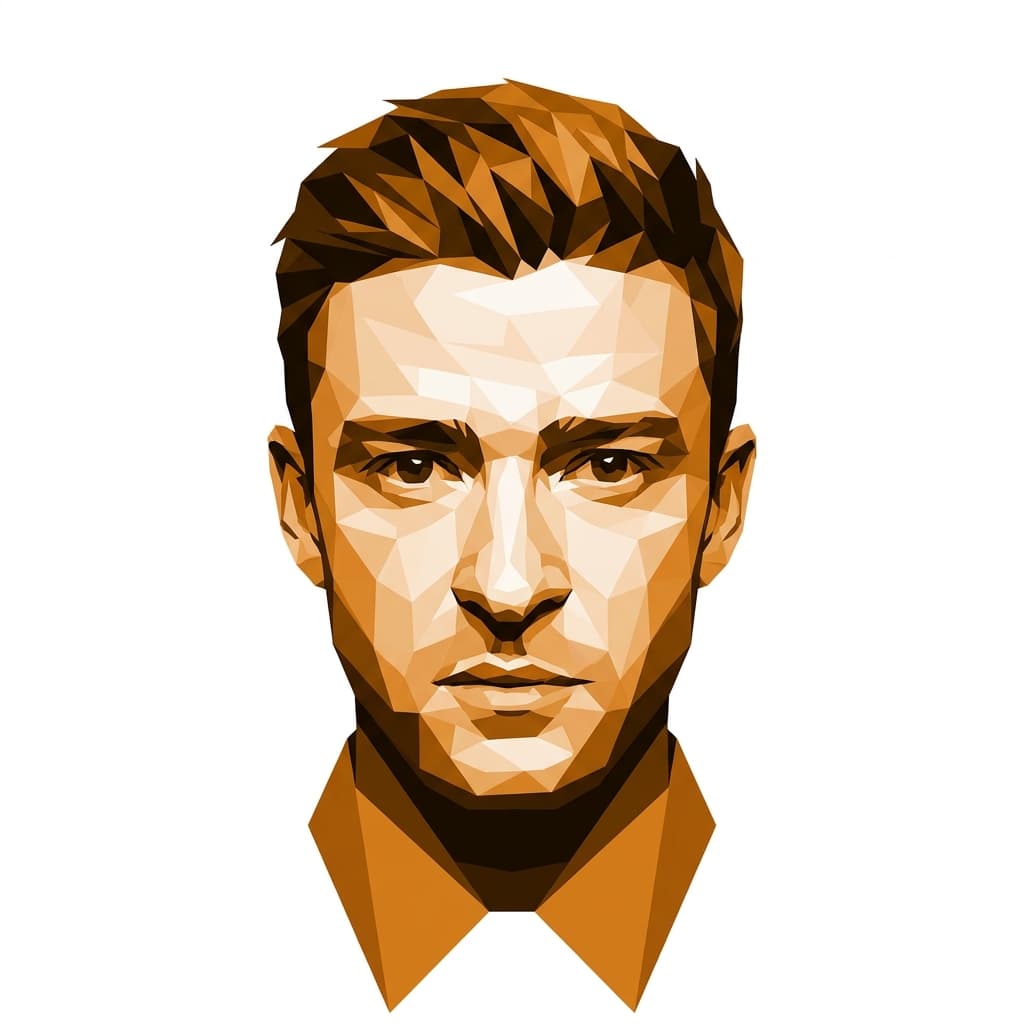
Pop and R&B singer, dancer, and actor who broke from boy-band fame into solo reinvention.
Design
- Q1.1
- h2.1
- R50.2
- g7.3
- i13.3
- S28.6
- T18.5
- U26.2
- V46.4
- W18.2
- X14.1
- Y26.5
- Z32.2
Personality
- Q19.5
- h33.5
- R11.3
- g33.4
- i19.4
- S55.1
- T61.6
- U30.1
- V48.1
- W48.1
- X14.6
- Y11.2
- Z32.4
Justin Timberlake is a Manifesting Generator — wired to juggle singing, dancing, acting, producing, and a tequila brand without ever fully committing to one lane — and his career has always moved at that hybrid pace. He went from Mickey Mouse Club kid to *NSYNC frontman to solo artist to SNL host to film actor in a non-linear sprint that would look chaotic on anyone else's resume. Most pop stars try to consolidate; he keeps adding lanes and changing direction when the energy shifts.
The pivot that defined him was Justified in 2002. He'd been packaged as a teen idol in matching outfits, and the response in his gut was clearly no. He decamped to Virginia Beach, sat in the studio with Pharrell and Timbaland, and came back with a falsetto-driven R&B record that didn't sound like anything *NSYNC had done. That's a 5/1 profile move in textbook form — the investigator who disappears to build a real foundation, then re-emerges as the problem-solver people actually want to hear. He didn't just leave the band; he studied his way into a different artist.
His decision-making has always been visibly physical. He talks in interviews about "feel" and "vibe" the way other people talk about strategy, and the records bear it out — the kind of in-the-room yes you can't argue with is what drives "Cry Me a River," "SexyBack," the Suit & Tie horn line. When he's locked in, he can pour absurd hours into work he genuinely loves and the output sounds effortless; when he's not, the music gets thinner and the press gets worse. Man of the Woods is what happens when a fresh idea gets chased before the gut signs off.
On stage, what he actually does is sell. Not in a cynical way — in the pure-instinct showman way of someone who knows exactly how to move a room. He reads a crowd, adjusts a verse, drops to a knee at the falsetto, and the deal closes. The same instinct shows up in The Social Network and Friends with Benefits, where he's bringing his own original take rather than copying anyone else's playbook. His best performances feel improvised even when they're not.
He's also someone who carries an instinct for what's worth preserving versus what needs to evolve — which is why he kept songwriting partners across decades, why the *NSYNC guys still show up at his shows, and why his Tennessee roots keep surfacing in the music even when it's wrapped in synths. There's a steady pull toward home, family, and the people he's known longest that grounds the pop-star machinery. The Memphis kid is still in there.
The harder chapters — the Super Bowl fallout, the Britney apology, the DWI — read like a 5/1 problem: when the world projects perfection onto someone and they don't retreat often enough to actually process what they've absorbed, the cracks show publicly. His best work has always come after a stretch out of the spotlight. The pattern suggests the next one will too.
Sources: biography · birth data
What do you and Justin Timberlake have in common?
Enter your birth details to find out