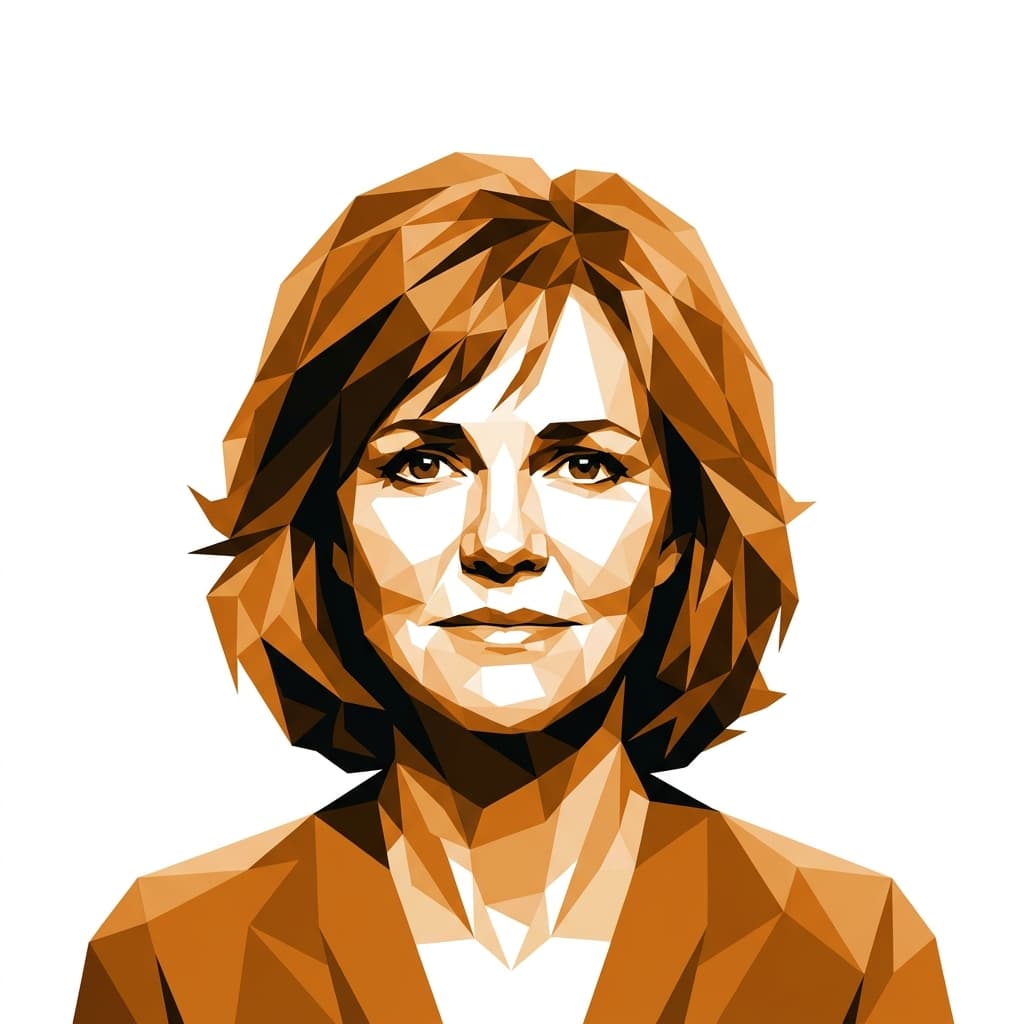
Victorian novelist who wrote Jane Eyre, transforming personal grief and isolation into enduring English literature.
Design
- Q41.2
- h31.2
- R9.1
- g12.2
- i11.2
- S19.5
- T26.3
- U24.1
- V44.2
- W13.1
- X9.5
- Y26.5
- Z22.5
Personality
- Q3.6
- h50.6
- R30.2
- g35.6
- i5.6
- S51.2
- T17.1
- U15.1
- V28.5
- W49.4
- X9.6
- Y26.6
- Z36.1
Charlotte Brontë was a Manifesting Generator — wired to move fast across many creative fronts, and her short life is exactly that pattern compressed into forty years. She wrote poetry, taught, painted, ran a failed school, wrote novels under a male pseudonym, and along the way managed a household of consumptive siblings and a grieving father. The pace was punishing, but the output was startling: three published novels, a fourth left in fragments, and juvenile writings that filled hundreds of tiny hand-stitched books before she turned twenty.
Her earliest years on the Yorkshire moors were spent doing what a 6/2 profile tends to do — retreating into a private inner world and building imaginary kingdoms there. With her siblings Branwell, Emily, and Anne, she invented the fantasy realms of Angria and Gondal, populating them with characters, wars, and political intrigues written in a script so small it needed a magnifying glass to read. This was the long apprenticeship of solitude, the years she'd later minimize as juvenile play but which quietly built the psychological range that made Jane Eyre possible.
The Brussels period cracked her open. Sent at twenty-six to improve her French at the Pensionnat Heger, she developed a consuming, unrequited attachment to her married professor, Constantin Heger, and wrote him letters afterward that read like emotional weather nobody could ride out cleanly. She burned in silence for years. When she finally turned that material into fiction — Villette especially — she did it with words that landed exactly when the mood was right, and with the specific detail no other observer had caught. Nothing in her novels is invented from nothing; it's all metabolized.
Jane Eyre arrived in 1847 under the name Currer Bell because she and her sisters had already learned that women who published were patronized or dismissed. The book's engine is a governess who insists on her own moral worth against a household, a class system, and a man who all outrank her — a quiet insurgency built from principle, executed with the certainty that some fights are the only ones worth having. Charlotte had a lifelong sensitivity to injustice, particularly toward women without means, and she attended to who was going without in ways her contemporaries frequently didn't.
Then the losses came in a row that would have flattened most people. Branwell died in September 1848. Emily in December. Anne the following May. Charlotte kept writing through it, alone in the parsonage with her aging father, producing Shirley and Villette out of the wisdom you only get by surviving what should have ended you. She had become, by then, quietly famous — Thackeray dedicated the second edition of Vanity Fair to her — and she disliked being lionized in London, preferring the moors and the routine of her desk to the drawing rooms that wanted to look at her.
She married her father's curate, Arthur Bell Nicholls, in 1854 after years of resistance, and appeared briefly, cautiously happy. She died nine months later, likely from complications of pregnancy, at thirty-eight. What she left behind was small in volume and enormous in effect: novels that reorganized what English fiction could sound like when a woman wrote from the inside of her own life instead of the outside of someone else's.
Sources: biography · birth data
What do you and Charlotte Brontë have in common?
Enter your birth details to find out