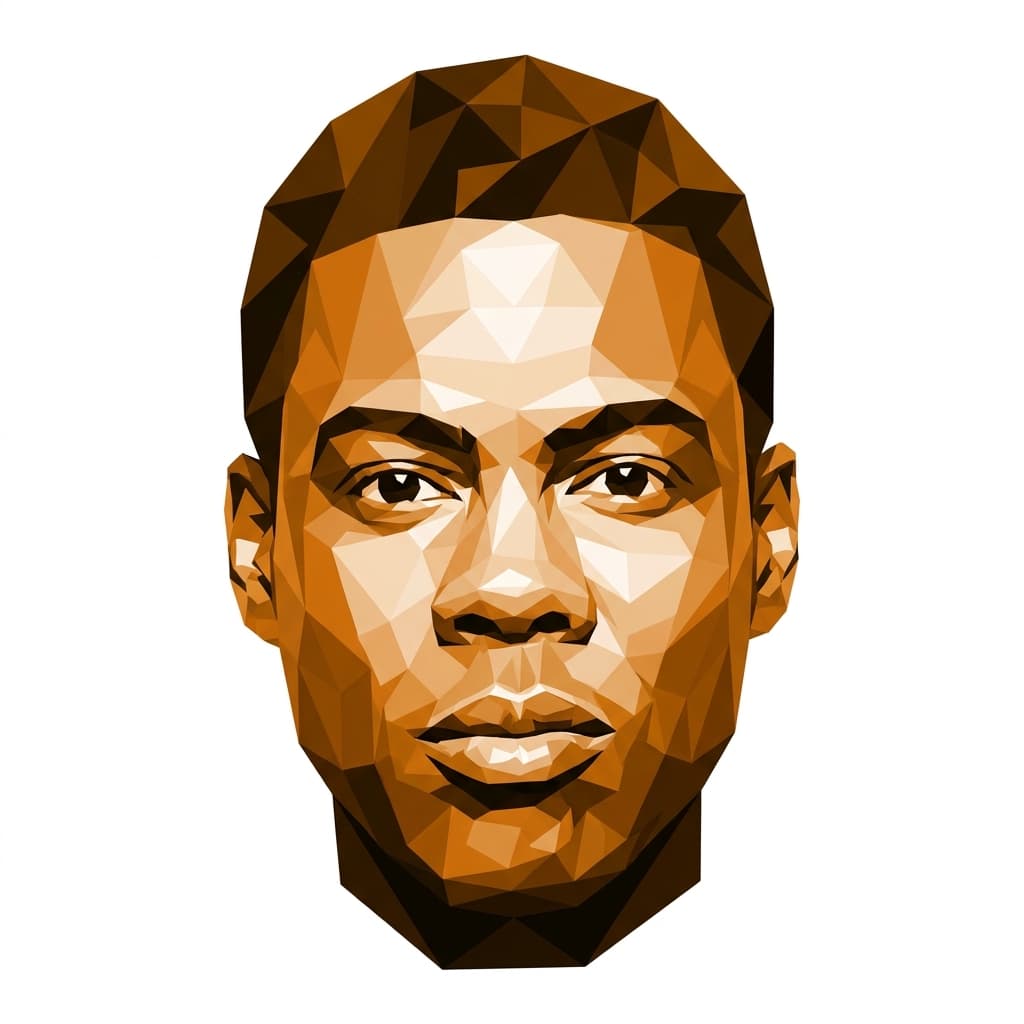
American stand-up comedian, actor, writer, and director known for sharp social commentary and incisive observational humor.
Design
- Q43.2
- h23.2
- R39.1
- g20.5
- i34.5
- S5.2
- T58.4
- U10.1
- V15.3
- W37.6
- X47.2
- Y43.1
- Z47.2
Personality
- Q13.6
- h7.6
- R64.6
- g20.2
- i34.2
- S49.1
- T60.4
- U37.1
- V45.5
- W63.6
- X47.2
- Y43.4
- Z47.1
Chris Rock is a Manifesting Generator — built for multiple lanes at once, and his career proves it: stand-up headliner, sitcom creator, film director, documentary maker, talk-show producer, awards host. He didn't pick one. He's done all of it, often simultaneously, and the speed at which he pivots between forms is exactly what you'd expect from someone wired to chase several passions without permission to slow down.
Rock came up bussed into mostly-white schools in Bed-Stuy, took early shots at New York comedy clubs as a teenager, and spent three frustrating seasons on Saturday Night Live before realizing the show wasn't designed for what he was actually trying to say. That whole period — the bullying, the SNL underuse, the false starts — reads now as the trial-and-error opening act that 6/2 lives map onto so neatly. The 1996 HBO special Bring the Pain was the pivot. Suddenly he was the role model people kept looking for, not by climbing toward it but by surviving long enough to have something to say.
His stand-up is built on taking a complicated truth and stripping it to its bone — the bit about two kinds of people, the school-shooting bit, the Obama material. He doesn't decorate. He finds the sentence underneath the sentence and delivers it. That cuts with the provocation of someone willing to make a room uncomfortable on purpose, and it's why his specials function less like comedy hours and more like communal pressure-release valves. He's poking the audience to feel what they've been avoiding.
The decisions inside his career have a gut-first, explain-later quality. He walked away from SNL. He greenlit Everybody Hates Chris about his own childhood. He directed Top Five the way he wanted to direct it. He hosted the Oscars in 2016 during #OscarsSoWhite and refused to soften the monologue. And in 2022, when Will Smith walked onstage and slapped him, Rock's response in the moment — and the year of silence before he addressed it on his own terms in Selective Outrage — was the work of someone who trusts his own timing over the public's appetite. He let the moment ripen.
What gives his comedy weight is that he's a listener first, talker second — collecting stories from barbershops, from his family, from being one of the few Black kids in white rooms and one of the few rich kids back in old neighborhoods. He metabolizes those observations and gives them back as bits that feel inevitable. Underneath it sits an unmistakable insistence on standing exactly where his values stand, which is why his material on race, marriage, parenting, and class never feels focus-grouped.
In the later phase of his career he's stepped more openly into the role of elder voice, the one younger comics quietly check with, without trading in the restless engine that keeps him on the road. He's still touring. Still writing. Still pivoting. The wisdom is showing — but the appetite hasn't gone anywhere.
Sources: biography · birth data
What do you and Chris Rock have in common?
Enter your birth details to find out