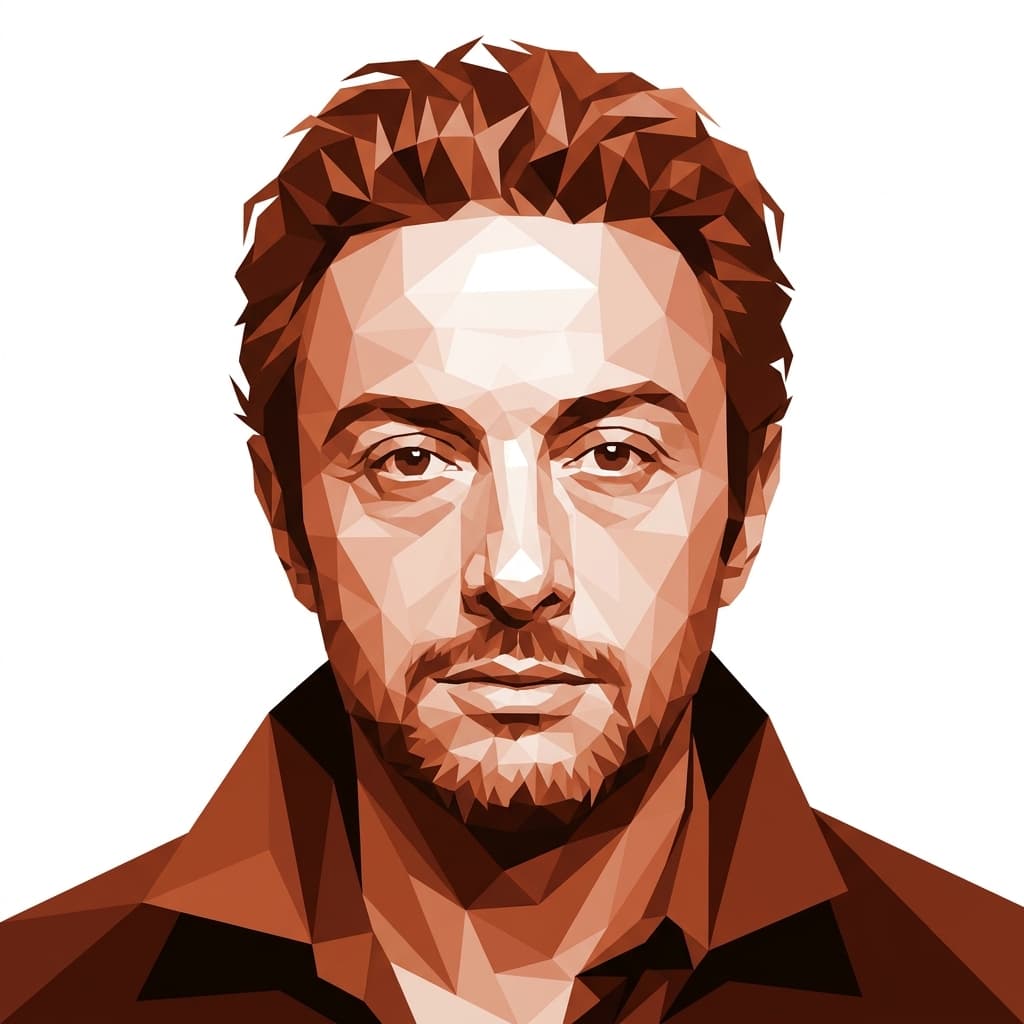
Groundbreaking American stand-up comedian whose obscenity trials transformed free speech and comedic expression.
Design
- Q62.2
- h61.2
- R2.2
- g31.3
- i41.3
- S7.2
- T7.1
- U33.5
- V54.3
- W44.1
- X36.3
- Y4.3
- Z39.5
Personality
- Q57.5
- h51.5
- R59.3
- g56.6
- i60.6
- S32.4
- T34.3
- U48.1
- V38.6
- W1.1
- X22.6
- Y4.6
- Z39.6
Lenny Bruce was a Generator — built with the stamina to grind through the same clubs night after night, mastering a form of comedy that didn't quite exist before he built it. Born Leonard Alfred Schneider in Mineola, Long Island, he served in the Navy during WWII, worked strip joints and Catskills rooms in the early '50s, and slowly stopped doing bits and started doing something else entirely: talking, riffing, indicting, confessing. By 1959, when he appeared on Steve Allen's show introduced as "the most shocking comedian of our time," he'd already become the thing that would eventually get him arrested in nearly every major American city.
His comedy was built on provoking emotions others preferred to leave buried — race, religion, sex, hypocrisy, the specific mendacity of American respectability in the Eisenhower years. He'd do the "How to Relax Your Colored Friends at Parties" bit, or work through the Catholic Church's finances, or improvise a nine-minute monologue about a lonely Lone Ranger, and audiences would either lean forward or walk out. The famous 1961 Jazz Workshop obscenity bust in San Francisco — over a single Yiddish-derived word — was the first of many. He kept doing the material anyway, fighting for something that actually mattered to him, which in his case was the right to say what he'd just said.
As a 5/2 profile, he had the classic pattern: pulled onstage to solve a problem (make people laugh, tell the truth), then retreating to hotel rooms with law books and tape recorders. His natural gift for weaving personal experience into cultural indictment felt effortless — he'd riff a bit once, refine it the next night, and by the third pass it was a piece of American literature. But he also carried the 5's curse: the projections. Prosecutors called him a menace, disciples called him a prophet, and neither was quite the person actually standing at the microphone.
He made decisions the way he made jokes — from a gut that fired before his mind caught up. Fire a manager, marry a stripper, do the bit that would get him arrested, plead his own case in court despite everyone begging him not to. Later in his career, the mental pressure to understand his own persecution consumed him. He stopped doing comedy and started reading trial transcripts aloud onstage, obsessively working the legal puzzle that no amount of thinking could actually solve. Audiences dwindled. He kept going.
His voice had a jazz musician's ear for tone, cadence, the exact weight of a word — he thought of himself as playing changes, not telling jokes, and his best routines have the improvisatory shape of a Bird solo. He was also, more quietly, a working innovator who used constraint as fuel: club rules, obscenity laws, network censors, all of it became material. When he couldn't say a word, the not-saying became the bit.
By 1966 he was blacklisted from most American clubs, broke, addicted, and legally radioactive. He died of a morphine overdose in his Hollywood Hills bathroom that August, age 40. The obscenity convictions were eventually vacated; George Carlin, Richard Pryor, and essentially every stand-up who followed inherited the room he'd forced open, a kind of leadership that only got recognized after the fact.
Sources: biography · birth data
What do you and Lenny Bruce have in common?
Enter your birth details to find out