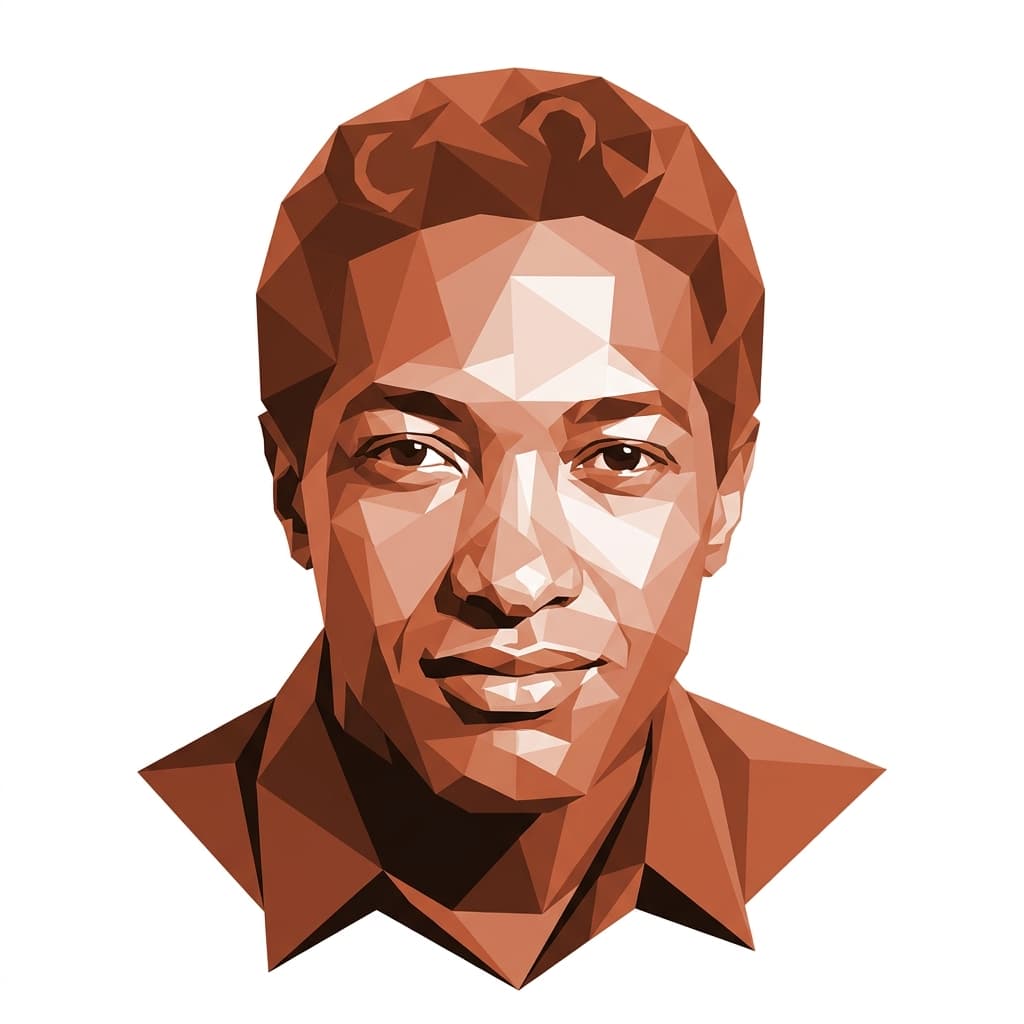
American actor whose Method-driven performances in Streetcar and The Godfather redefined screen acting forever.
Design
- Q54.2
- h53.2
- R41.1
- g59.4
- i55.4
- S60.2
- T13.3
- U43.4
- V9.4
- W50.6
- X63.4
- Y4.2
- Z39.2
Personality
- Q21.5
- h48.5
- R21.4
- g59.2
- i55.2
- S3.1
- T8.5
- U54.3
- V26.4
- W50.5
- X22.3
- Y7.5
- Z39.1
Marlon Brando was a Generator — built for deep, sustained mastery of a craft when something genuinely lit him up, and capable of going utterly cold when it didn't. The arc of his career is exactly that pattern: incandescent commitment in the work he believed in, contemptuous disengagement from everything else. He didn't audition; he waited for the part that pulled at his gut, then poured everything into it.
His 5/2 profile — the heretic with a hermit's heart — explains the shape of his life better than most biographies do. On screen he was the problem-solver everyone projected onto: directors wanted a savior, studios wanted a meal ticket, a generation of actors wanted a prophet. Off screen he vanished to Tetiaroa, his Tahitian atoll, for months at a time, refusing calls and gaining weight as if to repel the gaze. He undervalued the thing that came easiest to him, often calling acting a hustle unworthy of serious men, even as he kept producing performances no one else could touch.
As Stanley Kowalski in Streetcar and Terry Malloy in On the Waterfront, he worked with a provocateur's instinct for the emotional truth under a scene, tearing through the polite theatrical conventions of the 1940s. He mumbled, scratched, ate during dialogue, improvised with props. He had the emotional acoustics of someone who heard tone before words, and he used silence the way other actors used speeches. Kazan said directing him was less about instruction than about creating conditions where Brando could arrive at a knowing he couldn't quite explain.
Then came the long middle — Mutiny on the Bounty, The Chase, a string of films he openly disdained — where his emotional weather ran the show and decisions made on hot impulse turned into years of regret. He fired directors, ballooned the budgets, fed cue cards to co-stars. He refused to be controlled by the studios that wanted to control him, and the industry wrote him off as finished. Coppola had to fight Paramount to cast him as Vito Corleone; Brando stuffed his cheeks with cotton at the screen test and pulled order out of what looked like chaos, reinventing himself in a single afternoon.
He used his platform in ways that infuriated Hollywood — sending Sacheen Littlefeather to refuse the Oscar for The Godfather, marching with civil rights leaders, funding Native American causes — because his sense of what was worth protecting ran deeper than career management. He bonded fiercely and selectively, keeping a small circle of intimates and treating most of Hollywood with bemused contempt. Wally Cox's ashes sat on his dresser for decades.
The late performances — Paul in Last Tango, Kurtz in Apocalypse Now — show an actor listening more than speaking, gathering everyone's stories into himself and giving them back transformed. By the end he barely worked, preferring his island, his ham radio, his children. He'd done what he came to do, on his own terms, and saw no reason to keep performing satisfaction he no longer felt.
Sources: biography · birth data

What do you and Marlon Brando have in common?
Enter your birth details to find out