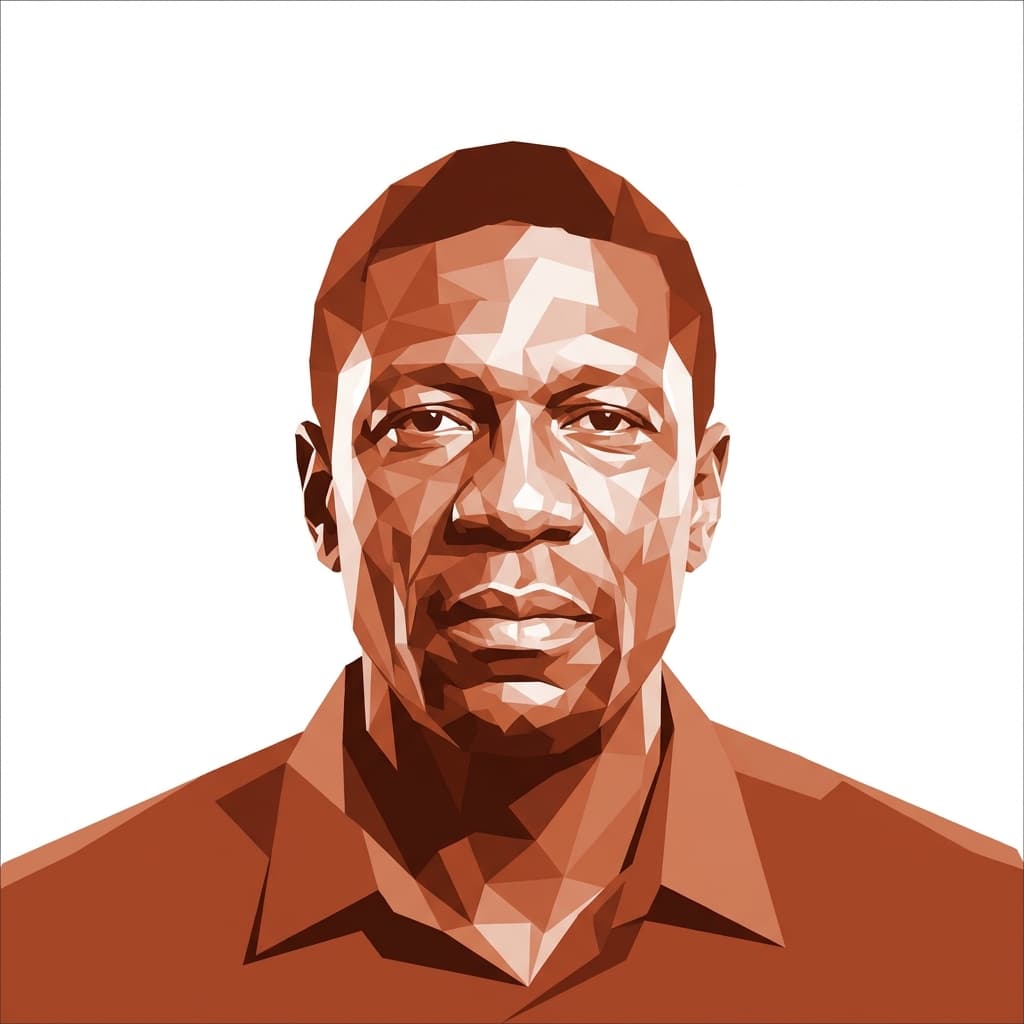
American statistician and writer known for election forecasting, poker, and probabilistic analysis at FiveThirtyEight.
Design
- Q32.5
- h42.5
- R38.2
- g57.1
- i51.1
- S32.5
- T46.4
- U62.6
- V52.3
- W29.4
- X44.4
- Y5.3
- Z48.6
Personality
- Q61.3
- h62.3
- R22.6
- g18.6
- i17.6
- S10.2
- T61.1
- U31.4
- V15.1
- W29.6
- X1.3
- Y26.1
- Z57.2
Nate Silver is a Generator — built with the stamina to grind through spreadsheets, model runs, and poker sessions at a pace that would flatten most people, and to do it happily for years on end. He first got obsessed with baseball statistics as a kid in Michigan, then spent his post-KPMG twenties building PECOTA, a projection system that quietly outperformed the industry consensus on player careers. That pattern — leaving a stable job to chase what actually lit up his gut — is textbook waiting for the full-body yes before committing.
His career is a near-perfect 3/5 profile arc: learn by doing, mess up in public, then get cast as the guy who can fix everyone else's problem. He didn't study political science. He built the 2008 election model on nights and weekends, blogging pseudonymously as "Poblano" on Daily Kos, experimenting in public until the method worked. When it did, the projection came fast and hard — a New York Times licensing deal, a bestselling book, and the strange burden of being expected to be right about everything.
The core Silver product is taking vague anxieties about the future and turning them into numbers with error bars, paired with an appetite for the specific detail, the exact poll weighting, the exact house effect. He'll spend a podcast episode arguing about whether a topline number should move two points, because to him the two points are the argument. That same instinct made him a good poker player during the mid-2000s boom — reading patterns others miss and pricing them into a decision — and a persistent, sometimes exhausting critic of pundits who treat forecasts as vibes.
He is also, temperamentally, a fighter who genuinely enjoys picking the battle. The public feuds — with Krugman, with the political science establishment, with the "polls are broken" crowd after 2016, with the effective-altruism-adjacent set in his more recent work — are not incidental to the brand; they're the engine. When he left ABC/FiveThirtyEight in 2023 and launched the Silver Bulletin on Substack, he did it with a shrug that read as refusing to perform certainty he didn't feel about the old arrangement, then immediately started building the next model.
His 2024 book On the Edge is the clearest self-portrait he's published: a taxonomy of the "River," his term for the risk-tolerant, probability-native subculture that includes poker players, VCs, crypto people, and, obviously, him. The book is a persuasive case that the world would be better run by people who think in expected value, and also a quiet argument for the courage to make the bet before the outcome is knowable. It reads like someone who has spent twenty years collecting the lessons from each finished project before starting the next and finally decided to write the through-line down.
What makes Silver durable, more than any single forecast, is that he keeps choosing which problems are actually worth his analytical energy — and cheerfully ignoring the ones that aren't.
Sources: biography · birth data

What do you and Nate Silver have in common?
Enter your birth details to find out