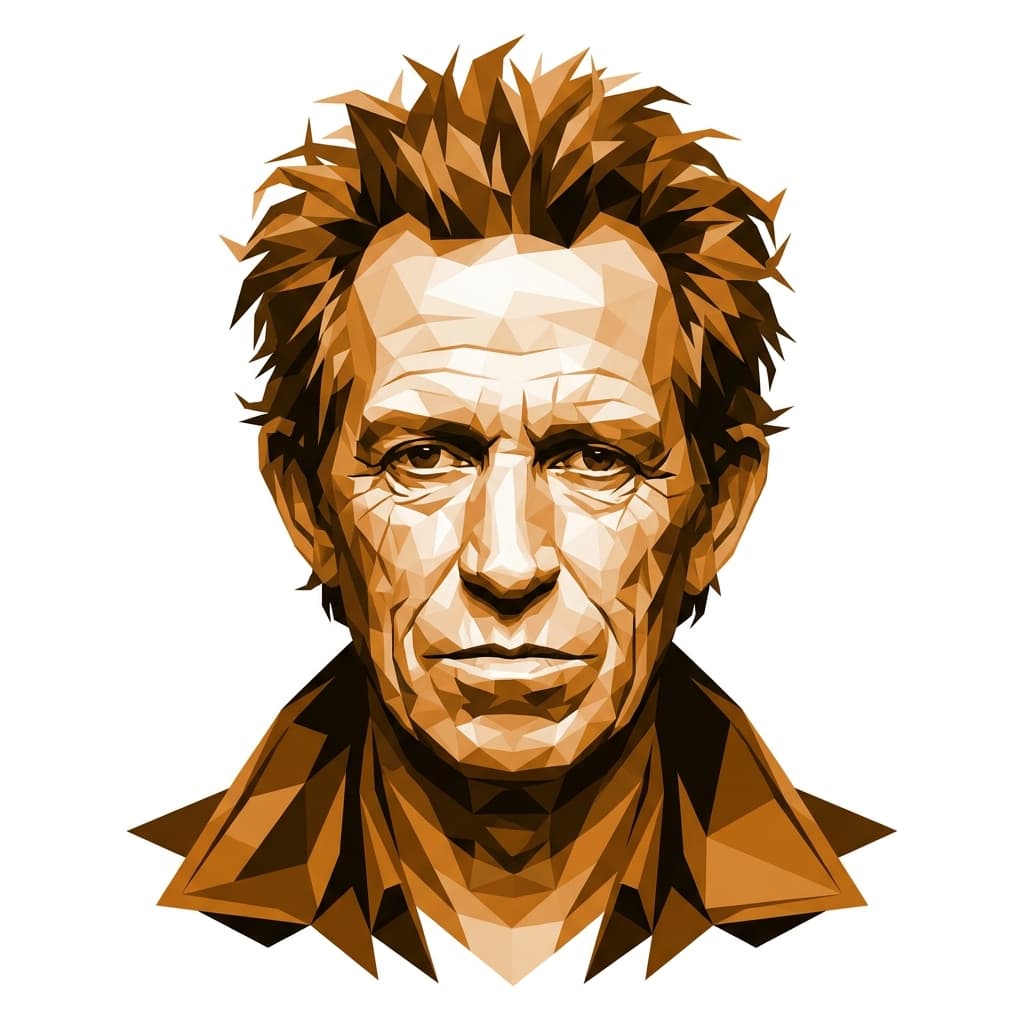
Canadian-American singer-songwriter behind Harvest, Rust Never Sleeps, and decades of restless, uncompromising rock.
Design
- Q4.4
- h49.4
- R44.3
- g52.5
- i58.5
- S59.2
- T39.3
- U35.4
- V6.6
- W53.5
- X35.6
- Y18.1
- Z33.3
Personality
- Q43.1
- h23.1
- R13.1
- g15.3
- i10.3
- S9.6
- T50.5
- U56.5
- V57.2
- W62.5
- X35.6
- Y18.5
- Z33.5
Neil Young is a Manifesting Generator — wired to chase several sounds at once and pivot without warning — and the whole arc of his career is exactly that. He'll be halfway through a country record and abandon it for a feedback-drenched garage album, drop a synth experiment on the same label that wanted another Harvest, and reappear a year later with a folk record made in a barn. Geffen famously sued him in the 1980s for making music "unrepresentative" of Neil Young. The joke, of course, was that unrepresentative is the representation.
He grew up in Winnipeg after a childhood bout of polio, taught himself guitar obsessively, and drove a hearse full of gear down to Los Angeles in 1966 to find Stephen Stills. That's the shape of a life that waits for something to show up and then floors it — Buffalo Springfield, CSNY, Crazy Horse, the solo records, all responses to people and moments that lit him up rather than plans he engineered. When the gut said go, he went fast. When it said no, he walked, sometimes off a stadium tour mid-run.
His 1/4 profile — the investigator who shares with a tight circle — shows up in how he works: deep in the ranch in La Honda with the same handful of collaborators for fifty years, Crazy Horse, Ben Keith, Nils Lofgren, a chosen community he returns to again and again. He researches obsessively — model trains, sound fidelity (Pono), electric cars, Civil War history — then distills the obsession into something plainspoken that lands on a three-minute song. "Rockin' in the Free World" is a foreign-policy essay in a chorus anyone can shout.
The decisions themselves ride an emotional wave. His Emotional Authority is legible in the stories his bandmates tell — sessions cancelled the morning of, tours pulled, songs recorded once at 3 a.m. and never touched again because the feeling was right that night and might not be tomorrow. He'll provoke a room until the truth surfaces, whether that room is a Monsanto shareholder meeting or a CSNY reunion, and he doesn't much care who gets uncomfortable. The activism — Farm Aid, the Bridge School Benefit for his sons, the anti-fracking tours — is the same energy pointed outward, values he refuses to trade for access.
You can hear his gift for starting things and letting the ending find itself in the recordings: first takes, visible mistakes, amps buzzing, count-offs left in. Tonight's the Night was cut in a haze of grief for Danny Whitten and Bruce Berry and released raw. Rust never sleeps because polish would kill it. His guitar solos on "Cortez the Killer" or "Down by the River" are exercises in staying inside one note until it opens, the same three chords held long enough to become a landscape.
What holds it all together is a stubborn insistence on being exactly who he is, the crack in the voice included. He gathers stories — from Kent State, from the Gold Rush, from his own wrecked marriages and dead friends — and hands them back as songs that feel like they were always there. Six decades in, he's still recording, still fighting with streaming services over sound quality, still touring with Crazy Horse when the mood strikes. The plan, as ever, is that there isn't one.
Sources: biography · birth data
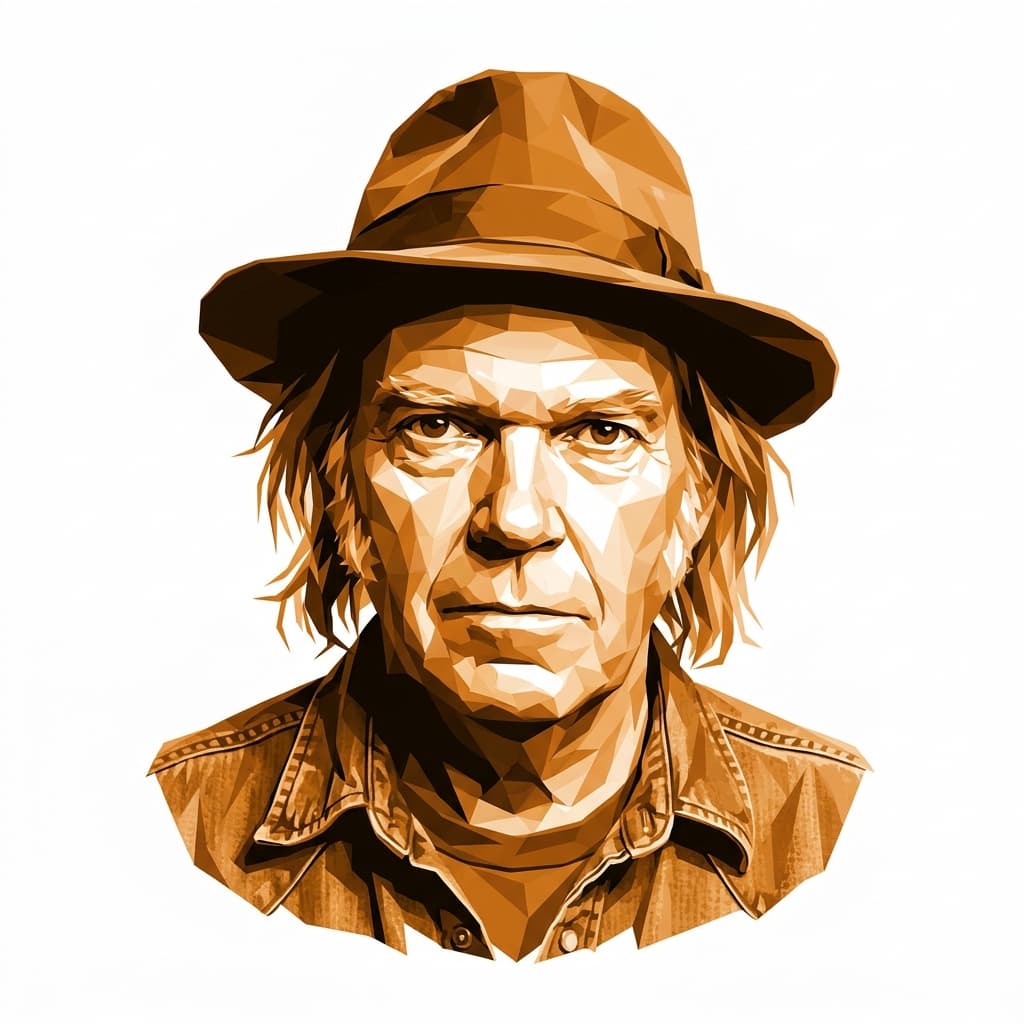
What do you and Neil Young have in common?
Enter your birth details to find out