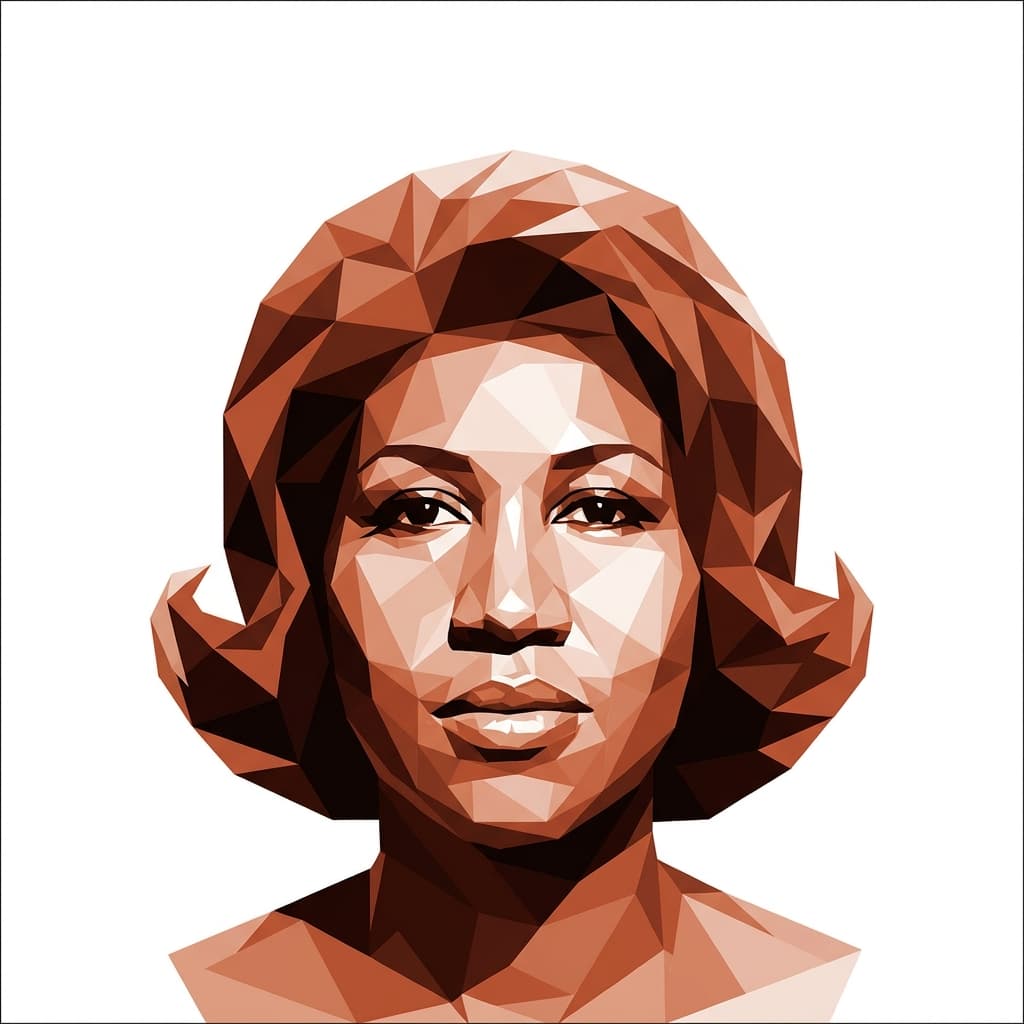
Trailblazing American country singer whose voice bridged honky-tonk and pop before her death at 30.
Design
- Q45.2
- h26.2
- R7.3
- g22.6
- i47.6
- S35.3
- T53.1
- U23.2
- V7.5
- W41.3
- X42.2
- Y59.6
- Z62.1
Personality
- Q64.6
- h63.6
- R58.4
- g22.1
- i47.1
- S29.6
- T56.5
- U62.3
- V40.1
- W60.3
- X42.3
- Y40.3
- Z62.3
Patsy Cline was a Generator — built for stamina, mastery, and the long grind of hauling herself up through radio stations, county fairs, and honky-tonks until her voice could no longer be ignored. She started singing in Winchester, Virginia as a teenager, dropped out of school to help support her family after her father left, and worked as a soda jerk and drugstore clerk while auditioning at every local venue that would have her. The steady, unglamorous climb — years of it — is exactly the kind of arc a Generator's engine is made for.
Her 6/2 profile shows in the shape of her career: a messy, experimental first act followed by a compressed second act where she became the role model. She spent her early twenties in fringed cowgirl outfits her mother sewed, singing rockabilly and western swing on local TV, testing what worked. When she finally broke through with "Walkin' After Midnight" in 1957, she was still figuring out who she was on stage. It took a few more years — and Owen Bradley's insistence that she stop fighting her lower register — before she stepped into the smoky, torch-lit Patsy the world remembers. That transition from experimenter to authority happened in public, and fast.
She was famous, among the Nashville crowd, for knowing exactly what she wanted the second she heard it. She fought Bradley on "Crazy" — hated the demo, hated Willie Nelson's phrasing, refused to sing it that way — and then delivered it in one take once her body finally said yes. She had the persuasive instinct of someone who knew her own worth in a business that routinely underpaid women, and she pushed for better contracts, better songs, better billing. Her friendships with Loretta Lynn, Dottie West, and Brenda Lee weren't casual; she pulled younger women in close and provided for them with loaned money, hand-me-down stage clothes, and blunt career advice nobody else was giving them.
The voice itself did something no one in country music had quite done before. She could take a lyric down to its emotional bone — no ornament, no vibrato tricks, just the ache sitting right on top of the note. "I Fall to Pieces," "She's Got You," "Sweet Dreams": these are recordings where the emotional weather of the room lives inside her phrasing, where a single held vowel does the work of a whole verse. She was also a natural storyteller who made three-minute songs feel like whole lives, which is why her records still play like short films.
She lived hard and moved fast — two serious car accidents, a stormy marriage, chart hits, Grand Ole Opry membership, Vegas residencies, all packed into a handful of years. There was a restless hunger in her for the next experience, the next stage, the next city, and friends recalled her talking openly about premonitions that she wouldn't live long. On March 5, 1963, her plane went down in a Tennessee forest returning from a benefit concert. She was thirty. The cycle closed before anyone was ready, but the recordings — barely four years of concentrated work — became the template every female country vocalist since has had to reckon with.
Sources: biography · birth data

What do you and Patsy Cline have in common?
Enter your birth details to find out