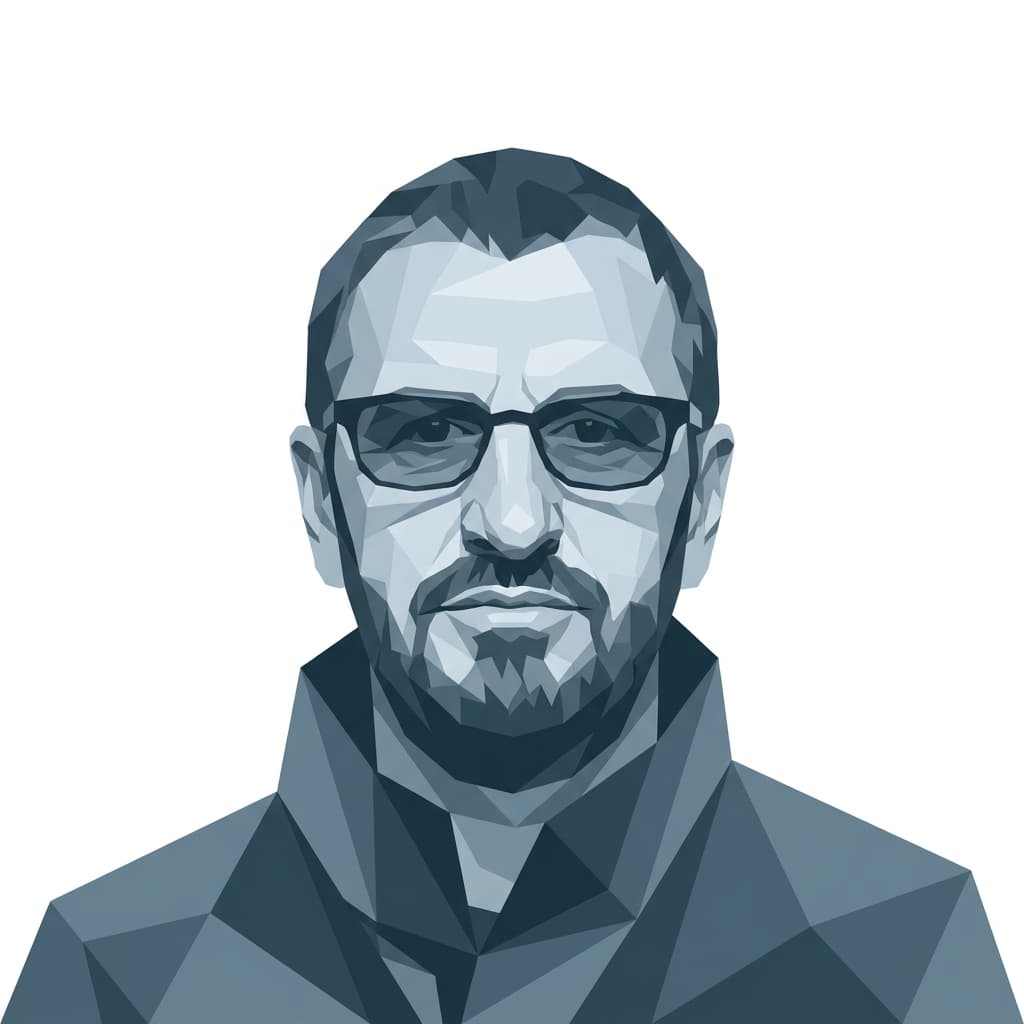
Beatles drummer whose steady groove, warmth, and understated humor anchored the biggest band in history.
Design
- Q51.2
- h57.2
- R25.6
- g57.6
- i51.6
- S22.4
- T20.2
- U20.4
- V51.6
- W27.1
- X23.2
- Y6.1
- Z56.5
Personality
- Q39.6
- h38.6
- R31.3
- g57.1
- i51.1
- S31.4
- T15.2
- U31.1
- V24.3
- W24.6
- X8.1
- Y6.1
- Z56.6
Ringo Starr was a Projector — not the engine of the band, but the one who saw the whole thing clearly and held it together with a groove nobody else could have played. Born Richard Starkey in a rough patch of Liverpool, he spent much of his childhood in hospitals, missing years of school and learning early how to entertain himself in solitude. By the time he joined The Beatles in August 1962, replacing Pete Best on the eve of their first proper recording session, he was already the most experienced professional drummer of the four — invited in, exactly the way his Strategy asked him to arrive.
His drumming was famously idiosyncratic, and famously right. Left-handed on a right-handed kit, he played fills that no session drummer could replicate — the tumbling toms on "A Day in the Life," the loose swing on "Ticket to Ride," the impossible pattern on "Come Together." He wasn't showing off; he was saying only what the song needed, and doing it with the kind of quiet, in-the-moment knowing that doesn't second-guess itself. Paul McCartney has spent sixty years telling interviewers Ringo is one of the greatest drummers alive, and every drummer who's tried to copy him agrees.
His 6/2 profile — the role-model observer who needs a lot of time alone — is the shape of his whole life. The chaotic first act was Hamburg and Beatlemania: touring, screaming girls, the shocks and initiations of being 24 and inside the biggest cultural event of the century, met with an open-hearted innocence that never quite curdled. The middle act was withdrawal — the post-Beatles wilderness, the drinking years in Los Angeles with John Lennon and Harry Nilsson, a period of restlessness and extremes that nearly killed him. He got sober in 1988 and has been sober since.
On camera he was always the one people fell for — not the cute one or the clever one, but the one with the disarming warmth that made the room feel safe. In A Hard Day's Night he carries the middle of the film alone, wandering the canals of London with a book and a camera, and the sequence works because he isn't performing; he's just being watched being himself. His vocal turns — "With a Little Help from My Friends," "Yellow Submarine," "Octopus's Garden" — all trade on the same thing: a voice that tells you a small true story without dressing it up.
Since 1989 he has toured almost continuously with his All-Starr Band, a rotating cast of friends who take turns leading songs while Ringo plays drums and grins. It's a format built entirely around being genuinely invited to share a stage, and it suits him. He gives the peace sign in every photograph, says "peace and love" at every opportunity, and at 84 still tours, still records, and still refuses birthday gifts in favor of asking fans, at noon on July 7th wherever they are, to just say those three words. It's the impact of being consistently, unmistakably himself — the quietest Beatle, and somehow the one everyone loves without complication.
Sources: biography · birth data
What do you and Ringo Starr have in common?
Enter your birth details to find out