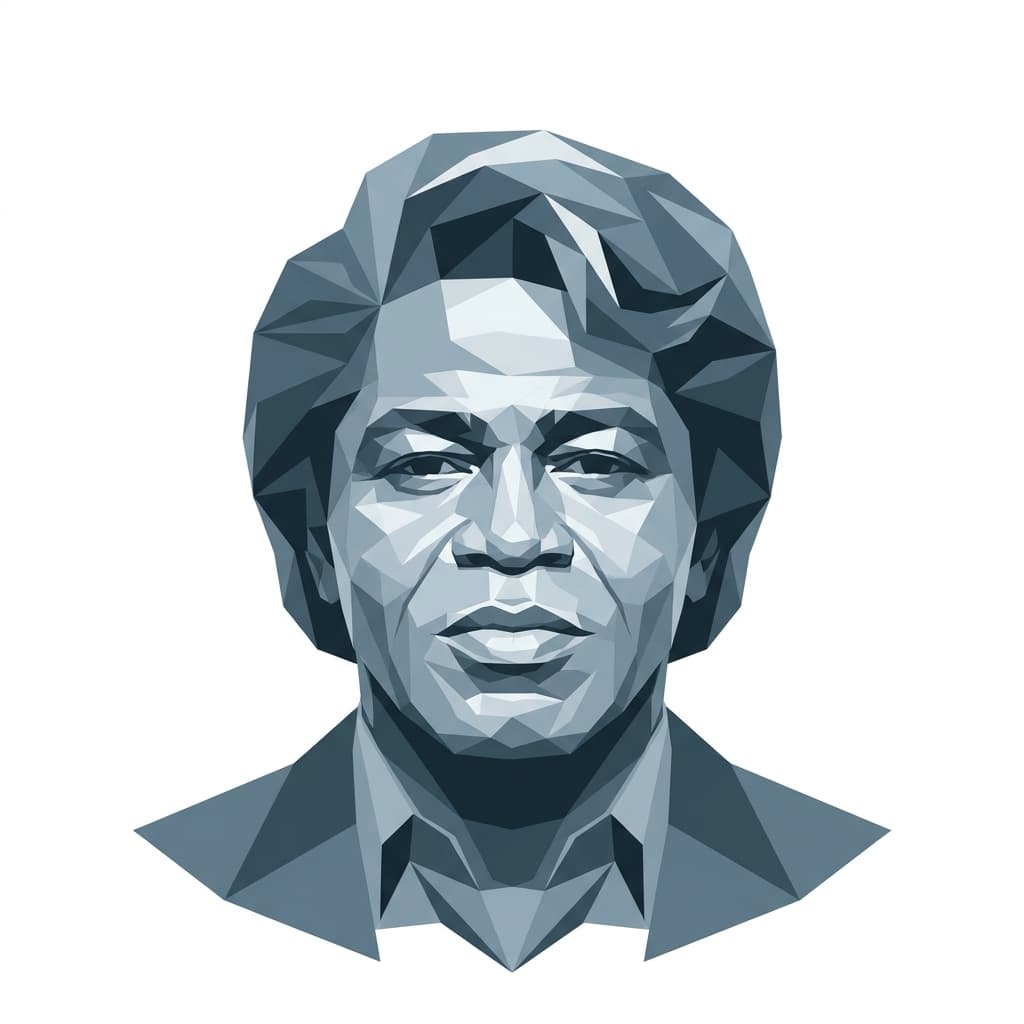
American singer-songwriter who reshaped pop music through confessional storytelling and unprecedented business savvy.
Design
- Q6.1
- h36.1
- R17.4
- g30.2
- i29.2
- S18.6
- T28.3
- U6.6
- V52.5
- W58.4
- X10.4
- Y38.1
- Z44.6
Personality
- Q26.5
- h45.5
- R15.6
- g13.6
- i7.6
- S58.6
- T60.6
- U14.3
- V52.5
- W38.5
- X58.1
- Y38.2
- Z1.4
Taylor Swift is a Projector — not built for relentless energetic output, but for seeing patterns others miss and guiding entire industries through what she notices. The narrative around her work ethic obscures something more accurate: she takes long retreats, disappears for a year or two, then returns with the next era fully architected. That rhythm — visible withdrawal, then precise re-entry — is the shape of her career.
She started as a 14-year-old in Nashville who'd already figured out that nobody else was writing country songs about being a teenager. That's a 5/1 profile move — the practical problem-solver who first does the foundational research, then offers a solution the market didn't know it needed. Her early albums are built on the instinct to investigate a gap and fill it with something well-grounded, and her later pivots — into pop with 1989, into indie folk with folklore, into re-recording her entire catalog — follow the same pattern. Build the foundation alone. Then step out and lead.
The re-recording project is the cleanest expression of her drive to fight for what's actually meaningful paired with her instinct for which battles are worth the cost. When her masters were sold without her, she didn't sue or sulk; she rebuilt the entire catalog from scratch and devalued the originals through sheer cultural will. It was a structural critique of how the music industry treats artists, executed through the energy of improving a broken system rather than tolerating it. Few people in pop have ever weaponized patience that effectively.
Her songwriting is famously specific — the scarf, the cardigan, the refrigerator light — because she's a deep listener who turns absorbed experience into stories other people recognize as their own. Fans don't just like her songs; they decode them, and she rewards that with Easter eggs and Vault tracks. That confessional intimacy is also a careful selectivity about who actually gets close; the public gets the song, not the person. She's spoken openly about retreating from the spotlight for over a year after the 2016 backlash, which fits the Projector pattern exactly — when recognition curdles, withdraw, recalibrate, and wait for the right invitation back in.
Business-wise, she operates with the persuasive instinct of someone who can make almost anything marketable but only sells what she believes in — the Eras Tour, the friendship bracelets, the directorial credits. Underneath the spectacle is a quiet, instant knowing about what's right that doesn't bother explaining itself. She fires collaborators, ends relationships, and pivots aesthetics on what looks from outside like a dime, but is really just her acting on a signal the rest of us can't hear.
What makes her unusual isn't the songwriting or the spectacle. It's that she's spent two decades modeling what it looks like to stay recognizably yourself while the entire culture tries to reshape you — the originality of refusing to make the expected next album, and the willingness to take her time until the invitation is real.
Sources: biography · birth data

What do you and Taylor Swift have in common?
Enter your birth details to find out