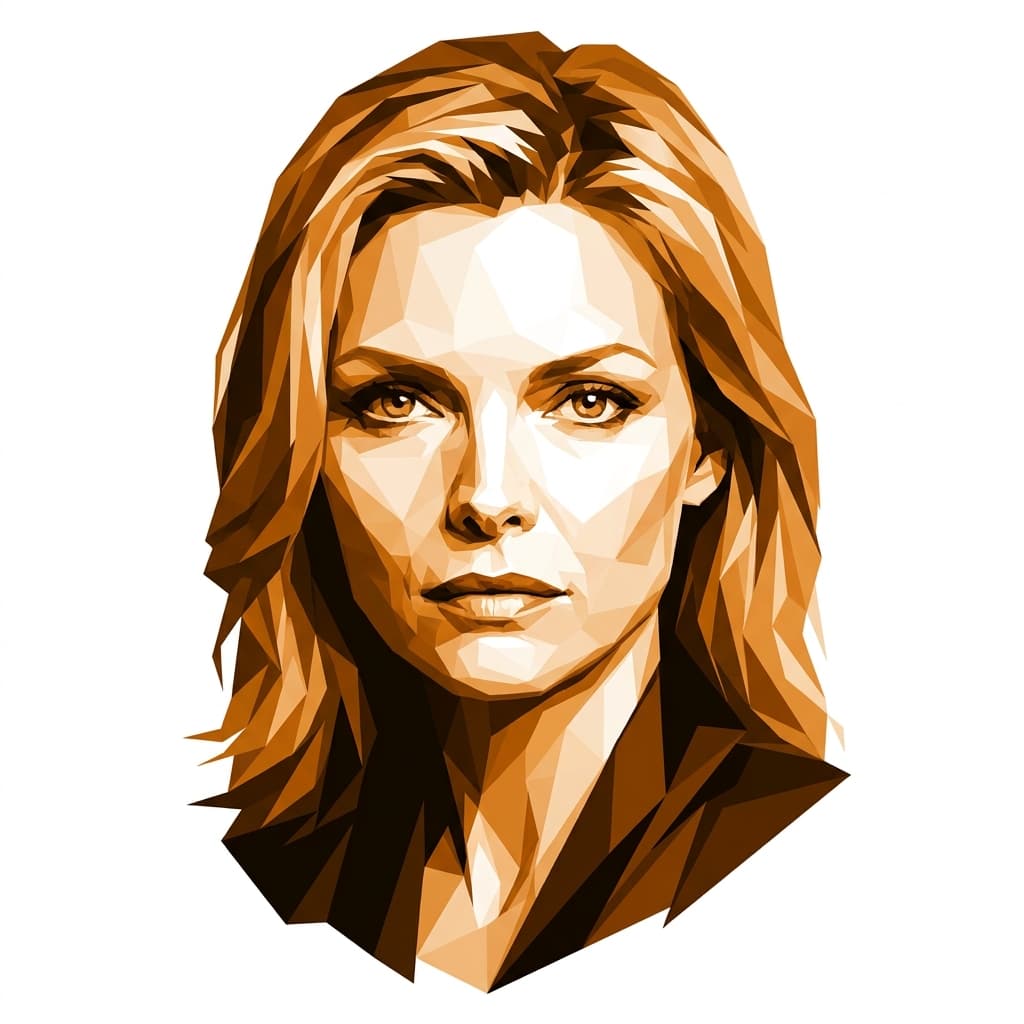
American actress known for Pulp Fiction, Kill Bill, and a career of unconventional, physically demanding roles.
Design
- Q19.4
- h33.4
- R43.1
- g63.1
- i64.1
- S54.2
- T19.6
- U17.1
- V28.4
- W27.1
- X18.6
- Y34.1
- Z6.5
Personality
- Q24.2
- h44.2
- R49.4
- g37.5
- i40.5
- S23.4
- T20.3
- U16.2
- V50.4
- W24.5
- X18.2
- Y14.6
- Z6.3
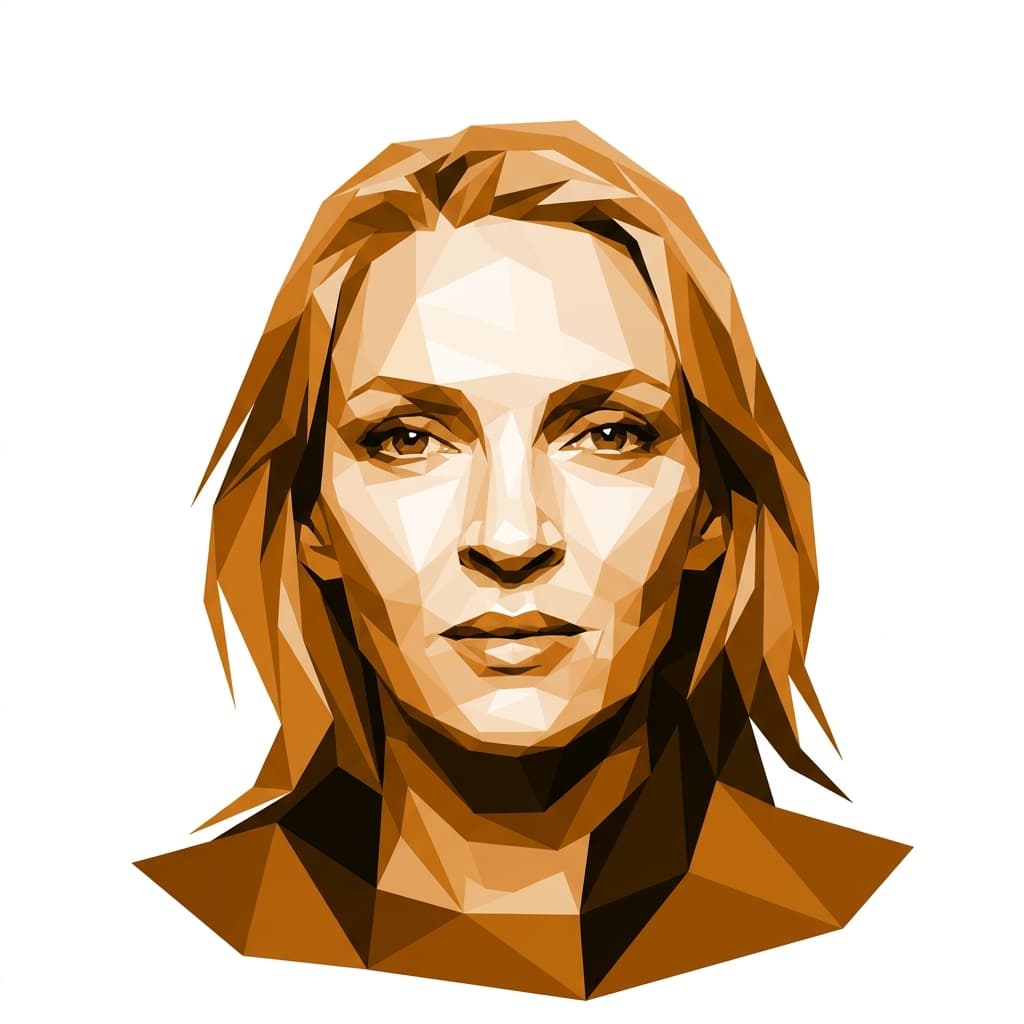
Uma Thurman is a Manifesting Generator — built to chase several passions at high speed without collapsing them into one — and her filmography reads exactly like that: French period drama, superhero comedy, samurai revenge epic, off-Broadway Tennessee Williams, all in the same decade. Daughter of a Buddhist scholar father and a psychotherapist/model mother, she grew up between Amherst and India, dropped out of the Professional Children's School at fifteen, and was working steadily in film by seventeen. The pace was Manifesting-Generator fast; the choices were not obvious.
Her early breakthroughs — Dangerous Liaisons, Henry & June, The Adventures of Baron Munchausen — came before she'd figured out what she wanted, and she has spoken candidly about the pattern of accepting roles she couldn't yet feel her way through. Emotional Authority tends to punish that. She needed the long wave to know what she actually wanted, and the roles that eventually defined her — Mia Wallace, The Bride — arrived after she'd learned to sit with a script for weeks before answering. Tarantino famously waited years for her yes on Kill Bill; that waiting was the whole point.
She has always described herself as awkward, tall, private — a person who recharges by disappearing into her own world and then emerges to work. The 2/4 profile fits the biography almost too neatly: the hermit who nonetheless keeps landing in the center of a scene because her closest people — Tarantino, Ivory, Schnabel, Stoppard — keep pulling her back out. Her opportunities have almost all come through relationships, rarely from auditions or hustle. She waits, and then her gut goes green and she moves fast.
The Bride is the role where her chart shows most plainly. Two years of sword training, Cantonese lessons, and physical rebuilding after pregnancy — the kind of repetition that becomes identity, a merging with craft that Tarantino has said no other actress would have endured. That same film demanded pure sustained physical power channeled through a single purpose and a character whose entire arc is wrestling with whether a fight is worth the meaning it costs. Uma has said the shoot broke her body; she also calls it the work she is proudest of.
Off-screen she has been quietly principled in ways that took decades to become visible. Her 2018 New York Times interview about Harvey Weinstein and the Kill Bill car crash was famously slow to arrive — she waited until she could speak from a settled place rather than a hot one, and when she did, she named exactly what needed to be said in language nobody could soften. It was a public exercise in insisting on what feels ethically right, even at professional cost, and in protecting the people and standards she considers non-negotiable.
She raises her three children largely out of the tabloid economy, lives in New York, paints, writes, and continues to take roles — Nymphomaniac, Suspiria, Stage Fright on Broadway — that suggest a discerning, selective heart that lets very few things all the way in. The career has never been linear. That was always the point.
Sources: biography · birth data
What do you and Uma Thurman have in common?
Enter your birth details to find out