American actor and narrator whose late-blooming career made him one of cinema's most trusted voices.
Design
- Q63.2
- h64.2
- R43.2
- g26.4
- i45.4
- S30.1
- T42.6
- U14.3
- V54.6
- W36.2
- X27.5
- Y47.1
- Z56.1
Personality
- Q16.5
- h9.5
- R30.5
- g5.4
- i35.4
- S2.5
- T3.2
- U43.6
- V60.1
- W25.6
- X24.4
- Y64.6
- Z56.1
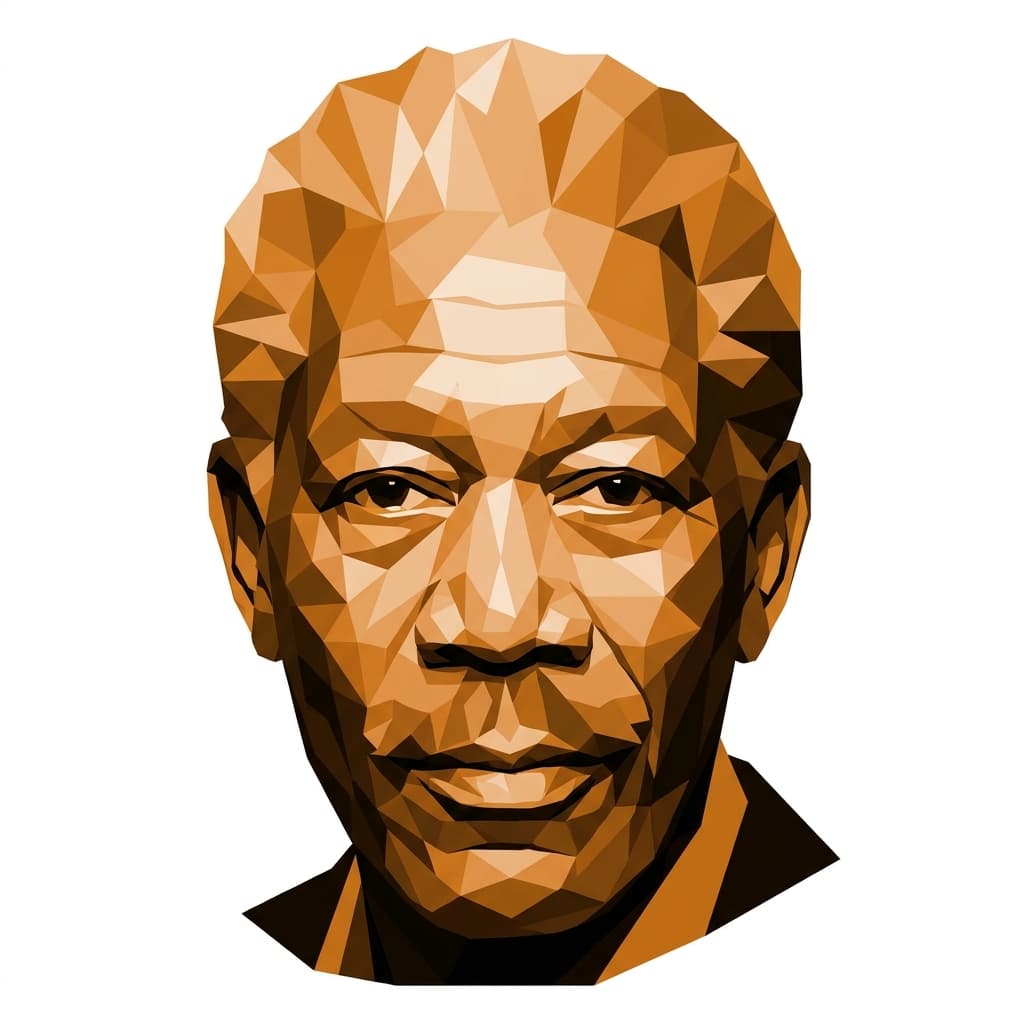
Morgan Freeman is a Manifesting Generator — wired for multiple passions and non-linear paths — and his career reads exactly like that: Air Force mechanic, dancer, San Francisco theater actor, PBS children's television regular on The Electric Company for six years, then Broadway, then, at fifty-two, an Oscar nomination for Street Smart that finally cracked Hollywood open. He did not niche down. He waited, worked, waited more, and let the right things arrive.
The waiting was not passive. Freeman has described spending years turning down parts that felt wrong, holding out for scripts he could stand behind — the practiced instinct of selling only what he could genuinely believe in. When Driving Miss Daisy and Glory arrived in 1989, back-to-back, he was ready in a way a younger actor couldn't have been. His Emotional Authority shows in how he talks about decisions — sleeping on them, revisiting them, refusing to be rushed by agents or studios who wanted a quick yes. He is famously slow to commit and, once committed, unshakably present.
As a 5/2 profile, Freeman carries the tension of the reluctant leader — the person others project enormous expectations onto, who quietly prefers his ranch in Charleston, Mississippi, his beekeeping, his small plane, and long stretches away from the industry. He has played God twice, Nelson Mandela, a U.S. president, and the moral compass of dozens of films, all while insisting in interviews that he is not particularly wise, just working. There is something effortless in what he does that he refuses to overexplain, and it functions, on screen, like gravity.
The voice deserves its own paragraph. That instrument — unhurried, weathered, faintly amused — is the product of decades of theater training and a musician's ear for rhythm. He narrates as if he has already lived every sentence, which is close to true; his best line readings feel like wisdom pulled from a deep well of lived experience and offered without pressure. As Red in The Shawshank Redemption, he made the shape of a whole life into a story worth telling, and the film's afterlife on cable — its slow bloom from box-office disappointment to cultural fixture — mirrors the pace of Freeman's own arrival.
Off camera, he founded Revelations Entertainment with Lori McCreary, produced documentaries about the search for God and the nature of the universe, and used his production company to direct resources toward the kind of work he actually cared about. He co-owns a blues club in Clarksdale, Mississippi, that helped revive the town's music economy, and he has been vocal, over decades, about race in ways that refuse the easy script — questioning received wisdom rather than accepting the frame he was handed.
Freeman's late arrival taught him something most stars never learn: the right opportunities get better with time, and the work of a lifetime is closing each chapter cleanly before starting the next. He is still working in his late eighties, still narrating, still — by every account — waiting to respond to what actually lights him up.
Sources: biography · birth data
What do you and Morgan Freeman have in common?
Enter your birth details to find out