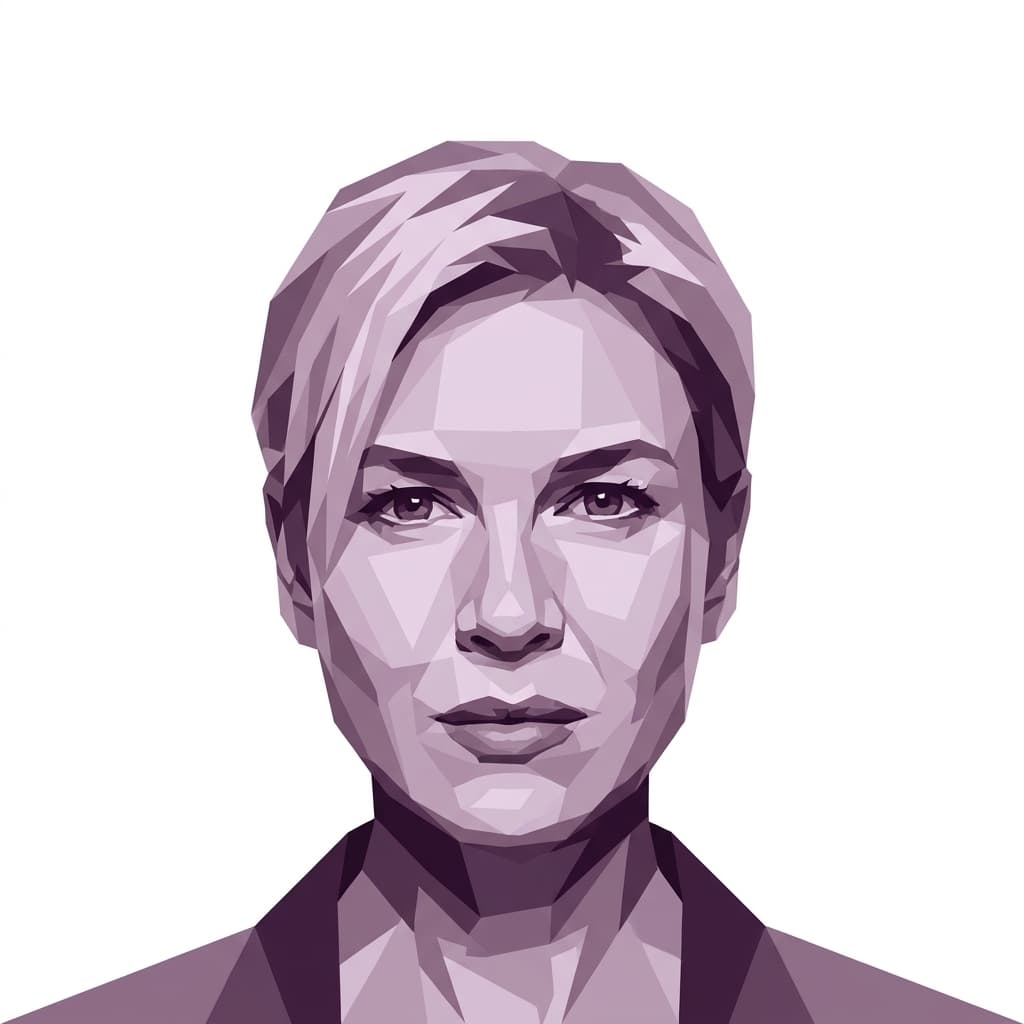
British actress and lifelong political activist renowned for her stage, screen, and humanitarian work.
Design
- Q44.6
- h24.6
- R56.5
- g11.3
- i12.3
- S28.3
- T5.5
- U6.2
- V11.2
- W63.5
- X27.6
- Y47.2
- Z56.3
Personality
- Q19.4
- h33.4
- R46.1
- g11.1
- i12.1
- S54.2
- T36.5
- U44.6
- V38.5
- W22.4
- X27.4
- Y47.2
- Z56.2
Vanessa Redgrave is a Manifestor — built to move first, speak her mind, and let the aftershocks shape the room. Born into theatrical royalty on the night her father Michael was opening in Hamlet (Laurence Olivier announced her birth from the stage), she arrived with the pedigree, but the trajectory was never predictable. She's spent six decades playing queens and dissidents, winning an Oscar for Julia, carrying Ibsen and Chekhov across continents, and periodically detonating her own career over political causes most actors wouldn't touch with a pole.
Her artistry lives in knowing exactly when to speak and when to let silence do the work. Peter Hall said watching her onstage was like watching weather — a thought would pass through her face and the whole house would feel it. That emotional transparency is the mark of someone with Emotional Authority, who learned over time that the truest performances, like the truest decisions, don't come from the first wave of feeling but from riding it out until something clear and strange emerges on the other side. Her Isadora Duncan, her Mary Tyrone, her Olive Chancellor in The Bostonians — all built from that patient waiting.
She has always been the kind of artist who moves people through the sheer grace of her presence, but she is also, famously, the kind of woman who will stop a Hollywood ceremony cold to make a political statement. The 1978 Oscars speech defending her documentary on Palestinian refugees — delivered against the booing — is the textbook example of a Manifestor refusing to soften her message to keep the room comfortable. She paid for it. Studios cooled on her. She kept going. The fight was the point, and she had an unerring sense of which battles were worth her name — refugees, civil liberties, Chechen children, striking workers.
As a 4/6 profile, Vanessa builds her life around a tight circle of comrades and family — the Workers Revolutionary Party years, the Redgrave-Richardson clan, the colleagues she returns to across decades. Her early years had the restless experimental quality the 6 line is known for, and the wisdom she carries now is unmistakably earned, distilled from a life lived publicly and sometimes painfully. The deaths of her daughter Natasha, her brother Corin, her sister Lynn in a single terrible period became material she eventually spoke about with the hard-won clarity of someone who had surrendered to the full weight of it.
She reads voraciously, questions constantly, and will interrogate a script, a director, or a government position with equal intensity. Collaborators describe a woman who arrives to rehearsal with more ideas than any single production could possibly use, spinning out historical context, political parallels, character backstory. She is attuned to the needs of whoever is in front of her — refugees in a camp, a young actor on their first job — sometimes to her own cost. At nearly ninety she is still working, still arguing, still stepping onto stages. The Manifestor doesn't retire. She just picks the next thing worth starting.
Sources: biography · birth data

What do you and Vanessa Redgrave have in common?
Enter your birth details to find out