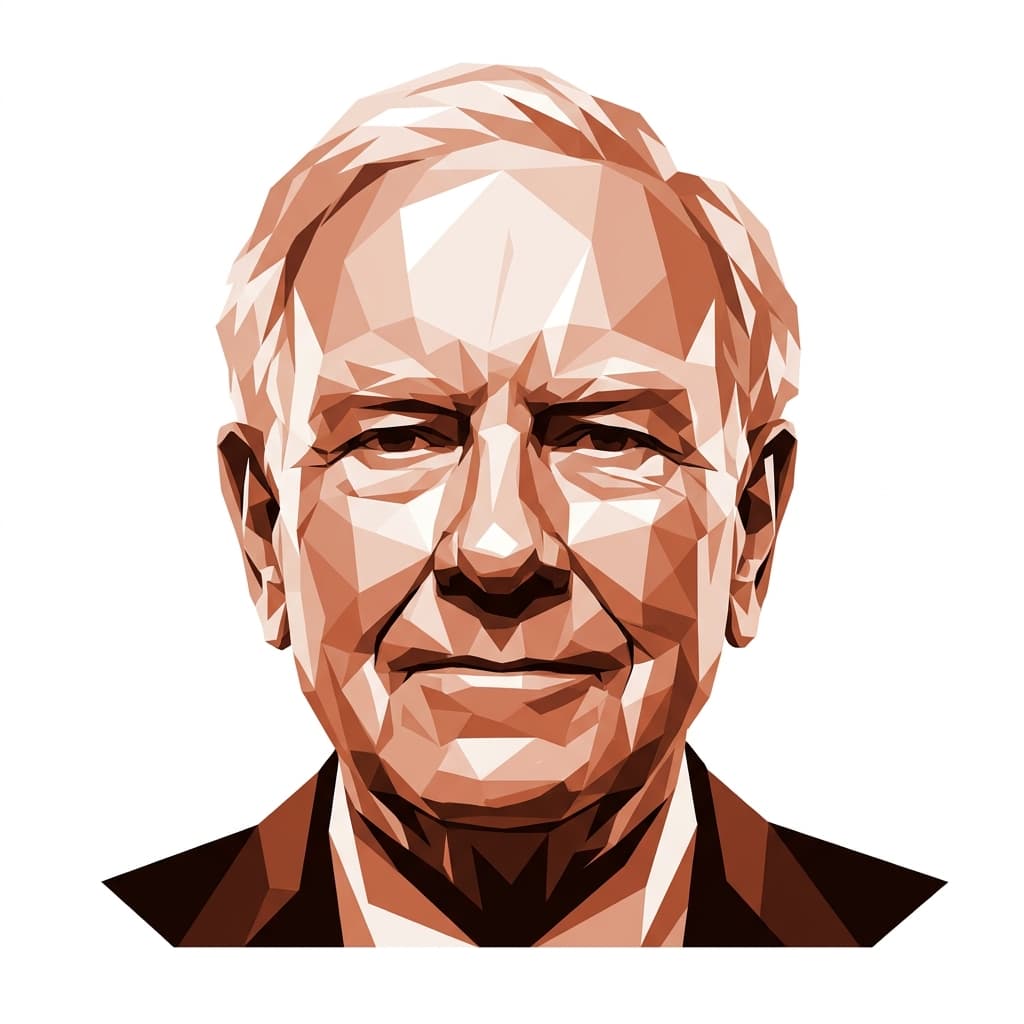
Legendary investor and CEO of Berkshire Hathaway, known as the Oracle of Omaha.
Design
- Q16.4
- h9.4
- R39.6
- g27.1
- i28.1
- S23.6
- T52.4
- U3.2
- V12.2
- W38.2
- X21.6
- Y59.1
- Z53.4
Personality
- Q40.2
- h37.2
- R34.5
- g42.5
- i32.5
- S46.6
- T32.2
- U15.4
- V39.5
- W58.2
- X21.6
- Y59.4
- Z53.6
Warren Buffett is a Generator — built for the long, patient work of mastering one field so completely that the mastery becomes the man. He has done essentially one thing since he was a paperboy in Omaha: study businesses, figure out what they're worth, and buy the ones trading for less. Seventy-plus years of the same activity, and he still bounds to work each morning, in his phrase, "tap-dancing." That's what satisfying energy usage looks like at scale.
The famous investing method is Gate 32 territory — an instinct for what will endure and what won't, sharpened over decades of reading annual reports the way other people read novels. He famously passed on the dot-com boom entirely, not because he didn't understand technology but because he couldn't see the durability. He calls this his "circle of competence," and it's really the patience of concentrated study meeting the stillness of a mind that doesn't need to be doing something all day. He reads five or six hours daily. Most of it looks, from the outside, like nothing happening.
His Wait to Respond strategy is practically the operating manual of Berkshire Hathaway. Buffett has spoken openly about sitting on cash for years — sometimes tens of billions — because nothing in his gut said yes. When the 2008 crisis hit, he responded: Goldman Sachs, Bank of America, General Electric, all in weeks. The opportunities came to him, phones ringing, and he moved fast because the ground had been prepared by decades of waiting. His Emotional Authority shows up as the sleep-on-it discipline he preaches — never buy a stock you wouldn't be happy to hold if the market closed for ten years.
The 2/4 profile fits him almost embarrassingly well — the hermit who is also the host. He lives in the same modest Omaha house he bought in 1958, eats at the same diners, and spends most days alone in a quiet office with a stack of reports. But the network — Charlie Munger, Bill Gates, the CEOs of dozens of Berkshire subsidiaries, the loyal shareholders — is the community that brings the opportunities to his door. The annual meeting in Omaha, where he holds court for hours, is the 4 line in full public performance.
His communication style is pure Gate 23: taking something genuinely complicated and making it sound like common sense. "Be fearful when others are greedy." "Price is what you pay, value is what you get." A generation of investors learned to think through his one-liners. Paired with a sharp sense of when to speak and when to sit quiet, it's why his shareholder letters are read like scripture.
What ultimately makes Buffett unusual is the refusal to leave — he's been at this since the 1950s, still going in his nineties, still in love with the craft itself rather than the outcome. The Giving Pledge, the plan to give away 99% of his fortune, is Gate 21 resolving cleanly: managing enormous resources not for himself but on behalf of the collective. The wealth was never the point. The work was.
Sources: biography · birth data
What do you and Warren Buffett have in common?
Enter your birth details to find out