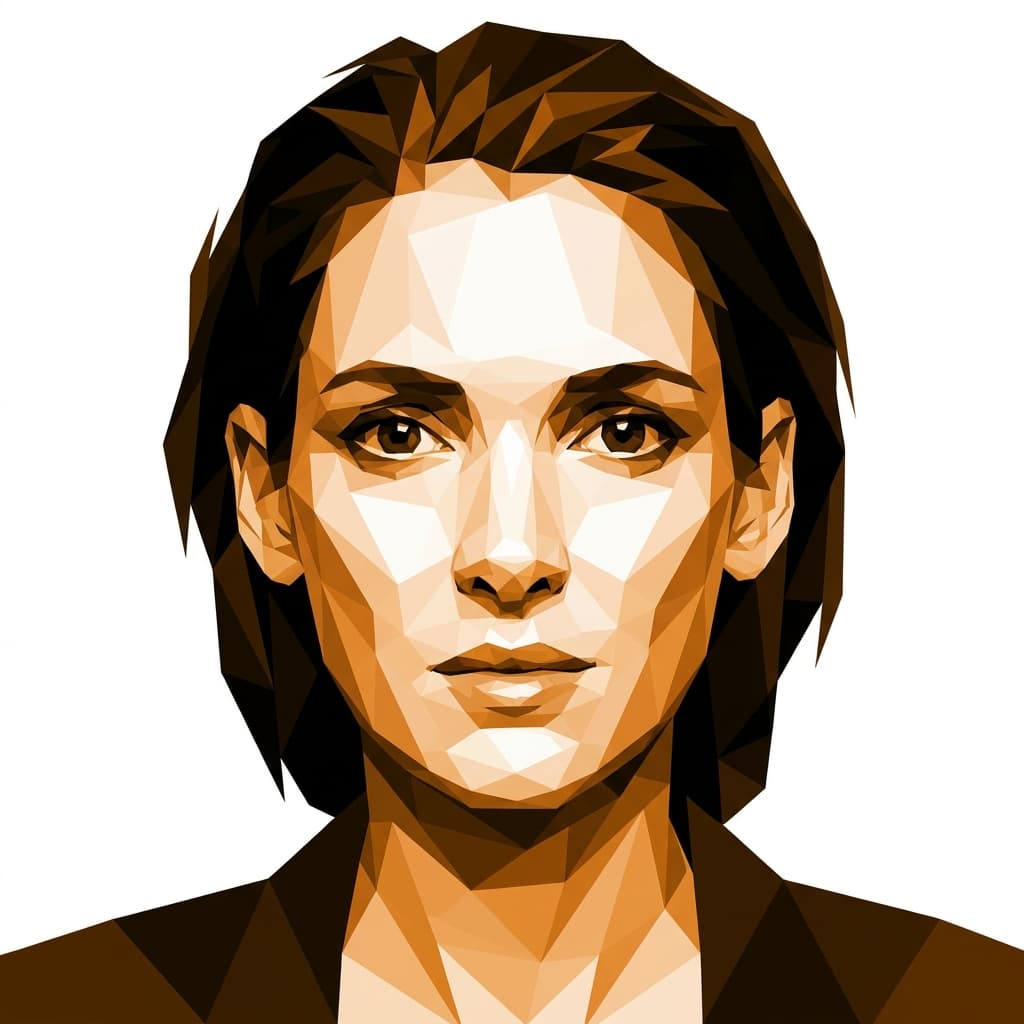
American actress known for Beetlejuice, Heathers, Girl Interrupted, and her enduring Gen X iconography.
Design
- Q31.6
- h41.6
- R1.6
- g13.2
- i7.2
- S59.5
- T56.4
- U49.1
- V14.3
- W20.5
- X48.1
- Y34.1
- Z6.6
Personality
- Q28.4
- h27.4
- R37.1
- g19.4
- i33.4
- S1.6
- T43.4
- U30.2
- V9.3
- W20.6
- X57.1
- Y34.2
- Z46.3
Winona Ryder is a Manifesting Generator — wired for multiple obsessions at once and for skipping straight to the essential thing — and her career reads like exactly that: a young actress who, by twenty, had already moved through Tim Burton's goth romance, Heathers' pitch-black satire, and Scorsese's Age of Innocence without ever settling into a single lane. She grew up on a commune in Northern California, raised by counterculture parents (her godfather was Timothy Leary), and by thirteen was auditioning in San Francisco with a monologue from Franny and Zooey. The speed was there from the start.
Her breakout as Lydia Deetz in Beetlejuice happened because Burton met her and immediately knew. She responded the same way — the gut recognizing its person before the mind catches up — and the collaboration extended into Edward Scissorhands. That early run showed the kind of creative range that refuses to repeat itself: the suicidal cheerleader in Heathers, the aching Jo March in Little Women, the coiled Susanna in Girl, Interrupted (which she developed herself, optioning Susanna Kaysen's memoir and producing it into being). She was reading Salinger and Kerouac in green rooms, and it showed.
The mid-90s were also when the wave broke. She was engaged to Johnny Depp, then wasn't. She suffered a serious insomnia crisis, checked herself into a psychiatric ward briefly, and later spoke about it with a candor that felt like processing hard things in public only after living them. Her 2001 shoplifting arrest at Saks Fifth Avenue became a tabloid feeding frenzy; she was thirty, exhausted, on prescription painkillers after a broken arm, and made a decision from inside an emotional storm that she'd spend years unpacking. The industry cooled on her. She more or less disappeared.
What she did during that near-decade off is telling. She didn't fight for a comeback. She retreated to San Francisco, read, spent time with a small circle of old friends — the deep few rather than the wide many — and waited. When she returned, it was as the anxious, protective Spock's mother in Star Trek, then the unraveling ballet mistress in Black Swan, and finally, at 45, as Joyce Byers in Stranger Things: a mother who nobody believes, powered by a caregiving intensity that refuses to stop looking for the missing child. It's a role that only works because she carries the felt weight of having been the girl everyone watched go through it.
She has always been a listener more than a talker — famously friends with Keanu Reeves, Cher, Rebecca Hall, quietly loyal for decades — and her interviews still carry the searching quality of someone still investigating what happened to her. She collects first editions, champions writers, speaks about her Jewish heritage and her grandparents' Holocaust survival with real gravity. The Gen X icon thing gets thrown at her constantly, but what actually persists is subtler: a person who went through the mess publicly and came back with the wisdom intact, still choosing the strange, specific projects that light her up.
Sources: biography · birth data
What do you and Winona Ryder have in common?
Enter your birth details to find out