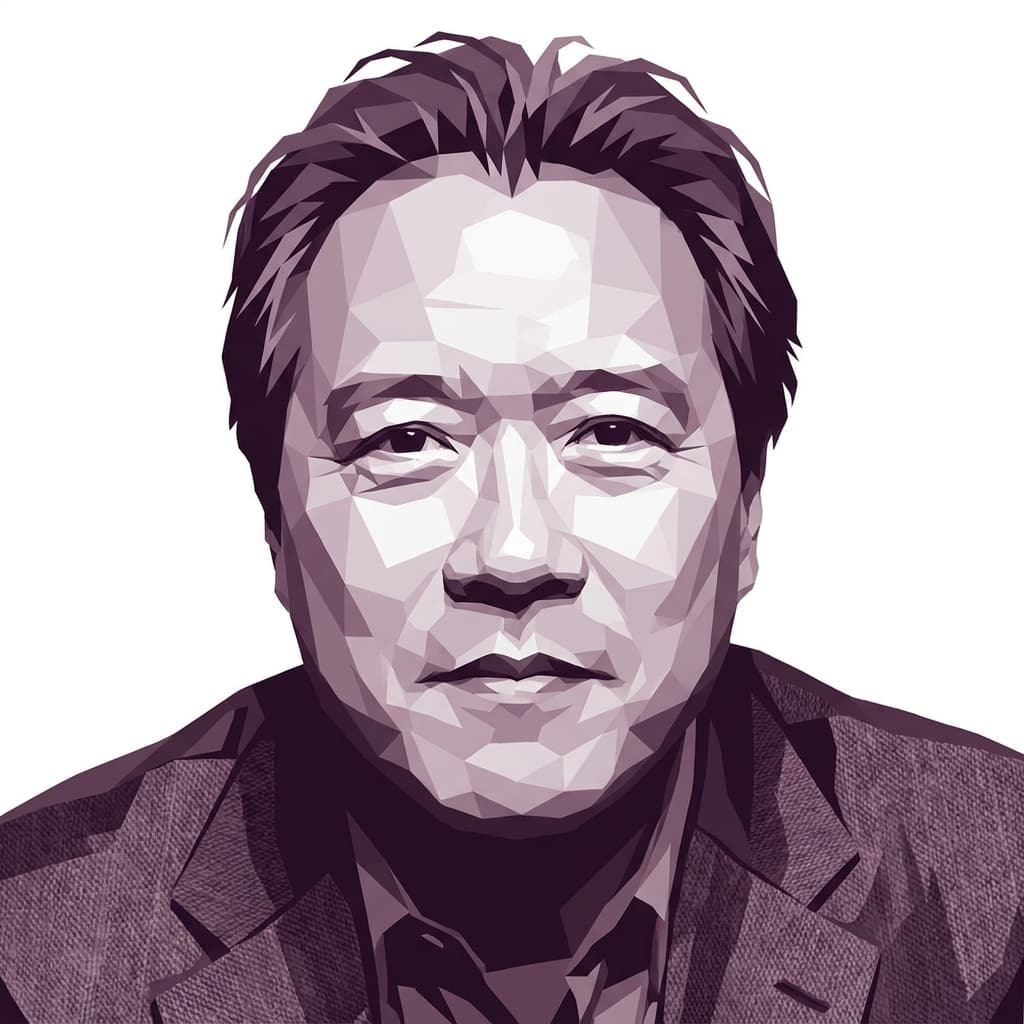
French-born American cellist whose curiosity reshaped classical music through collaboration, storytelling, and cross-cultural exploration.
Design
- Q53.1
- h54.1
- R49.6
- g11.4
- i12.4
- S12.3
- T15.3
- U56.2
- V31.4
- W1.2
- X56.1
- Y32.6
- Z29.1
Personality
- Q48.5
- h21.5
- R15.5
- g26.3
- i45.3
- S32.6
- T32.3
- U6.4
- V4.6
- W43.1
- X56.6
- Y50.2
- Z29.4
Yo-Yo Ma is a Manifestor — the kind of artist who starts things the classical world didn't know it was waiting for, then hands them off and moves on to the next. He picked up a cello at four in Paris because the violin was too small for the sounds he was hearing, played for Kennedy at seven, studied at Juilliard, then walked away from the conservatory path to finish a liberal arts degree at Harvard. The pattern was already there: initiate, inform the room, and go.
His 5/1 profile — the investigator who becomes a practical problem-solver — shows in how he prepares. Before recording the Bach Cello Suites (three times, across three decades, each interpretation an argument with his previous self), he built the foundation obsessively. His Silk Road Ensemble, launched in 1998, began the same way: years of reading, listening, and traveling before a single concert. He was the expert who won't step forward until the groundwork is real, then steps forward with unusual authority.
What people notice in the room, though, is the intuition. He makes decisions about collaborators, tempos, and phrasing with the quiet instant-yes that doesn't wait for reasons — a nod during rehearsal, a smile at a bluegrass fiddler, a spontaneous duet with a street musician outside a subway station. Colleagues from Bobby McFerrin to Edgar Meyer describe the same thing: he decides fast, warmly, and rarely revisits. When Sony wanted more standard repertoire, he chose Argentine tango with Astor Piazzolla instead, trusting the instinct about what would actually last.
The Silk Road Project is the clearest Manifestor gesture of his career: he saw a gap between musical worlds, initiated something no one else had permission to start, and then built an institution around it that other people run. He talks constantly about wanting to know how a Persian kamancheh player thinks, how a Galician bagpiper phrases a lament — the endless curiosity for the next fresh idea that keeps him restlessly generative. He is also, unmistakably, someone who thrives on variety and refuses one steady rhythm: Baroque one week, Appalachian fiddle tunes the next, Ennio Morricone film scores, a Simpsons cameo, a Tanglewood masterclass.
His public voice carries weight because he uses it sparingly and warmly. When he speaks about culture as connective tissue — at commencements, in Aspen Ideas panels, at the border in Laredo where he played Bach as a statement — his words land because the timing is felt, not calculated. He tells stories rather than arguments, making abstract ideas tangible through what he's actually lived, and people listen the way they listen to an elder rather than a celebrity.
At the core is something simpler than any of this: a man who plays music for people, one room at a time, and who has organized a whole life around the values he actually wants to protect and pass on — curiosity, generosity, and the belief that difference is worth crossing a room, or a continent, to hear.
Sources: biography · birth data
What do you and Yo-Yo Ma have in common?
Enter your birth details to find out