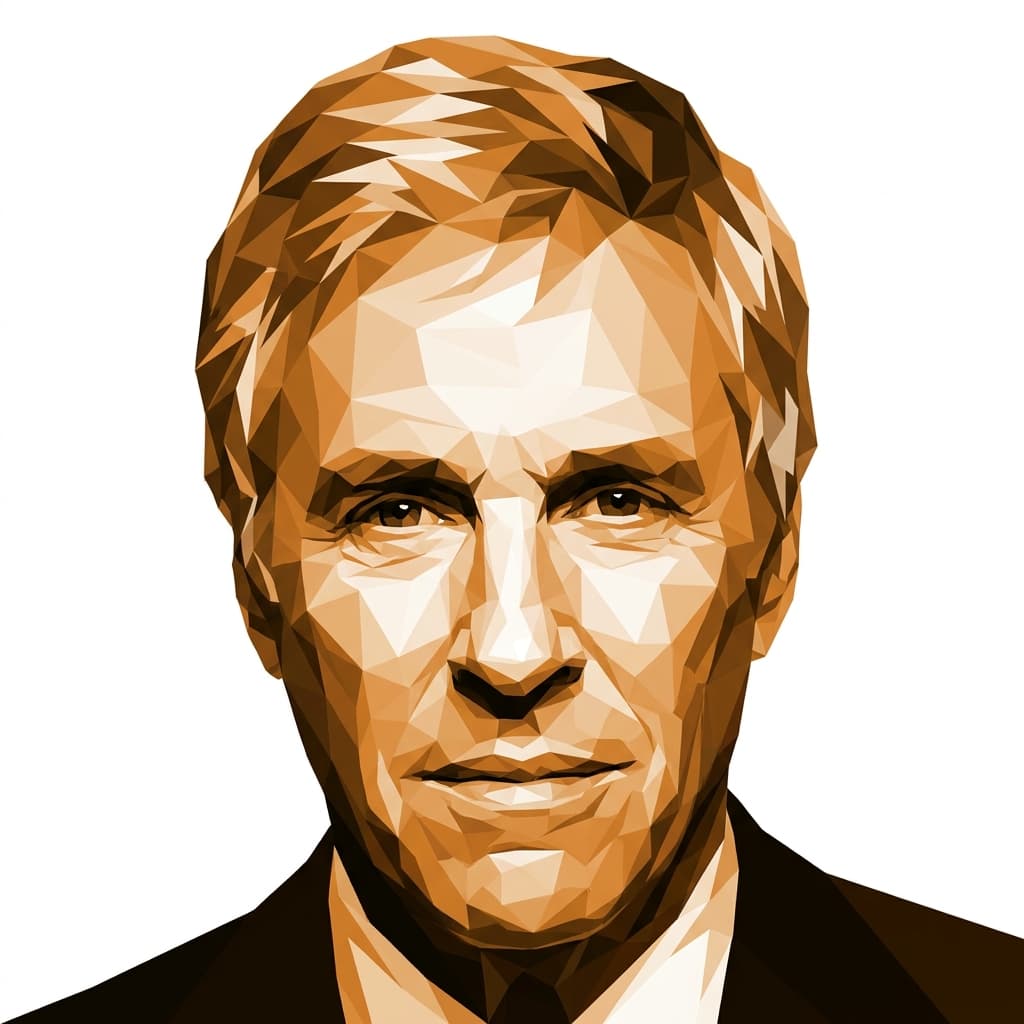
American composer and pianist behind hundreds of pop standards, defined by lush, unconventional melodies.
Design
- Q49.5
- h4.5
- R1.5
- g35.6
- i5.6
- S37.5
- T54.4
- U54.4
- V17.1
- W26.1
- X25.4
- Y29.4
- Z53.1
Personality
- Q23.3
- h43.3
- R13.1
- g16.5
- i9.5
- S20.2
- T24.1
- U36.5
- V42.5
- W26.1
- X17.3
- Y29.3
- Z53.1
Burt Bacharach was a Manifesting Generator — a composer wired to chase multiple obsessions at once and find the fastest route from a fragment of melody to a finished record. Across six decades he wrote hundreds of songs, most famously with lyricist Hal David, and shaped the sound of pop with pieces like "Walk On By," "I Say a Little Prayer," "What the World Needs Now Is Love," and "Raindrops Keep Fallin' on My Head." He didn't fit any of the era's boxes, and never tried to.
Trained in classical music at McGill and briefly with Darius Milhaud, Bacharach spent the 1950s as a journeyman — accompanist to Vic Damone, the Ames Brothers, and then a long stretch as Marlene Dietrich's musical director, touring the world reading rooms night after night. It was ideal apprenticeship for a 3/5 profile whose wisdom is built through trial and error before anyone hands them the stage. He was learning what worked by trying things live, in front of audiences, and adjusting, collecting the practical knowledge that would make him unmistakable when he finally stepped forward as a writer.
His melodies are famous for doing what melodies aren't supposed to do — shifting meters mid-phrase, landing on odd intervals, breaking the rules with the confidence of someone who knew them cold. He'd fuss over a single bar for days, drilling into the tiniest detail until it clicked, and rehearse Dionne Warwick's vocals with the patient repetition of someone chasing mastery rather than a hit. The Bacharach-David-Warwick partnership, which produced twenty top-40 singles, worked because all three treated the songs as craft objects to be refined, not product to be delivered.
He was famously slow with big decisions and quick with musical ones, sleeping on structural changes, letting a chord voicing sit for a week before committing. When something wasn't right he'd scrap it — even after a track was cut. He knew how to close a project cleanly and move to the next, and he knew when to walk. His long collaboration with David dissolved acrimoniously in the mid-'70s after the failed Lost Horizon film; he barely wrote for years. Then he waited for the right thing to show up and, in the early '80s, found Carole Bayer Sager, married her, and produced "Arthur's Theme" and "That's What Friends Are For" — the latter a benefit single for AIDS research that reflected his lifelong instinct to put the work behind causes he actually believed in.
Later in life he collaborated across generations with Elvis Costello (Painted from Memory), Dr. Dre, and Ronald Isley, treating each partnership as a fresh start rather than a legacy exercise. He was articulate about his craft in ways most composers aren't, explaining voice leading and rhythmic displacement in plain language on television, in interviews, at the piano. He kept writing until his death in 2023 at 94 — still testing ideas, still chasing the phrase that felt right, still refusing to repeat himself.
Sources: biography · birth data
What do you and Burt Bacharach have in common?
Enter your birth details to find out