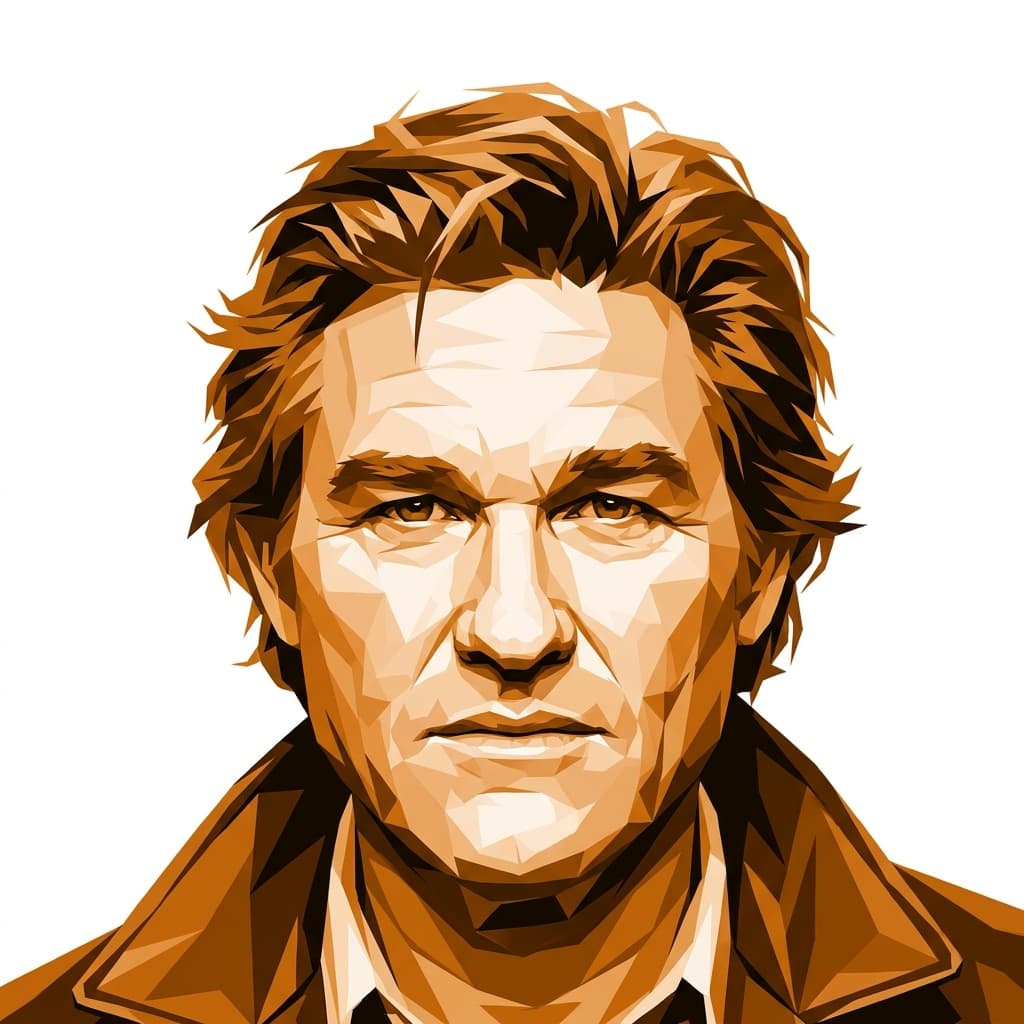
American actor known for Escape from New York, The Thing, Tombstone, and a five-decade Hollywood career.
Design
- Q11.6
- h12.6
- R2.5
- g36.1
- i6.1
- S54.3
- T58.4
- U41.3
- V55.3
- W46.4
- X52.5
- Y57.5
- Z4.1
Personality
- Q36.4
- h6.4
- R53.3
- g22.3
- i47.3
- S25.5
- T42.5
- U21.3
- V22.6
- W46.2
- X52.2
- Y57.4
- Z7.5
Kurt Russell is a Manifesting Generator — wired to move between wildly different lanes without ever picking just one, which is why his résumé zigzags from Disney child star to John Carpenter antihero to Quentin Tarantino heavy without any of it feeling like reinvention. He was signed to a ten-year contract with Walt Disney at age ten, played minor-league baseball seriously enough to hit .563 for a Northwest League affiliate before a shoulder injury sent him back to acting, and then quietly rebuilt himself in the late seventies as one of the most versatile leading men of his generation. The through-line isn't a plan. It's a gut that keeps saying yes to the next thing that lights him up.
His breakthrough as an adult came in 1979 playing Elvis for a young director named John Carpenter, and that response — Carpenter offered, Russell said yes — became the template for one of the great actor-director partnerships. Escape from New York, The Thing, Big Trouble in Little China, all inside four years. Snake Plissken was built out of saying only what needs saying at exactly the right moment, a performance almost entirely composed of pauses. Russell has told interviewers he approached Snake by asking what would happen if Clint Eastwood had a really bad attitude, then let the timing do the rest. As a 4/6 profile, he's the influential role model who built his authority through a long, messy experimental phase — the child-actor years, the baseball detour, the paycheck westerns — before stepping into the elder-statesman position he occupies now.
Colleagues describe him as unusually steady on set, the guy who reads the room and knows when a scene is done being fussed with. Carpenter has said Russell is the most prepared actor he's ever worked with, and Tarantino, casting him as Stuntman Mike in Death Proof and then again in The Hateful Eight, praised his ability to hold entire sequences together through sheer presence. That presence is partly the deep focus of a man who can sit inside a long take without leaking energy, and partly the drive to keep making the material better right up until they call action.
His decision-making runs on emotional authority — the slow sleep-on-it kind — which is why he famously turned down parts he probably "should" have taken and took parts nobody understood at the time. He's talked about waiting until something sits right before committing, and about the freedom of not needing anyone else's approval to walk away. With Goldie Hawn since 1983, no marriage, no drama, a partnership built on the kind of selectivity that protects what matters and a quiet refusal to perform their relationship for the public.
He raises horses in Colorado, produces wine with his son, votes libertarian, and shows up to Christmas movies late in his career because the idea genuinely delighted him. Ask him what ties it all together and he'll tell you he just followed what sounded fun. That's the innocence of a man who's still surprised by the work — and, at this point, the natural authority of someone people keep looking to for direction whether he asked for it or not.
Sources: biography · birth data
What do you and Kurt Russell have in common?
Enter your birth details to find out